San Francisco Trip Budget: What a Day Really Costs
How much does a day in San Francisco cost?
Budget travelers can get by on roughly $120-160 per day including a hostel bed, cheap eats and Muni; mid-range visitors should plan for about $250-350 per day with a hotel room, sit-down meals and one paid attraction; comfortable trips with private tours and nicer hotels run $450+ per day. None of these figures include sales tax, which is added at the register on top of the displayed price (8.625% in San Francisco), or tips, which are never included and expected on top.
Building a realistic daily number
San Francisco has a reputation for being expensive, and the reputation is earned — but “expensive” covers a wide range depending on where you sleep, how you eat and how many paid attractions you stack into a day. Rather than a single scary total, it helps to break the trip into four lines that behave very differently: lodging, food, transit, and attractions. Lodging is the biggest lever by far, transit is nearly fixed no matter your style, and attractions are the one line you fully control. This guide walks through each, then puts them together into three sample daily budgets so you can pick the tier that matches your trip.
Two things apply to every number below. First, sales tax is never included in a displayed price — San Francisco’s combined rate is about 8.625% in 2026, so the total at checkout is always higher than the menu or shelf price. Second, tipping is expected, not optional, on top of the tax-exclusive bill — tipping isn’t discretionary in American service culture, and servers, bartenders, drivers and guides rely on it as part of their income, with 15-20% at restaurants being standard nationwide and 20% the norm in San Francisco: figure 18-20%+ at restaurants and bars, a dollar or two per drink, roughly 15-20% for taxis and rideshare, and a few dollars per bag or per day for hotel staff. Neither of these is a rounding error — together they routinely add 25-35% on top of the sticker prices used in most budget breakdowns, so build them in rather than discovering them at the till.
Lodging: the line that moves the most
Hotel rates in San Francisco vary enormously by neighborhood, season and how far ahead you book. A room in a well-located but unglamorous area can cost half of an equivalent room near Union Square during a busy convention week. As a starting point for planning, not a quote:
| Tier | Typical nightly rate | What it gets you |
|---|---|---|
| Budget | $90-150 | Hostel private room or basic budget hotel, often outside the core tourist neighborhoods |
| Mid-range | $200-320 | Standard hotel room in or near downtown, the Mission, or Fisherman’s Wharf |
| Comfortable | $400+ | Full-service hotel near Union Square or the Embarcadero, or a well-appointed boutique property |
Reading up on San Francisco’s neighborhoods before booking pays off here: a hotel a short Muni or BART ride from the core is often dramatically cheaper than one you can walk everywhere from, and San Francisco’s compact geography means “a short ride away” rarely costs much time. Also worth knowing before you commit to dates: the best time to visit genuinely affects rates, and San Francisco’s own weather pattern — summer fog, then a warmer, sunnier September-October — means the cheaper shoulder months aren’t necessarily the worse ones to visit in.
Food: three tiers, three very different days
Food costs stack up faster than most visitors expect, mostly because “casual” restaurant meals in San Francisco are not actually cheap. Rough 2026 price orders of magnitude, before tax and tip:
| Meal type | Typical price per person |
|---|---|
| Coffee | $4-6 |
| Casual or quick meal (burrito, food hall, café) | $14-22 |
| Mid-range sit-down dinner | $35-65+ before tip |
A realistic full day of eating — coffee, a quick lunch, and a sit-down dinner — lands somewhere between $55 on the low end and $95+ before tax and tip once you’re eating a proper dinner out most nights. The Mission District and Chinatown are two of the more reliable places to eat well without hitting the top of that range; a Chinatown food tour or North Beach food tour can also work out as a single, predictable food cost for the day rather than a series of separate decisions.
Transit: cheap per ride, but it adds up
Transit is the one budget line that’s almost entirely fixed regardless of spending tier, and it’s genuinely inexpensive compared to lodging or food:
| Mode | Cost |
|---|---|
| Muni single ride (120-minute transfer window) | $2.85 |
| BART, SFO to downtown (one-way) | ~$11.15 |
| Cable car, single ride, no transfers | $8 flat |
| Golden Gate Bridge toll (southbound only, electronic) | $10.25-10.50 |
| Downtown parking | roughly $3-8/hour, $30-60/day |
A Clipper card is worth getting on arrival — it covers Muni, BART, Caltrain and the ferries, and taps in (and, on BART, out) at every gate. For details on getting between the airport and downtown, or choosing Muni versus BART for a given trip, see the getting around San Francisco guide and the SFO to downtown transport guide. The cable car deserves a specific budget note: at a flat $8 per one-way ride with no transfers, it’s priced — and should be treated — as a one-time experience, not as your daily transport. A single ride, ideally on the less-crowded California Street line rather than the Powell Street turnaround, gets the photo and the story without turning into a repeated daily expense.
Renting a car is worth pricing separately: a day of economy rental commonly runs $45-95+ before tolls, parking and gas, and it’s a poor fit for getting around San Francisco itself — the do you need a car in San Francisco breakdown covers why. Where a car earns its cost is day trips: to Napa Valley, down Highway 1, or toward Muir Woods and Marin, a car (or a guided tour that includes transport) is often the more efficient choice per person than public transit.
Attractions: the line you fully control
This is where budget, mid-range and comfortable trips diverge most, because it’s the only category with real optionality. A few reference prices:
| Attraction | Approximate 2026 price |
|---|---|
| Alcatraz Cellhouse day tour, adult | ~$47.95 |
| Alcatraz Cellhouse day tour, child (5-11) | ~$29.15 |
| Cable car, one-way | $8 |
| Napa or Sonoma tasting, per winery | $47-79 average |
| Guided day tour (varies widely) | $80-250+ per person |
Alcatraz is the one attraction worth budgeting for early and booking well ahead regardless of trip tier — tickets are sold exclusively by the official concession, releases go live 90 days out, and popular dates sell out weeks in advance; the Alcatraz tickets guide walks through timing this correctly. Beyond Alcatraz, a budget day might include free or low-cost sights — the Golden Gate Bridge itself, Golden Gate Park, walking through Fisherman’s Wharf — while a mid-range or comfortable day adds one or two paid experiences, whether that’s a guided walking tour, a bay cruise, or a half-day trip out to Muir Woods or Napa.
If a guided tour is on the list, a small, well-chosen city overview like the San Francisco highlights tour with a local guide tends to be an efficient use of a first day — it orients you to the neighborhoods without eating a full day’s transit budget. For getting the cable car experience without the hour-long Powell Street queue, a self-paced cable car app tour spreads the cost of the ride across a guided route rather than a single stand-alone fare.
Alcatraz is worth booking as a package where possible: the Alcatraz ferry ticket with a self-guided app bundles the ferry and the audio tour into one line item, which is easier to budget than piecing it together. And for a half-day out of the city that doesn’t require renting a car, a guided day trip to Muir Woods replaces a rental car, a parking reservation and a toll with a single fixed price per person.
Three sample daily budgets
These are per-person, per-day figures that combine lodging (split across a typical multi-night stay), food, transit and one attraction. They exclude flights and exclude sales tax and tips, both of which should be added on top at roughly 8.6% and 15-20%+ respectively.
| Budget | Mid-range | Comfortable | |
|---|---|---|---|
| Lodging (per person, shared room) | $45-75 | $100-160 | $200+ |
| Food | $35-50 | $55-80 | $90-140+ |
| Transit | $10-15 | $15-25 | $25-40 (rideshare-heavy) |
| Attractions | $0-20 | $40-90 | $100-250+ |
| Rough daily total | $120-160 | $250-350 | $450+ |
A few notes on how these differ in practice, not just in dollars. The budget tier means a hostel or basic hotel split with a travel companion, self-guided sightseeing using free viewpoints and neighborhoods, Muni over taxis, and picking one paid attraction (often Alcatraz, since it’s hard to substitute) rather than several. The mid-range tier adds a standard hotel room, a sit-down dinner most nights, and room for one guided experience or day trip alongside Alcatraz. The comfortable tier assumes a full-service hotel, more restaurant meals, private or small-group tours rather than self-guided options, and less time spent optimizing transit — more rideshare, less waiting for the bus.
Building a multi-day budget
Multiply a chosen daily tier by trip length, then adjust for two things that don’t scale evenly. First, day trips outside the city — Wine Country, Monterey and Carmel, the Central Coast — usually cost more than a city day, both in transport and in attraction spending, so budget those days separately rather than averaging them into a flat daily rate. Second, the first and last days of a trip (arrival and departure) are typically lighter on attractions and food but may carry airport transfer costs, so they often land below the daily average rather than at it.
For a sense of how many days actually make sense for a first visit, how many days you need in San Francisco is a useful companion to this budget — trip length and daily spending are the two variables that together determine the total, and it’s easy to underbudget by planning the days first and the money second. If Wine Country is on the itinerary, read the wine tasting reservations guide before budgeting that day specifically — tastings are paid, increasingly reservation-only, and the per-winery cost adds up faster than a casual stroll would suggest. And if the trip includes both a tight-budget city stretch and a splurge day or two, the budget San Francisco itinerary and luxury San Francisco getaway itineraries show what each extreme actually looks like day by day, which can be easier to budget against than an abstract daily average.
Day trips: the costs that don’t fit the daily table
The daily budget table above assumes a day spent inside the city. Trips outside San Francisco follow different math, because the biggest cost is transportation and time, not lodging or attractions. Wine Country — Napa Valley or Sonoma County, roughly 1-1.5 hours away by car with no direct train — adds $80-200+ per person once transport, a couple of tastings and lunch are added up; tasting fees alone average around $79 in Napa and $47 in Sonoma per winery in 2026, and most visitors taste at two or three wineries in a day. A guided or chauffeured day out removes the driving-versus-drinking conflict and bundles transport into one price, which is often worth it for exactly that reason.
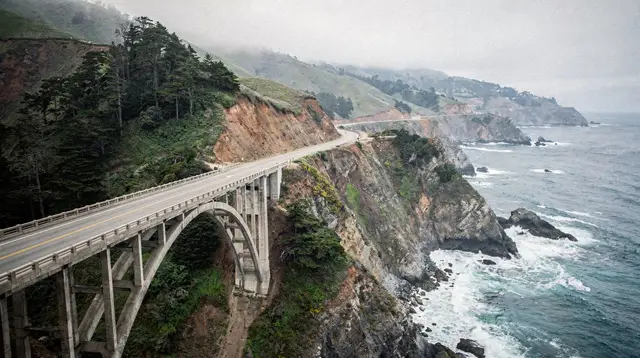
Further afield, the math changes again. Yosemite is about 3.5-4.5 hours by car one-way, and the reality of a Yosemite day trip is that it means 7-9 hours of driving alone, which leaves very little budget-worthy time in the park for the money and time spent — an overnight stay nearby is the better use of both; the planning guide from San Francisco walks through the trade-off in more detail. Lake Tahoe, about 3.5-4 hours by car via I-80, works as a long day trip only for a single lookout stop rather than a real beach or ski day — see the day trip logistics guide before committing a full day’s budget to it. Big Sur beyond Bixby Bridge and McWay Falls is a similar story: a long there-and-back on a slow road, where a one-way drive with an overnight works out better than round-tripping from the city in a single day, as the Big Sur day trip guide explains.
For Lake Tahoe or a combined Monterey-Carmel-Big Sur run, a chauffeured option like the Lake Tahoe private sightseeing tour with a daily chauffeur or the private Monterey, Carmel and Big Sur day trip converts a long, uncertain drive into a fixed per-person cost — useful for budgeting even if the sticker price looks steep next to a rental car.
Free and low-cost ways to fill a day
Not every day needs a paid attraction to feel full. Walking the Golden Gate Bridge, wandering Golden Gate Park, watching sea lions at Pier 39, and exploring free stretches of the Presidio or Ocean Beach cost nothing beyond transit. Stringing two or three of these together into a single day is a legitimate way to keep a budget-tier trip near its lower bound without feeling like you’re missing anything — save the paid attraction line for Alcatraz or the one experience that matters most to you, rather than spreading it thin across several lesser ones.
Where the money actually goes wrong
The most common way visitors blow their San Francisco budget isn’t any single splurge — it’s the gap between the price on the menu and the price on the receipt, repeated across every meal and every fare of the trip. Sales tax and tips together routinely add 25-35% on top of listed prices, and if that’s not accounted for from the start, a carefully planned mid-range budget can quietly slide into the comfortable tier by the end of the trip. The tipping in San Francisco guide and the San Francisco tourist passes compared breakdown are both worth a few minutes before the trip, since the second one answers a question that comes up in almost every budget conversation: whether a bundled pass is actually cheaper than paying per attraction, which depends entirely on how many paid sights are already on the list. For a running total while planning, the site’s own budget tool lets you plug in trip length and tier and adjust the numbers above to a specific itinerary rather than a generic average.
Trip Planning
Verified deep-linked GetYourGuide tours. Book through these links and we earn a small commission at no cost to you.
GetYourGuide does not provide a product photo for this activity — the image shows the meeting point, photographed by us.