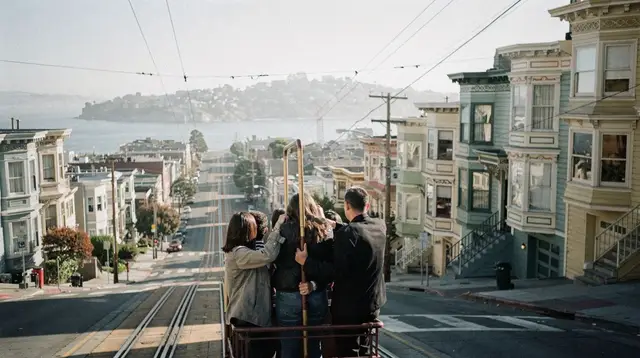
Walking the waterfront, not chasing one sight
Fisherman’s Wharf is best understood as a stretch of shoreline, not a single stop on a map. It runs roughly from the Chinatown-adjacent streets around Pier 39 westward past a working fishing harbor, souvenir arcades, seafood counters and small museums, before the waterfront path continues on toward the Golden Gate Bridge. Most visitors arrive expecting a single attraction and are better served treating it as a 15-20 minute walk with several stopping points along the way — Pier 39 at one end, the fishing boats and crab stands near Jefferson Street in the middle, and quieter piers toward Ghirardelli Square at the other.
It is worth saying clearly up front: this page covers the Wharf itself, not Alcatraz. Boats to the island leave from Pier 33, a short walk east along the same waterfront, but Alcatraz is a timed-entry, ticketed visit in its own right, sold only through the official concession — see our Alcatraz tickets guide if that is the main reason you are heading this direction. Treat the Wharf and Alcatraz as two separate plans on the same afternoon, not one combined stop.
Pier 39 and the sea lions
Pier 39 is the commercial heart of the district: a two-level pier lined with shops, a small aquarium, arcade games and a carousel, extending out over the bay with the Golden Gate Bridge and Alcatraz Island visible in the distance on a clear day. Its best-known residents showed up uninvited in 1989 — California sea lions hauled themselves onto the K-Dock floats just after the Loma Prieta earthquake and never fully left. Docent volunteers now staff the dock daily to answer questions, and the population fluctuates seasonally: numbers are typically highest from around September through January, when several hundred animals can be crowded onto the floats barking, wrestling and basking, and lower in late spring and early summer when many head to breeding grounds farther south. There’s no ticket and no schedule — the sea lions are visible free, any time the pier is open, though a still, sunny weekday morning tends to be calmer than a summer weekend afternoon.
Pier 39 also anchors most bay cruise departures. If the plan includes a boat ride under the Golden Gate Bridge or a scenic loop of the bay, this is the general area to base a visit around — see our Golden Gate bay cruise guide for what those trips actually cover and how long they run.
The seafood stands and working harbor
Walk west from Pier 39 along Jefferson Street and the district changes character: outdoor crab pot stands with steaming clam chowder bread bowls, walk-up counters selling shrimp and crab cocktails in plastic cups, and a genuinely active small-boat fishing harbor where the industry the neighborhood is named for still operates, if at a fraction of its mid-20th-century scale. This stretch is where the “tourist trap” reputation gets earned or avoided in equal measure — prices at the most visible stands run noticeably higher than a sit-down restaurant a block or two inland, and quality varies stand to stand. A useful rule: stands with a visible line of locals, not just tour groups, and boats actually tied up nearby unloading catch, tend to be a safer bet than the ones with the biggest illuminated menu boards. Our Fisherman’s Wharf tourist trap myths piece goes through this in more detail if food quality is a priority.
Expect a casual bread-bowl chowder or seafood cocktail to run somewhere in the $12-20 range before tax, and a sit-down seafood lunch closer to $25-40 per person before tip — sales tax and tip are added on top of every posted price in San Francisco, never included, so budget accordingly.
Musee Mecanique
Tucked at the end of Pier 45, the Musee Mecanique is one of the Wharf’s genuinely distinctive stops and one of the easiest to miss if you don’t know to look for it: a free-to-enter arcade of more than 300 antique coin-operated machines, from early 20th-century fortune tellers and mechanical bands to vintage pinball and early arcade games, most of them still working on real coins. There’s no admission charge to walk in and browse — you only pay per machine you play, typically a quarter or two per go on the oldest pieces. It rewards 20-30 minutes and works well as a change of pace from the outdoor piers, especially on a foggy or windy day when the waterfront itself is less pleasant to linger on.
Getting there without a car
Driving to the Wharf is one of the more common visitor mistakes: parking is scarce, expensive, and concentrated in a handful of large garages that fill on weekends, and the surrounding streets are dense with one-way turns and double-parked delivery trucks. Muni streetcars on the F line run right along the waterfront on vintage cars, and cable car lines terminate within walking distance at the Hyde Street pier — a scenic if slow way to arrive, and one that avoids the queue-and-park problem entirely. Our do you need a car in San Francisco piece covers this in more depth, and the short version for the Wharf specifically is: leave the car at the hotel. If a rental is already booked for a Wine Country or coastal day trip, our car break-ins guide is worth reading before it sits parked near a tourist-heavy pier — never leave anything visible inside.
For visitors planning several paid attractions across the city, a bundled pass can be worth pricing out before buying individual tickets one at a time. The San Francisco Explorer Pass lets you pick a set number of attractions and bay-area experiences at a discount versus paying separately, which suits a visit that mixes the Wharf with a bay cruise or a museum stop elsewhere in the city. For a longer stay covering more sights, the San Francisco 9 Day CityPASS bundles several of the city’s major paid attractions into one ticket valid across nine days, which can suit a slower-paced week that returns to different neighborhoods more than once.
What’s nearby, and what isn’t part of the Wharf
It’s worth being precise about geography here, since several separately marketed attractions sit close enough to blur together on a map. Alcatraz ferries leave from Pier 33, a 10-15 minute walk east — that’s its own destination page, not a Wharf activity. Ghirardelli Square, with its chocolate shops and small museum, sits at the western edge of the Wharf district and makes a natural final stop before continuing on foot or by streetcar toward the Golden Gate Bridge and the Presidio. Chinatown and North Beach sit a short walk inland to the south, and both work well as a follow-on stop for dinner once the waterfront cools down and the day-trip crowds thin out — see our Chinatown walking tour guide and North Beach walking tour guide for self-guided routes.
For visitors basing a full day around the wider bay rather than just the Wharf, a guided day tour is one way to cover Alcatraz-adjacent sights, Marin County and Sausalito without juggling separate bookings and ferry schedules. The San Francisco: Alcatraz Muir Woods and Sausalito Day Tour combines several of these stops into one itinerary, departing from the general downtown/waterfront area. For a more active option that starts near the Wharf and crosses the bridge itself, the Muir Woods: Visit Golden Gate Bridge Bike Ride pairs a ride over the Golden Gate Bridge with a redwood forest stop in Marin, a popular way to turn a Wharf-adjacent morning into a full day outdoors.
When to go
Because most of what makes the Wharf worthwhile — the sea lions, the outdoor food stands, the piers themselves — is outdoors, timing matters more here than at an indoor museum. San Francisco’s summer fog belt sits directly over this stretch of waterfront, meaning June through August frequently bring grey skies, wind and daytime highs in the 15-19°C (60-66°F) range right at the shoreline, often colder here than a few blocks inland. September and October are San Francisco’s real summer: the fog retreats, skies clear, and this is the best-documented window for both a comfortable walk and clear photos of the bridge and bay from the piers. Whatever the season, a layered jacket is worth carrying even at midday — wind off the water is near-constant. Early morning (before 10am) and the hour before sunset are the two calmest windows for photos and for the sea lions, before and after the heaviest midday tour-bus crowds.
A short table of what to expect by time of day:
| Time of day | Crowd level | Notes |
|---|---|---|
| Before 10am | Low | Quietest sea lion viewing, cooler light for photos |
| 11am-4pm | High | Peak tour groups and cruise-ship passengers |
| Late afternoon | Moderate | Good light, food stands still fully open |
| After sunset | Low | Many shops close; some restaurants and bars stay open |
Rounding out the visit
A half-day at the Wharf pairs naturally with several other San Francisco plans without adding much travel time. Visitors building a first full day in the city often combine it with a downtown walk or a hop-on-hop-off loop — see our San Francisco hop-on-hop-off bus guide and the San Francisco in one day itinerary for how that typically gets sequenced. Travelers without a car for the whole trip can lean on the car-free San Francisco itinerary, which treats the Wharf as one stop among several reachable by streetcar, cable car and on foot. And for anyone weighing which paid attractions are actually worth the money across a longer stay, our San Francisco attraction tickets guide compares passes and individual tickets side by side.
Fisherman’s Wharf FAQ
Is Fisherman’s Wharf worth visiting?
Yes, as a free, walkable orientation to the waterfront — the sea lions, the harbor, and Musee Mecanique cost nothing to see beyond individual food or arcade purchases. It works best treated as a half-day walk rather than the single highlight of a trip, and pairs well with a nearby neighborhood or a bay cruise.
Do I need a ticket to see the sea lions at Pier 39?
No. The K-Dock viewing area is free and open to the public with no ticket, reservation or schedule; the sea lions come and go on their own, with numbers typically highest from around September through January.
Is Alcatraz part of Fisherman’s Wharf?
No. Alcatraz ferries depart from Pier 33, a short walk from the Wharf, but the island visit is a separate, timed-entry ticket sold exclusively by Alcatraz City Cruises. See our Alcatraz tickets guide for how to book it.
How much does food cost at Fisherman’s Wharf?
Outdoor stands charge roughly $12-20 for a bread-bowl chowder or seafood cocktail before tax, and a sit-down seafood meal runs closer to $25-40 per person before tip. Prices at the most visible waterfront stands tend to run higher than a comparable meal a block or two inland.
Is Musee Mecanique free?
Entry is free; you only pay per machine, typically a quarter or two for the older mechanical pieces. It sits at the end of Pier 45 and makes a good indoor stop on a foggy or windy day.
Should I drive to Fisherman’s Wharf?
It’s not recommended. Parking is scarce and expensive, and the F-line streetcar and nearby cable car lines both reach the district without the hassle of finding a space. Save a rental car for day trips outside the city.
What’s the best time of day to visit?
Before 10am or in the last hour before sunset, when tour-group and cruise-passenger crowds are thinnest. September and October generally offer the clearest, warmest conditions of the year for an outdoor walk along this stretch of waterfront.
Can I combine Fisherman’s Wharf with a bay cruise?
Yes — most bay cruise and Golden Gate Bridge boat tours depart from piers in or near this district, making it a natural starting or ending point for a cruise. See our Golden Gate bay cruise guide for options and typical durations.