Mission District Neighborhood Guide: Murals, Food and Parks
Is the Mission District worth a dedicated visit in San Francisco?
Yes — the Mission District combines two of the city's best mural alleys (Balmy Alley and Clarion Alley), a food scene built around taquerias and modern restaurants side by side, and Dolores Park, all within a flat, walkable grid unlike most of San Francisco's hills. Most visitors give it a half-day to a full afternoon and evening.
Why the Mission District earns its own visit
Most first-time visitors to San Francisco spend their time on the classic loop — Fisherman’s Wharf, Union Square, the Golden Gate Bridge — and never make it south of Market Street into the Mission District. That’s a genuine miss. The Mission is one of the few flat neighborhoods in a notoriously hilly city, which alone makes it easier to explore on foot than Chinatown or Russian Hill. More importantly, it’s where San Francisco’s Latino heritage, its 1960s-70s counterculture murals, and its modern food and bar scene all overlap on the same handful of blocks.
The neighborhood’s identity was shaped by decades of Latin American immigration, starting with Mexican and Central American communities settling around Mission and 24th streets from the mid-20th century onward. That history is still visible — not in a museum, but painted directly onto garage doors and alley walls. Since the early 2000s, the Mission has also become one of San Francisco’s most sought-after neighborhoods for restaurants, bars and boutique shopping, especially along Valencia Street, without (yet) losing the older taquerias and produce markets that gave it its character in the first place. The result is a neighborhood that rewards a dedicated half-day or full afternoon rather than a quick pass-through.
Getting there and getting oriented
The 16th Street Mission and 24th Street Mission BART stations put you directly in the neighborhood, and both are a short, flat ride from downtown or the Embarcadero. Muni buses run along Mission and Valencia streets as well, and if you’re coming from the Castro or SoMa, it’s a comfortable 20-30 minute walk on level ground — a rarity anywhere else in the city. A rental car is not useful here: street parking is scarce and metered, and everything worth seeing in the Mission is within a 15-20 minute walk of everything else.
Valencia Street is the neighborhood’s main commercial spine, lined with restaurants, bars, bookstores and design shops between about 16th and 24th streets. Mission Street, one block east, is older and grittier, closer to the neighborhood’s working-class roots, with produce markets, discount stores and some of the most-loved taquerias. Dolores Street, one block west of Valencia, is quieter and residential, running past Dolores Park. Knowing this three-street structure — Dolores, Valencia, Mission, roughly west to east — makes the whole neighborhood easy to navigate without a map.
The murals: Balmy Alley and Clarion Alley
The Mission’s murals are its most photographed feature, and they’re free to see at any hour. Balmy Alley, between 24th and 25th streets, is the older and more historically rooted of the two: murals here date back to the early 1970s-80s, many originally painted in solidarity with Central American political movements, and the alley is still actively repainted and maintained today. It’s a narrow residential lane, so keep voices down and be respectful of the people who live there.
Clarion Alley, between 17th and 18th streets just off Valencia, is younger, edgier and more explicitly political, run by an artist collective (the Clarion Alley Mural Project) since 1992. Where Balmy Alley leans toward commemorative and cultural imagery, Clarion Alley tends toward current social and political commentary, and the art turns over more frequently. Both alleys work well as a single loop if you start near 24th Street BART, walk Balmy Alley, then head north on Mission or Valencia to Clarion Alley before continuing toward Dolores Park.
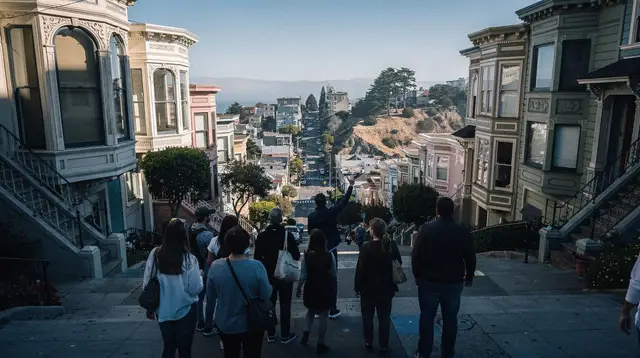
For visitors who want context rather than just photographs, a guided walk adds real value here — many of the murals reference specific historical events or neighborhood figures that aren’t obvious without explanation.
a guided walk through the Mission District and neighboring Castro covers the murals alongside the two neighborhoods’ intertwined social history, which is hard to piece together from plaques alone.
Eating in the Mission: taquerias, modern restaurants and everything between
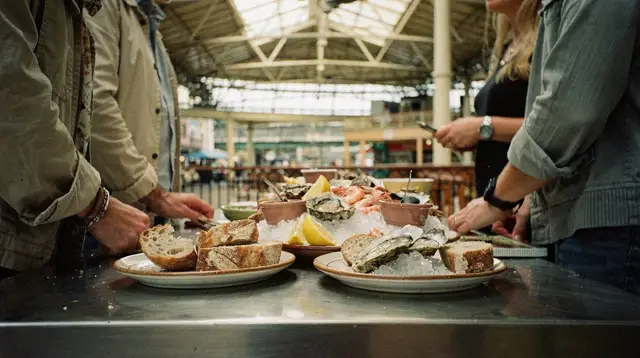
The Mission is arguably San Francisco’s most important food neighborhood, and it operates on two tracks that sit within blocks of each other. The first is the taqueria tradition: large, foil-wrapped San Francisco-style burritos, often cited as having been invented or popularized in this exact neighborhood, served at long-running counter-service spots along Mission and 24th streets. Ask five different locals for the “best” burrito in the Mission and you’ll likely get five different answers — it’s a genuinely unsettled debate, and part of the fun is trying more than one.
The second track is Valencia Street’s newer restaurant scene: wine bars, farm-to-table kitchens, natural wine shops and destination restaurants that have opened since the 2000s, drawing diners from across the city. The two tracks coexist rather than compete — a visitor can eat a classic burrito for lunch and a tasting menu for dinner within four blocks of each other, which is unusual even by San Francisco standards.
| Food style | Where to look | What it costs (roughly, before tax/tip) |
|---|---|---|
| Classic taqueria burrito | Mission St. and 24th St. | $12-16 |
| Casual Latin American / pupusas, tacos | 24th St. corridor | $14-20 per person |
| Modern Valencia St. restaurants | Valencia St., 16th-24th | $35-65+ per person, dinner |
| Coffee shops and bakeries | Valencia St. and side streets | $4-8 |
| Bars and natural wine spots | Valencia St. | $10-18 per drink |
If you’d rather have a local guide walk you through the food scene and pick the stops for you, a structured tasting works well here:
a Mission District food tour with six tastings covers a mix of taquerias and newer spots in one outing, which is a fast way to sample both sides of the neighborhood’s food identity without picking wrong on your own.
For visitors more interested in the history behind the food — why the burrito style developed here, how the neighborhood’s immigrant communities shaped what’s on the menu — a food-history-focused walk digs deeper than a straightforward tasting crawl.
Dolores Park and the neighborhood’s green space
Mission Dolores Park, occupying a full block between 18th and 20th streets along Dolores Street, is the neighborhood’s social heart, especially on sunny afternoons. Its sloped lawn faces north, giving an open view back toward the downtown skyline that’s genuinely one of the better free photo spots in the city — no ticket, no line, just a walk uphill from the park’s Church Street side. On warm days the park fills with picnickers, and it’s a legitimate stop even for visitors who have no interest in sunbathing, simply as a scenic pause between the murals and Valencia Street’s restaurants.
The park sits directly across from Mission Dolores (Mission San Francisco de Asís), the city’s oldest surviving building, dating to 1791 — a reminder that the neighborhood’s name and history predate the Gold Rush by nearly a century. It’s easy to combine a walk through the park with a quick look at the mission church itself before continuing your route.
The Mission and the Castro: two neighborhoods, one walk
Given their proximity — about a 20-25 minute walk or a short Muni ride apart — the Mission District and the Castro are frequently visited together, and their histories overlap more than most visitors realize. The Castro’s emergence as a center of LGBTQ culture from the 1960s-70s onward ran alongside the Mission’s own countercultural and immigrant-rights movements a few blocks away, and several of the Mission’s murals directly reference that shared history.
If your time is limited, combining both neighborhoods into a single guided outing is more efficient than visiting each separately:
a Castro District LGBTQ history tour focuses specifically on that neighborhood’s history and landmarks, and pairs naturally with a Mission visit on the same day, before or after.
For visitors who’d rather cover more ground on two wheels — the Mission, the Castro, and the route toward Haight-Ashbury and Golden Gate Park — an e-bike tour covers considerably more territory than a walking route in the same window of time, which is worth considering if the Mission is one stop among several neighborhoods you want to see in a day.
A practical half-day plan
For visitors building their own route rather than joining a guided tour, this order works well and avoids backtracking:
- Start at 24th Street BART station, mid-morning.
- Walk Balmy Alley (between 24th and 25th streets) for the murals.
- Head north on Mission Street, stopping for a burrito at one of the corridor’s classic taquerias.
- Continue north to Clarion Alley (17th-18th, off Valencia) for a second, more contemporary mural stretch.
- Walk Valencia Street north to south (or south to north) for shops, coffee and browsing.
- Finish at Dolores Park for the skyline view, especially if timed for late afternoon light.
This route covers roughly 2-2.5 miles of flat, easy walking and takes 3-4 hours at a relaxed pace, longer with a sit-down meal. It connects cleanly to an evening in the Castro or a return downtown by BART from either station.
How the Mission fits into a wider San Francisco itinerary
The Mission is rarely anyone’s first stop in San Francisco, and that’s reasonable — most visitors want the Golden Gate Bridge, Fisherman’s Wharf and Alcatraz on a first pass through the city. But for a first-time visitor itinerary of three days or more, or a car-free itinerary built entirely around BART and Muni, the Mission is one of the easiest additions: it requires no car, connects directly to downtown by train, and offers a genuinely different experience from the city’s more photographed landmarks.
It also pairs naturally with a broader look at San Francisco’s other neighborhoods — Haight-Ashbury’s counterculture history a couple of miles northwest, North Beach’s Italian heritage and food scene near downtown, and Chinatown’s own distinct character closer to Union Square. Visitors trying to decide how to split limited time across things to do in San Francisco by neighborhood often find the Mission is the neighborhood that most rewards slowing down rather than checklist sightseeing.
A note on safety and logistics: the well-trafficked stretch of Valencia Street and the area immediately around Dolores Park are comfortable at most hours, including evening. As in any dense urban neighborhood, it’s worth reading up on getting around the city and whether you actually need a car before your trip — for the Mission specifically, the honest answer is no. If you’re weighing transit passes for a longer stay, comparing San Francisco’s tourist passes is worth doing before you arrive rather than after.
Mission District: frequently asked questions
How do I get to the Mission District from downtown San Francisco?
The BART 16th Street Mission and 24th Street Mission stations sit right in the neighborhood, a few minutes from downtown or the Embarcadero. Muni bus lines also run along Mission and Valencia streets, and it’s a flat, walkable 25-30 minute stroll from the Castro or SoMa.
What are the Mission District’s famous murals and how do I see them?
Balmy Alley and Clarion Alley hold the neighborhood’s densest concentrations of murals, many dating to the 1970s-80s Chicano art movement and still repainted today. Both alleys are free, outdoor and open at any hour, though murals photograph best in daylight.
Is the Mission District safe for visitors?
The core tourist stretch around Valencia Street and Dolores Park is well-trafficked and generally comfortable during the day and evening. Streets further from Valencia and around the BART stations can feel rougher after dark, so stick to well-lit, busy blocks at night as you would anywhere in the city.
What’s the best Mission burrito, and does it matter which taqueria I pick?
The neighborhood is famous for the San Francisco-style burrito, and opinions on the single best taqueria are a genuine local debate rather than a settled answer. Most long-running spots along Mission and 24th Street serve a similar large, foil-wrapped format, so trying more than one is part of the experience — see our roundup of Mission burritos for a starting list.
Is Dolores Park worth visiting if I’m not going to sunbathe?
Yes — even a short walk through Dolores Park gives sweeping views back toward the downtown skyline, and it sits within a few blocks of Valencia Street’s shops and restaurants, making it an easy stop to combine with the rest of a Mission afternoon.
How much time should I budget for the Mission District?
A half-day (roughly 3-4 hours) covers the main murals, a meal and a walk through Dolores Park. A full afternoon into evening allows time to add a food tour, a bar or two on Valencia Street, and a slower pace through the neighborhood’s shops. See our neighborhood history of the Castro if you’re planning to combine both areas in one day.
Does the Mission District connect well to a Castro visit on the same day?
Very well — the Castro sits about a 20-25 minute walk (or a short Muni ride) west of the Mission, and many walking tours combine both neighborhoods into a single itinerary given their shared history and proximity.
San Francisco by Neighborhood
Verified deep-linked GetYourGuide tours. Book through these links and we earn a small commission at no cost to you.
GetYourGuide does not provide a product photo for this activity — the image shows the meeting point, photographed by us.