Do You Need a Car in San Francisco? My Honest Answer
Do you need to rent a car in San Francisco?
No — inside the city, walking, Muni, BART, cable cars, and rideshares cover everything better than a car, which faces scarce and expensive parking. A car earns its keep only on day trips outside the city, like Wine Country or the coast.
I rented a car for my first trip to San Francisco because that’s what I always did in a new city. Big mistake. I spent the first afternoon circling North Beach looking for parking, paid something like forty dollars for the privilege of leaving the car sitting still for six hours, and then had to remember to curb the wheels on a hill so I wouldn’t get a ticket. By day two, the rental was parked and staying parked, and I was walking, taking Muni, and hopping on BART instead. It was faster, cheaper, and a lot less stressful.
That’s the short version of what I’ve learned over several trips here: inside San Francisco, a car is a liability, not a convenience. Outside the city, on day trips, it flips completely — and a car becomes one of the most useful things you can have.
Why the city itself doesn’t want your car
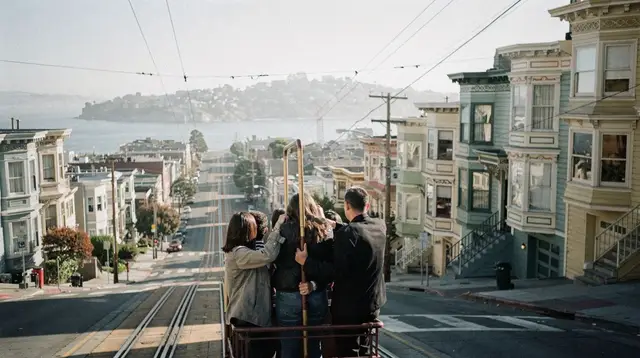
San Francisco is compact. The tourist core — Union Square, the Financial District, Fisherman’s Wharf, North Beach, Chinatown, the Embarcadero — fits into a few square miles that are genuinely walkable, if hilly. Add in Muni (buses, streetcars, and the historic cable cars) and BART for longer hops, plus the ferries from the Embarcadero, and you can reach nearly everything I listed above without ever touching a steering wheel.
A single Muni ride with a Clipper card is $2.85 and covers you for 120 minutes with transfers — which in practice means one fare gets you from Union Square to the Mission District with a stop along the way. BART connects SFO airport straight to downtown for about $11.15 one-way, which is both cheaper and less stressful than arranging a car at the airport. I load a Clipper card onto my phone the moment I land and don’t think about transit again.
Parking, on the other hand, is where a car quietly drains your trip budget. Expect $3-8 an hour and daily maximums of $30-60 in high-demand spots like Union Square. Multiply that by three or four days and you’ve spent more on parking than most people spend on food. Streets here are narrow, often one-way, and steep enough that parking regulations require you to curb your wheels on a grade — an actual enforced rule, not just good practice.
Then there’s the break-in risk. It’s gotten dramatically better — reported car burglaries dropped to roughly 10 a day citywide by 2026, down 75-85% from the 2017 peak — but the underlying rule every local repeats hasn’t changed: never leave anything visible in a parked car. A rental car sitting in a tourist neighborhood is still a target, and honestly, it’s one more thing to worry about that I don’t need on vacation.
What I do instead, day to day
My default pattern in the city: walk when it’s under 20 minutes, take Muni or BART when it’s not, and use a cable car once — as an experience, not as transport. The Powell Street turnaround near Union Square has queues that routinely run 30-60+ minutes at peak times, so if I just want the ride, I board partway along the route or use the quieter California Street line instead.
For sightseeing that covers a lot of ground in one go, I’ve used a pass rather than piecing together tickets — the San Francisco Explorer Pass bundles several attractions and saves the hassle of buying individually, and if you’re staying longer, the San Francisco 9 Day CityPASS spreads that value over more time. Neither requires a car — they’re built around the walk-and-transit reality of the city.
Rideshares fill the gaps: late at night, with luggage, or when I’m just tired and it’s raining. A short rideshare across town is usually cheaper than a full day of parking, and it skips the one-way street maze entirely. I treat it as a backup, not a default — it adds up fast if you lean on it for everything.
Where a car actually earns its keep
Everything changes the moment I leave the city. Napa Valley and Sonoma have no direct train, and a car is genuinely the easiest way to move between tasting rooms — assuming you’ve got a designated driver, since California’s legal limit is 0.08% and you won’t want to taste at more than one winery if you’re driving yourself. On a day I wasn’t driving, I booked a guided tasting instead — the Berkeley wine tasting with a local sommelière let me actually enjoy the pours.
The coast down Highway 1 — Half Moon Bay, Santa Cruz, Monterey, Carmel — is the same story: no useful train service, and the drive itself is half the point. Big Sur beyond Bixby Bridge is a long, winding road that rewards having your own car and your own schedule, not a bus timetable.
Even some day trips that are technically reachable by transit are more pleasant with a car. Marin County — Sausalito, Muir Woods, Point Reyes — has ferries and shuttles that work fine, but I’ve also done it by car and liked having the flexibility to linger at Stinson Beach longer than a shuttle schedule allowed. When I wanted Alcatraz, Muir Woods, and Sausalito all covered without driving myself, I booked the Alcatraz, Muir Woods and Sausalito day tour instead and let someone else handle the Golden Gate Bridge traffic.
One thing to know if you do rent for a day trip: the Golden Gate Bridge toll is entirely electronic and one-directional, charged only when entering the city from the Marin side. There’s no booth and no cash option, so check what your rental company charges to process it — often a per-trip fee on top of the toll itself.
My actual rule of thumb
If your itinerary is San Francisco proper for two or three days, skip the rental entirely. Fly in, get a Clipper card, and let Muni, BART, walking, and the occasional rideshare do the work — you’ll save money on parking alone. If Wine Country, the coast, or Yosemite is on the list, rent the car for just those days, or better, pick it up the morning you leave the city and drop it back when you return. I’ve done both versions of this trip, and the hybrid — car-free in the city, car for the day trip — is the one I keep coming back to.
For getting between neighborhoods without any of this planning, I still default to public transit; the getting around San Francisco guide breaks down every option in more depth. For the day trips themselves, the Napa Valley day trip guide and driving to Napa Valley from San Francisco cover the logistics I wish I’d read before my first drive out.
FAQ: Renting a car in San Francisco
Do I need a car to see San Francisco’s main sights?
No. Union Square, Fisherman’s Wharf, Chinatown, the Golden Gate Bridge, and Alcatraz are all reachable by walking, Muni, BART, or ferry. A car adds parking costs and hassle without saving meaningful time.
How much does parking cost in San Francisco?
Expect roughly $3-8 per hour and daily maximums commonly in the $30-60 range in high-demand areas like Union Square, under the city’s demand-based pricing.
Is it safe to leave a rental car parked in San Francisco?
Car break-ins have dropped sharply — to roughly 10 reported incidents a day citywide by 2026, down 75-85% from the 2017 peak — but the rule still holds: never leave anything visible in the car, in the city or at a trailhead.
What’s the cheapest way to get around San Francisco day to day?
A Clipper card loaded onto Muni and BART. A single Muni ride is $2.85 and covers 120 minutes with transfers; BART from SFO to downtown runs about $11.15 one-way.
When does renting a car actually make sense on this trip?
For day trips outside the city with no direct train — Napa Valley, Sonoma, the Highway 1 coast toward Santa Cruz, Monterey, and Carmel, or a Yosemite trip. Inside San Francisco itself, skip it.
Does the Golden Gate Bridge have a toll booth I can pay cash at?
No. The toll is fully electronic and charged only southbound (entering San Francisco from Marin) — there’s no booth and no cash option. Rental companies typically add their own processing fee on top.
Are cable cars a practical way to get around, or just for sightseeing?
Mostly sightseeing. They’re slow and the Powell Street turnaround often has 30-60+ minute queues. A Muni bus or streetcar covers the same distance faster on a normal day.
Should I use rideshares instead of a rental car?
For occasional trips — late at night, with luggage, in bad weather — yes, rideshares are cheaper than a day of parking. As a full-time substitute for transit, the costs add up quickly compared to a Clipper card.
tours.Transport
Verified deep-linked GetYourGuide tours. Book through these links and we earn a small commission at no cost to you.
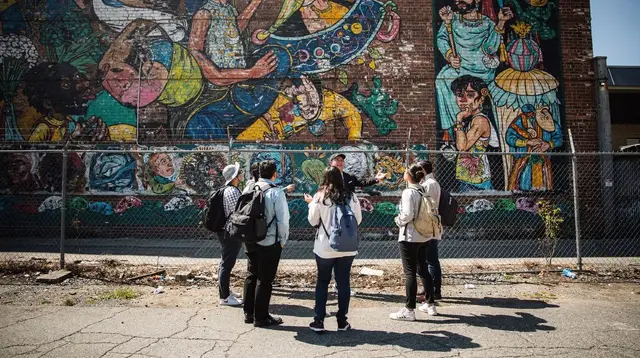
GetYourGuide does not provide a product photo for this activity — the image shows the meeting point, photographed by us.