Chinatown Food Tour Guide: Dim Sum, Tea and What's Included
What does a Chinatown food tour in San Francisco actually include?
Most Chinatown food tours are 2.5-3.5 hour small-group walks with a local guide, stopping at 5-8 spots for tastings — typically dim sum, a bakery, a tea shop, and a market or herbal shop — with most or all food included in the ticket price. Alcohol, extra dishes and gratuity are usually separate, since tips are never included in US prices.
What a Chinatown food tour actually buys you
San Francisco’s Chinatown is the oldest Chinatown in North America and one of the densest food streets in the city, packed into a compact grid a short walk from Union Square. That density is exactly the problem for a first-time visitor: dozens of bakeries, dim sum counters, tea shops, herbal pharmacies and produce markets sit shoulder to shoulder, almost none of them with English menus built for tourists, and there’s no obvious way to tell a neighborhood institution from a spot that only survives on foot traffic. A guided food tour solves that by pre-selecting the stops, prepaying the tastings, and adding the historical and cultural context that turns a walk through Chinatown into something closer to a meal.
This guide covers what these tours typically include, how the format differs from a self-guided walk or a walking tour without food, what a fair price looks like, and the questions worth asking before booking.
How the format works
Nearly every bookable Chinatown food tour follows the same basic structure: a small group (commonly 8-16 people) meets a local guide at a fixed starting point, usually near the Chinatown Gate on Grant Avenue or a nearby plaza, and walks a fixed route of roughly 1-1.5 miles over 2.5-3.5 hours. Along the way, the guide leads the group into 5-8 businesses — a mix of a dim sum counter, a bakery, a tea shop, a dried-goods or herbal market, and sometimes a produce stall or noodle shop — where a tasting portion is already arranged with the owner. The food is included in the ticket price; you don’t pay separately at each stop unless you want extra.
What separates a food tour from simply walking Chinatown with a list of recommended stops (see Chinatown etiquette tips for that approach) is access and context. Guides often have standing relationships with shop owners, which means a group can get a kitchen tour, a demonstration, or a dish that isn’t on the public counter. The narration typically covers the neighborhood’s history — the 1906 earthquake and rebuilding, the role of family associations, the wave of Cantonese immigration that shaped the food — alongside practical detail on what’s being eaten and why.
What’s typically included and what isn’t
| Included on most tours | Usually NOT included |
|---|---|
| 5-8 tastings at selected stops | Alcohol (unless specified) |
| A local guide for 2.5-3.5 hours | Extra portions beyond the tasting |
| Historical and cultural narration | Guide gratuity |
| Dietary accommodation with advance notice (partial) | Transportation to/from the meeting point |
The tasting portions add up to a real meal by the end of the tour — most operators design the route so nobody leaves hungry — but they’re small, shared plates at each stop rather than a single sit-down dish. If you have a specific dietary restriction, message the operator before booking rather than assuming a stop can be swapped on the day; Chinatown’s tasting menu leans heavily on pork, shellfish and non-vegetarian broths, so substitutions are more limited than in many other food-tour neighborhoods.
Dim sum: what to expect on the tour vs. eating it yourself
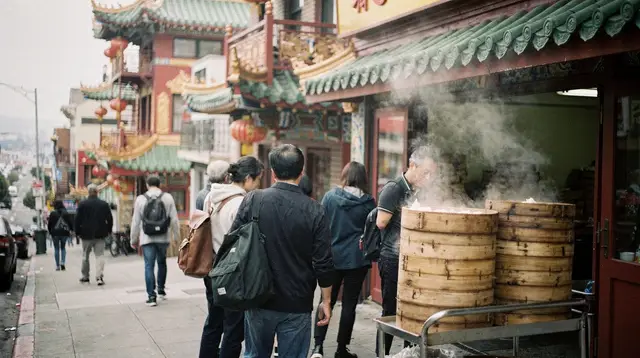
Dim sum is the dish most visitors specifically want from a Chinatown food tour, and nearly every operator builds a stop around it — but it’s worth knowing the difference between the tour version and a full dim sum meal. On a guided tour, you’ll typically get one or two shared dim sum items (commonly har gow, siu mai, or a barbecue pork bun) from a counter-service bakery or dim sum specialist, timed to fit the group’s schedule. A traditional sit-down dim sum meal, ordered from rolling carts at a large banquet-style restaurant, is a different and longer experience that most food tours don’t attempt to replicate, since it doesn’t move a group through in 20-30 minutes.
If dim sum specifically — not the broader Chinatown food scene — is the priority, it’s worth asking an operator directly what their dim sum stop looks like before booking, since the format varies more here than at any other stop on the route.
Tea shops and the slower side of the tour
Most itineraries include a stop at a tea shop, which tends to be one of the calmer, more educational parts of the walk. Rather than a quick tasting, tea stops often run as a short seated demonstration — how the tea is grown, processed and brewed, with a chance to taste two or three varieties (commonly an oolong, a jasmine, and a pu-erh or similar aged tea). It’s also usually the point in the tour where the group sits down, which matters on a hot day or with kids in the group.
Some tours pair the tea stop with a brief stop at a traditional Chinese herbal pharmacy nearby, where the guide explains how traditional medicine shops are stocked and used — interesting context, though there’s rarely tasting involved at that particular stop.
Solo-guide vs. combined North Beach-Chinatown tours
Two tour shapes cover most of what’s bookable:
- Chinatown-only tours, focused entirely on the neighborhood, typically run 2.5-3 hours and go deeper into fewer blocks — useful if Chinatown itself, not the surrounding area, is the priority.
- Combined North Beach and Chinatown tours, which walk from one neighborhood into the other, usually run 3-3.5 hours and deliberately contrast Chinese and Italian food cultures sitting a few blocks apart. This shape works well if it’s your only free morning or afternoon for food touring in the city, since it covers two distinct neighborhoods (also see the North Beach food tour guide) in one outing rather than requiring two separate bookings.
One operator worth knowing for this combined format is a guided walk that moves between Chinatown and North Beach in a single outing, tasting through both neighborhoods rather than picking one.
Street-food-style options
Not every food tour in this part of the city is built strictly around Chinatown’s sit-in shops — some operators run a broader street-food format that includes Chinatown stops alongside other downtown food spots. A local-guide-led street food tour covering multiple downtown food stops is worth considering if the goal is a wider sampling of San Francisco’s food scene rather than a Chinatown-only deep dive.
For a comparison point outside the city, some visitors extending their trip into the East Bay also look at a food culture tour through Berkeley’s restaurant and market scene, which covers a very different, more contemporary Bay Area food culture than Chinatown’s century-old institutions.
Price ranges and what drives them
| Tour type | Typical length | Typical price per person |
|---|---|---|
| Chinatown-only small-group tour | 2.5-3 hours | $60-100 |
| Combined North Beach + Chinatown tour | 3-3.5 hours | $90-130 |
| Private/custom group tour | 2.5-3.5 hours | $130-250+ |
Prices scale mainly with group size (private tours cost more per person but offer a guide dedicated entirely to your group) and the number of stops. A tour with 8 tastings and a seated tea demonstration will generally cost more than one with 5 quick stops, since the operator is prepaying more food per guest. As with restaurant prices anywhere in the city — where tips are never included in the bill — none of these figures include the tip a guide expects at the end — plan on an extra 15-20% of the tour price, similar to tipping norms elsewhere in San Francisco.
Booking timing and group size
Chinatown food tours run in small groups by design — the format depends on a shop owner being able to serve 8-16 people a tasting portion without disrupting regular service, so groups rarely exceed about 16. Popular time slots (mid-morning and early afternoon, avoiding the neighborhood’s own lunch rush) can sell out several days ahead in peak season, particularly around weekends and during Lunar New Year, when Chinatown’s own foot traffic is highest. Booking a few days to a week ahead is a safer bet than assuming a same-day slot will be open.
Common mistakes to avoid
- Booking during Chinatown’s own lunch rush (roughly 11:30am-1:30pm). Some shops that host tour stops are busiest with local customers at this time, which can mean a rushed or crowded tasting. Morning and mid-afternoon slots tend to run more smoothly.
- Eating a large meal right before the tour. The tastings are designed to add up to a full meal by the end — arriving already full means missing most of the point.
- Assuming every stop is vegetarian-adjustable on the day. Message the operator ahead of time if you have dietary restrictions; last-minute substitutions are limited.
- Confusing a food tour with a walking-history tour. A tour focused purely on architecture and history, like the Chinatown walking tour, won’t include tastings — check the listing carefully if food is the priority.
- Not budgeting for the tip. The ticket price covers the food and the guide’s fee to the company; a personal gratuity on top is standard and not automatically included.
- Skipping the tea stop as “not real food.” It’s usually one of the more memorable parts of the tour and often the only seated break in an otherwise walking-heavy 2.5-3.5 hours.
Alternatives if a guided tour isn’t the right fit
A guided food tour isn’t the only way to eat well in Chinatown. Visitors comfortable navigating on their own can walk the neighborhood independently using a self-guided walking tour framework and simply stop at bakeries and dim sum counters along the way — slower, cheaper, and more flexible on timing, but without the pre-arranged tastings, kitchen access, or narration a guide provides. Families traveling with young kids should also check the San Francisco with kids guide before booking, since a 2.5-3.5 hour walking tour with adult-paced tastings isn’t built with strollers or very young children in mind.
For trip planning around Chinatown more broadly — where it sits relative to other San Francisco neighborhoods, and what else is walkable nearby — see the Chinatown neighborhood guide and the wider San Francisco neighborhoods guide. If Chinatown is one stop on a broader single-day plan, it also fits naturally into a one-day San Francisco itinerary or a dedicated food lovers’ itinerary. For the full range of bookable food experiences in the neighborhood beyond tours listed here, browse things to do in Chinatown and the citywide food tours category.
Chinatown food tours: frequently asked questions
How much does a Chinatown food tour cost in San Francisco?
Expect roughly $60-130 per person for a 2.5-3.5 hour small-group walking tour with tastings included at every stop. Private or combined North Beach-Chinatown tours that add more stops or a guide dedicated to your group run toward the higher end of that range.
Is food actually included, or do I pay at each stop?
On nearly all bookable Chinatown food tours, the core tastings are prepaid and included in the ticket — that’s the point of joining one instead of walking in alone. Extra portions, additional drinks beyond what’s offered, and alcohol are commonly excluded and paid on the spot.
Will I get real dim sum on a Chinatown food tour?
Yes — dim sum (or a close equivalent, such as steamed buns or dumplings from a bakery-style counter) is a near-universal stop, since it’s the dish most visitors associate with the neighborhood. Expect a shared plate or two per stop rather than a full sit-down dim sum meal.
How much walking is involved?
Most tours cover roughly 1-1.5 miles (2-2.5km) over 2.5-3.5 hours at an easy pace with frequent stops, so it’s manageable for most fitness levels, but Chinatown’s blocks are hilly in places and the tour is on foot the entire time — there’s no vehicle or seated portion.
Should I eat a big breakfast before, or come hungry?
Come genuinely hungry. Most tours pace 5-8 tastings across the route specifically so the combined portions add up to a full meal by the end — eating a large breakfast beforehand means you won’t be able to enjoy most of what’s offered.
Can I do Chinatown and North Beach on the same food tour?
Several operators combine both neighborhoods into a single walk, since they sit next to each other and offer a contrast between Chinese and Italian food cultures. It’s a longer tour (often 3-3.5 hours) and works well if you only have one morning or afternoon free for food touring.
Are Chinatown food tours vegetarian-friendly?
Many stops (tea, baked goods, some dim sum items) are naturally vegetarian, but Chinatown’s tasting culture leans heavily on pork and seafood, so a fully vegetarian route is more limited than in some other food-tour neighborhoods. Message the operator in advance if you have dietary restrictions — most can adjust some stops with notice.
Do I need to tip the guide separately?
Yes. The ticket price covers the food tastings and the guide’s fee to the tour company, but a personal tip for the guide — commonly 15-20% of the tour price, or $10-20 per person — is standard on top, the same as for any guided tour in the US.
Food Tours and Tastings
Verified deep-linked GetYourGuide tours. Book through these links and we earn a small commission at no cost to you.
GetYourGuide does not provide a product photo for this activity — the image shows the meeting point, photographed by us.