Wine Tasting Reservations: Which Wineries Require Them and How Far Ahead to Book
Do you need a reservation for wine tasting near San Francisco?
Most sit-down tastings in Napa Valley and a growing number in Sonoma County now require a reservation, especially on weekends and during harvest (September-October). A handful of smaller, family-run Sonoma wineries still welcome walk-ins on weekdays, but Napa's bigger names routinely book out 1-4 weeks ahead in peak season.
The reservation culture visitors don’t expect
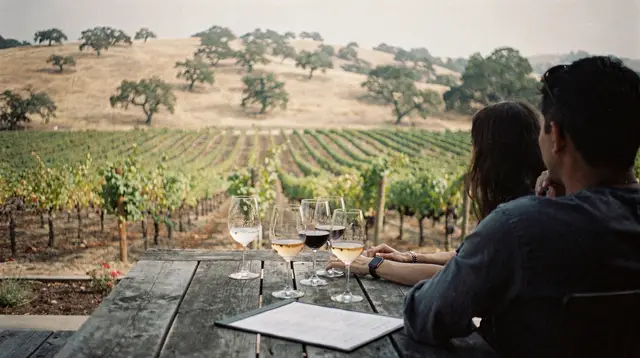
A lot of visitors picture wine country as a casual drive-and-drop-in afternoon: park outside a tasting room, walk in, sit at the bar, taste a flight, move on to the next place. That version of Napa Valley and Sonoma largely disappeared over the last decade. Today, most sit-down tastings — the kind with a host walking you through a flight, a table by the vines, or a food pairing — are booked in advance, and showing up unannounced is one of the more common and entirely avoidable mistakes visitors make on a day trip from San Francisco.
This matters because a reservation isn’t just a courtesy. Many tasting rooms, particularly in Napa, are staffed and poured to a booked headcount. Arrive without a reservation on a busy Saturday and you may simply be told there’s no room, no matter how empty the parking lot looks from the road.
Which wineries actually require a reservation
There’s no single rule that covers every property, but a few patterns hold consistently across both valleys:
- Most mid-size and large Napa wineries require reservations for any seated or guided tasting. This includes almost every winery with a dedicated hospitality program, a reservation link on its homepage, or a name visitors are likely to recognize.
- Standing-room or bar tastings are sometimes walk-in friendly, even at wineries that require reservations for seated experiences. It’s common for a winery to reserve its patio or library room for booked guests while still pouring a shorter flight at the bar for walk-ins, space permitting.
- A handful of smaller, family-run Sonoma wineries — especially along back roads off Highway 12 and in the Russian River Valley — still take walk-ins on weekdays. This is the closest thing left to the old drop-in model, and it’s largely a Sonoma phenomenon rather than a Napa one.
- Weekends, holidays and harvest season change the picture everywhere. A winery that’s relaxed about walk-ins on a Tuesday in March may be fully booked on a Saturday in October.
The only reliable way to know before you go is to check the specific winery’s own website or call ahead — a “walk-ins welcome” policy from a friend’s visit two years ago, or from a blog post, isn’t something to build a day around.
How far ahead to book, realistically
| Season / day | Napa Valley | Sonoma County |
|---|---|---|
| Weekday, low season (Nov-Mar) | A few days ahead | Often same-week, sometimes walk-in |
| Weekend, low season | 1-2 weeks ahead | A few days to a week ahead |
| Weekday, peak season (Jun-Oct) | 1-2 weeks ahead | A few days to a week ahead |
| Weekend, peak season | 2-4 weeks ahead | 1-2 weeks ahead |
| Harvest weekends (Sep-Oct) | 3-4+ weeks ahead for popular names | 1-3 weeks ahead |
These are general planning windows, not guarantees — a handful of the most sought-after Napa estates release booking calendars weeks or months out and can sell through a Saturday slot almost immediately. If a specific winery is the whole reason for the trip, book it first and build the rest of the day around that confirmed time.
Napa versus Sonoma: two different reservation cultures
Napa Valley built its modern hospitality model around scheduled, hosted experiences — often a fixed seating time, a set flight, and sometimes food. That structure is part of why reservations are close to mandatory there: the whole visit is designed around a booked slot, not a bar you can lean on. It also explains the higher average price; Napa’s average tasting fee runs around $79 per person as of the 2025-2026 season, with standard tastings commonly $35-75 and premium or reserve experiences reaching $75-200 or more.
Sonoma County, spread across several distinct sub-regions (Sonoma Valley, Russian River Valley, Dry Creek Valley, Alexander Valley), has kept more of a mixed model — some estates run Napa-style booked experiences, while smaller producers still pour at a walk-up bar. Sonoma’s tastings also tend to run cheaper, averaging roughly $47 for a standard tasting and around $95 for a reserve tasting.
Because the two valleys sit on opposite sides of a mountain range with no direct fast road connecting them, most visitors pick one per day rather than trying to combine both — see the comparison in Napa vs Sonoma: which to visit if the choice isn’t obvious. A multi-day wine country itinerary is the more realistic way to see both properly.
Booking a full day without the guesswork
Individually researching and calling three or four wineries — checking each one’s own reservation policy, comparing tasting fees, and coordinating time windows that don’t overlap — is the main reason people find wine country planning tedious. Two approaches simplify that:
Pre-arranged tours that bundle wineries and reservations together. A guided day gets the reservation problem solved before the day starts, and adds a driver who isn’t tasting. A small-group Sonoma Valley winery tour with a picnic lunch built into the day is a straightforward version of this, with stops and reservations already arranged. For a lower-key, sit-back option that still covers multiple tasting rooms, a Sonoma wine trolley tour combining several tastings with lunch removes the need to drive or park between stops. Visitors who’d rather move between vineyards outdoors, at a slower pace than a van or trolley, can look at a small-group Sonoma wine ride that gets you between tasting rooms without a car.
Tasting passes that bundle several pre-arranged tastings under one purchase. These are worth considering for independent travelers who still want to choose their own pace: a Sonoma County tasting pass letting you pick one, two, or several participating wineries over a flexible window removes some of the back-and-forth of contacting each winery separately, though it still requires selecting participating estates and, in many cases, booking specific time slots ahead of arrival — see wine tasting reservations for tasting passes specifically if a pass is the direction you’re leaning.
For a Napa-specific version of the same idea, a chauffeured day removes both the driving and the reservation-juggling: a private six-hour Napa Valley wine tasting tour with a chauffeur handling the driving between wineries works well for a group that wants a flexible, pre-planned day without anyone behind the wheel.
More on comparing these formats — guided tours, chauffeured cars, rideshare, and self-driving — is in wine country tour transportation options.
Beyond the tasting room
Reservations aren’t limited to sit-down flights. A growing number of wine country experiences bundle tasting with an activity, and those tend to book out even faster because capacity is smaller. A Calistoga Segway tour pairing food stops with wine tastings along the way is a good example — the group size per departure is limited, so weekend slots in peak season can fill days ahead of a standard tasting-room booking.
If aerial views are more the goal than the tasting itself, that’s a separate booking track entirely, worth planning around sunrise timing and weather rather than winery hours — see the destination pages for Napa Valley and things to do in things to do in Napa Valley and things to do in Sonoma for the fuller range of options beyond tasting rooms.
Planning the logistics around the tasting
Getting the reservations booked solves only part of the day. The bigger planning question is usually transportation and pacing:
- Driving time from San Francisco. Both valleys are roughly 1-1.5 hours by car with no direct train connection, so the drive itself needs to be built into the schedule — see driving to Napa Valley from San Francisco for route and timing detail.
- Realistic pacing. Two to three wineries per day, with 60-90 minutes at each plus drive time between them, is the workable ceiling for most visitors — trying to squeeze in a fourth or fifth stop is one of the fastest ways to arrive late to a booked reservation.
- The drive back. Tastings are alcoholic and paid, not a casual free stroll, and California’s legal blood alcohol limit for driving is 0.08%. A designated driver, a car service, or a guided tour (as above) is the realistic way to taste at more than one or two wineries without anyone driving impaired.
- A single-day itinerary that bakes this all in is outlined in Napa and Sonoma wine country weekend, which sequences stops, drive times and a return plan rather than leaving it to figure out on the day.
More detail on how tasting fees actually break down winery by winery is in Napa tasting fees explained.
Common booking mistakes to avoid
- Assuming a specific winery takes walk-ins because a general guide says “some wineries don’t require reservations.” That’s true in aggregate, not for any one property — always check that winery’s own site.
- Booking four or more wineries in one day. Between reservation windows, drive time and the tasting itself, most days realistically hold two to three stops.
- Not accounting for the drive back when planning tastings. A day built around visiting wineries needs a driver plan decided before the first pour, not after.
- Treating Napa and Sonoma as one combined day. The mountain range between them and the lack of a direct fast road make combining both a long, rushed day rather than a relaxed one.
- Booking a Saturday in September or October at the last minute. Harvest-season weekends are the tightest booking window of the year at popular Napa estates — a 2-4 week lead time is the realistic minimum, not the maximum.
Wine tasting reservations: frequently asked questions
Do all wineries in Napa and Sonoma require a reservation?
No, but most do for a proper sit-down or guided tasting. A few smaller, family-run Sonoma wineries and some tasting rooms along Highway 12 still accept walk-ins on weekdays, but treating any specific winery as walk-up without checking its website first is a common and avoidable mistake.
How far in advance should I book a Napa Valley tasting?
For popular Napa wineries, book 2-4 weeks ahead for a weekend visit in summer or during harvest (September-October), and at least a week ahead even on a weekday. Sonoma generally allows shorter notice, often just a few days, except at its best-known estates.
Is wine tasting free in Napa and Sonoma?
No. Standard tastings commonly run $35-75 per person, with premium or reserve experiences reaching $75-200 or more. Napa’s average tasting fee is around $79 as of the 2025-2026 season; Sonoma tends to run cheaper, averaging roughly $47 for standard tastings and $95 for reserve tastings.
How many wineries can you realistically visit in one day?
Two to three is realistic with a designated driver or car service, allowing 60-90 minutes per stop plus drive time. Trying to fit in four or more usually means rushing tastings, arriving late to reservations, or skipping the drive-back planning altogether.
Can you visit Napa and Sonoma in the same day?
It’s possible but not recommended. The two valleys are separated by a mountain range with no direct fast road between them, so most visitors treat Napa and Sonoma as separate day trips rather than combining both in one outing.
Who drives if everyone in the group wants to taste?
California’s legal blood alcohol limit for driving is 0.08%, so a designated non-tasting driver, a car service, or a guided or chauffeured wine-country tour is the practical way for a group to taste at more than one or two wineries without anyone driving impaired.
What happens if you show up without a reservation?
At many mid-size and large Napa wineries, you’ll likely be turned away or asked to wait for an opening, especially on weekends. At smaller Sonoma tasting rooms that still take walk-ins, you may get a spot at the bar, but availability isn’t guaranteed and groups are more likely to be refused than solo visitors or couples.
Are tasting passes a good alternative to booking individual wineries?
A multi-winery tasting pass can simplify planning by bundling several pre-arranged tastings into one purchase, which is useful for visitors who don’t want to research and book each winery separately, though it still requires choosing participating wineries and, often, selecting time windows in advance.
Napa Valley and Sonoma Wine Tours
Verified deep-linked GetYourGuide tours. Book through these links and we earn a small commission at no cost to you.
GetYourGuide does not provide a product photo for this activity — the image shows the meeting point, photographed by us.