How Many Days Do You Need in San Francisco?
How many days should I spend in San Francisco?
Two full days cover the city's essentials at a rushed pace; three to four days lets you see the city properly and add one day trip; a week or more allows a relaxed city visit plus Wine Country, the coast, and even an overnight near Yosemite. Plan around fixed-time bookings like Alcatraz first, since they anchor everything else.
What trip length actually buys you in San Francisco
The honest answer to “how many days do I need in San Francisco” depends less on a fixed checklist and more on what you’re willing to give up. San Francisco itself is compact — a handful of hilly square miles — but a real visit almost always spills outward into Marin, Wine Country, the coast, or the Sierra Nevada, and each of those additions costs at least a full day, not an afternoon. The table below is a starting frame; the sections after it explain the trade-offs behind each length.
| Trip length | What’s realistic | What to skip |
|---|---|---|
| 2 days | City highlights only, rushed pace | Any day trip, most neighborhoods |
| 3 days | City properly, or city + 1 short day trip | Wine Country, the coast, Yosemite |
| 4-5 days | City in full + 1-2 day trips | Long trips like Yosemite or Big Sur |
| 6-7 days | City + Wine Country + coast, or + one overnight trip | Combining Yosemite and Big Sur |
| 8+ days | City + multiple day trips + an overnight excursion | Rushing any single stop |
Two days: the rushed version
Two full days is workable if San Francisco is a stopover rather than the main event of the trip — a layover before or after a longer West Coast itinerary, for example. It’s enough time to see Alcatraz, walk or ride a cable car through Fisherman’s Wharf, cross or view the Golden Gate Bridge, and spend a few hours in Chinatown or the Mission District. It is not enough time for a day trip outside the city, and it forces real choices — you’ll likely see either Golden Gate Park or a proper walk through North Beach and the Mission, not both in depth.
The single most important move for a two-day trip is booking Alcatraz before anything else, since ferry and Cellhouse tickets are sold only through Alcatraz City Cruises and sell out weeks in advance in busy seasons. Everything else in a short visit gets built around that time slot. Our one-day San Francisco itinerary and two-day highlights itinerary lay out hour-by-hour versions of this pace, and the San Francisco attraction tickets guide explains which passes are worth buying for a short, sight-dense visit.
A city tour that covers the major landmarks in one guided loop is a practical way to compress the highlights when time is genuinely tight — a guided city tour can cover downtown, the bridge, and the waterfront in a few hours instead of a full day of self-navigating.
Three days: enough to do the city justice
Three days is the point where San Francisco stops feeling rushed. It allows one day for downtown, the Embarcadero, and the waterfront (including Alcatraz); one day for Golden Gate Park, the Presidio, and the bridge; and a third day for either a deeper neighborhood walk — Haight-Ashbury, the Mission, Castro, Nob Hill and Russian Hill — or a single short day trip. Sausalito and Muir Woods, reached in 20-45 minutes by car or ferry across the Golden Gate Bridge, is the most efficient add-on at this length, since it doesn’t eat a full extra day the way Wine Country or the coast does.
Three days is not enough to add Wine Country and see the city properly in the same trip — fitting in a Napa or Sonoma day usually means giving up one of the two city days, which is a real trade-off rather than a free addition. See our three-day San Francisco itinerary for a version built around this balance, and the self-guided walking tour of San Francisco for a neighborhood-day framework that doesn’t require booking anything in advance.
Four to five days: the city plus one or two day trips
At four to five days, day trips stop being a compromise and start being a genuine addition. This is the length where a Wine Country day (Napa or Sonoma — not both, since the two valleys are separated by a mountain range and are usually visited as distinct outings) or a coastal day down to Santa Cruz or Monterey and Carmel fits comfortably alongside two to three days in the city itself.
A useful rule at this length: pick one day trip, not two, unless you’re willing to spend an entire day almost purely in transit. Our four-day San Francisco and Wine Country itinerary and five-day San Francisco and Central Coast itinerary each build around a single well-chosen addition rather than trying to stack several. For the wine day specifically, the Napa Valley day trip guide covers timing and transportation, since tastings are paid, often reservation-only, and not something to combine with self-driving — a guided option like the day tour to Wine Country solves the driver problem for a single day out.
If Yosemite is a priority and the trip is on the shorter end, a structured two-day version — one night near the park — fits into a five-day trip more comfortably than trying to squeeze the whole thing into the four-to-five-day window as a day trip; a packaged two-day Yosemite tour handles the long drive and lodging logistics as a single booking.
A week or more: the relaxed version
A week is where San Francisco trips stop feeling like a list to clear. Three to four days in the city allows time for slower exploration — Golden Gate Park at an unhurried pace, a proper walk through North Beach and Chinatown, an afternoon in the Mission and Castro — plus a full day each for Wine Country and a coastal day trip (Santa Cruz, or Monterey and Carmel), without every day being scheduled to the hour.
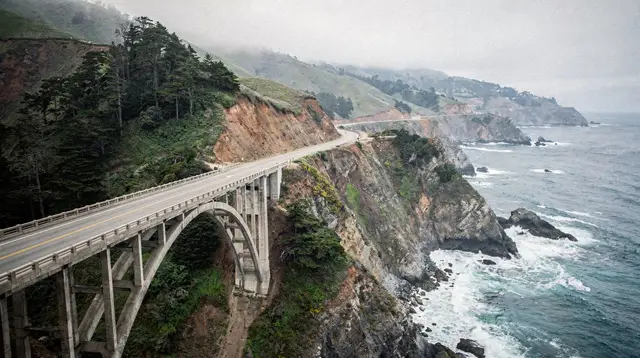
A week is also the minimum length at which an overnight trip to Yosemite or a longer coastal drive toward Big Sur becomes realistic without turning the whole visit into a driving marathon. Yosemite is 3.5 to 4.5 hours each way — a round trip is 7 to 9 hours of driving alone, which is why an overnight near the park, not a day trip, is the only version worth doing. Big Sur beyond Bixby Bridge and McWay Falls works the same way: a one-way drive-through with a night in Big Sur or Cambria, rather than a round trip squeezed into a single day. Our seven-day San Francisco, Yosemite, and Tahoe itinerary and Highway 1 coastal road trip are both built around this one-way logic rather than there-and-back day trips. The Yosemite from San Francisco planning guide walks through exactly how to structure the overnight version.
At eight or more days, it becomes possible to add a second overnight excursion — Lake Tahoe alongside Yosemite, for example — without any single day becoming an all-driving day. At this length, a multi-day sightseeing pass covering the city’s paid attractions can be worth the upfront cost, since it spreads across enough visits to pay for itself; the San Francisco 9-Day CityPASS bundles several major sights, and a multi-day CityPASS is worth comparing against buying individual tickets if you’re covering Alcatraz, the aquarium, and a bay cruise across a longer stay.
Matching trip length to what you actually want to do
Trip length should follow priorities, not the other way around. A few common cases:
- First-time visitor wanting the classics: three to four days covers Alcatraz, the bridge, the waterfront, and one or two neighborhoods without feeling rushed. See the first-time visitor itinerary.
- No interest in renting a car: the city itself doesn’t need one — Muni, BART, cable cars, and ferries cover the main sights, and even Sausalito and Marin are reachable by ferry. The car-free San Francisco itinerary is built entirely around transit and ferries. A car only becomes useful once Wine Country, the Peninsula, or the coast enters the plan.
- Wine Country is the priority: build the trip around at least four days so a full day trip to Napa or Sonoma doesn’t cut into city time, and budget for tasting fees, which in 2026 average around $79 in Napa and somewhat less in Sonoma.
- Yosemite or Big Sur is the priority: plan for a week or more with at least one overnight outside the city. Treating either as a rushed day trip from San Francisco is the single most common planning mistake covered in the Yosemite day trip reality check.
- Traveling with a flexible but limited budget: shorter, city-only trips of two to three days keep costs down since they avoid the extra lodging night and rental car that a day trip or overnight excursion adds; the San Francisco trip budget guide breaks down daily costs at different trip lengths.
Whatever the length, sequencing matters more than most visitors expect. Book Alcatraz first — tickets release 90 days out and sell out for weeks at a time — then build city days around that fixed slot, and only after that decide which single day trip, if any, fits the remaining time. For a broader guided option that adapts to a group’s specific interests rather than a fixed script, a private tour of the city can also compress sightseeing into fewer hours by skipping the parts a self-guided visit would otherwise spend time finding.
FAQ: how many days to spend in San Francisco
Is two days enough for San Francisco?
Two full days is enough to cover a tight version of the highlights — Alcatraz, the Golden Gate Bridge, Fisherman’s Wharf, and one or two neighborhoods — but it means picking, not lingering, and leaves no room for a day trip outside the city.
How many days do I need for San Francisco and one day trip?
Plan on four days minimum: two to three for the city itself, plus one full day for a single destination like Napa, Sausalito and Muir Woods, or Monterey and Carmel. Trying to fit a day trip into a two-day city visit usually means shortchanging both.
Can I do San Francisco and Yosemite in one trip?
Yes, but not as a day trip. Yosemite is roughly 3.5 to 4.5 hours each way, so a round trip from San Francisco eats 7 to 9 hours of driving alone. A week-long itinerary that includes at least one overnight near the park works far better than trying to squeeze it into a city-based schedule.
Is one week enough to see San Francisco properly?
A week is a comfortable amount of time: three to four days for the city, one day for Wine Country (Napa or Sonoma, not both), and two to three days for either the coast down Highway 1 or an overnight trip to Yosemite or Lake Tahoe.
What should I prioritize if I only have three days?
Book Alcatraz first, since tickets sell out weeks ahead and everything else can be built around that time slot. Spend one day on downtown and the waterfront, one day on Golden Gate Park, the Presidio, and the bridge, and reserve the third day for either a Mission/Castro/Haight-Ashbury neighborhood day or a single day trip like Sausalito and Muir Woods.
Do I need a car for a short San Francisco trip?
No — for two to four days inside the city itself, Muni, BART, cable cars, and ferries cover the main sights better than a car, which faces scarce and expensive parking. A car only earns its keep once you add day trips to Wine Country, the Peninsula, or the coast.
How much does trip length change the budget?
Each added day brings another night’s lodging plus meals and transport, but per-day costs often drop on longer trips once a multi-day pass (like a CityPASS or Explorer Pass) or a rental car for day trips starts spreading its cost across more use.
Trip Planning
Verified deep-linked GetYourGuide tours. Book through these links and we earn a small commission at no cost to you.
GetYourGuide does not provide a product photo for this activity — the image shows the meeting point, photographed by us.