The Best Time to Visit San Francisco (It's Not Summer)
When is the best time to visit San Francisco?
September and October are San Francisco's warmest, sunniest, and most reliable months, because the summer fog belt has retreated by then. July and August, by contrast, are the city's coolest and greyest stretch, with highs often in the 60s Fahrenheit.
I packed for summer and froze. Here’s what I’d tell my past self.
The first time I planned a trip to San Francisco, I did what most people do: I looked at a calendar, saw “July,” and packed like I was headed to a beach town. I brought exactly one light jacket, for evenings. By day two I’d bought a hoodie off a rack near Fisherman’s Wharf because the wind off the bay near the Golden Gate Bridge was cutting straight through me at two in the afternoon. That trip is the reason this guide exists.
San Francisco doesn’t run on the calendar most visitors bring with them. Its coldest, foggiest, greyest months are July and August — the exact weeks everyone assumes are “summer.” Its best weather, by almost every measure that matters for a trip, shows up in September and October instead. Locals call this stretch the city’s second summer, and once you understand why, the whole question of when to visit stops being a guess and starts being a set of trade-offs you can actually weigh.
Why summer is backwards here
The culprit has a name: Karl the Fog. It’s the marine layer that rolls in over the ocean and gets pulled across the city through gaps like the Golden Gate, and it’s thickest exactly when the rest of California is baking, because that inland heat is what pulls the cool marine air in. Daytime highs in the fog belt regularly sit around 60-66°F (15-19°C) in June, July and August, and it’s noticeably colder and windier right at the coast — Ocean Beach, the Sunset and Richmond districts — than it is a couple of miles inland. I’ve stood at Ocean Beach in a jacket while friends texted me from the Mission wearing t-shirts, on the same afternoon. That split isn’t unusual; it’s the norm. The Mission and Noe Valley sit in a rain shadow created by the city’s hills, so they run several degrees warmer and sunnier than the coastal neighborhoods on almost any given day, summer or not.
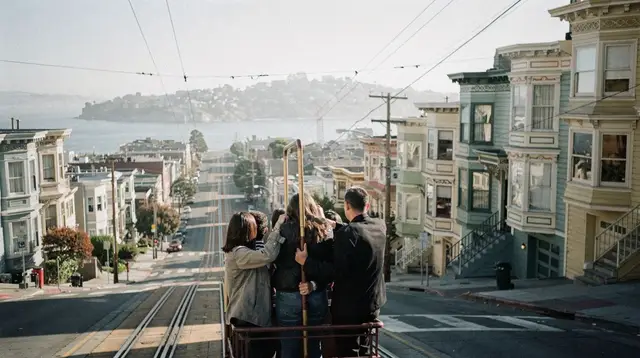
By September, the fog retreats. October holds that pattern, often with the clearest, warmest days of the whole year. If a crisp photo of the full Golden Gate Bridge with no fog on the towers is on your list, autumn gives you far better odds than a July morning does.
Month by month, the honest version
January-March is San Francisco’s rainy season, but it’s a mild one — this isn’t a city that shuts down for winter. Days run cool, in the 50s-low 60s°F, with real but not constant rain. What you get in return: thin crowds, lower hotel rates, and functioning museums and restaurants without the lines. It’s also the shoulder season for Lake Tahoe snow, so a Tahoe day mixed with a rainy SF stretch isn’t a bad pairing if skiing is part of the trip.
April-May is when I’d send anyone chasing waterfalls. This is peak snowmelt season, which matters if Yosemite is anywhere on your route — Yosemite Falls and Bridalveil Fall run at their fullest roughly April through June and can slow to a trickle by late summer. In the city itself, spring is mild and increasingly sunny, without yet being fogged in the way summer will be.
June-August is the trade-off month that surprises people. You get long daylight, school-holiday energy, and the widest set of tours and activities running at full schedule. You also get the coolest, greyest weather of the year in the city proper, plus the thickest crowds and highest prices at marquee stops like Alcatraz and the cable car lines. If summer is the only window your schedule allows, it’s still a completely workable trip — just pack like it’s autumn, not like it’s a beach vacation, and read up on how the fog actually behaves before you plan outdoor days around it.
September-October is the one I’d point most people toward. Warm, sunny, fog-free days are the best-documented pattern of the year here, crowds have thinned from the summer peak, and it overlaps with Wine Country’s harvest season, when Napa Valley and Sonoma are visually at their best and tasting rooms are busiest with the year’s crush. It’s genuinely my favorite window, and not because it’s a secret — locals plan around it too.
November sits between the two nicer seasons: still often clear and mild, with rain starting to build back in by late month. It’s a reasonable quiet-season pick if October is booked out.
December brings the rain back in earnest and the shortest days of the year, offset by holiday lights and a noticeably slower, cheaper city. Whale watching season also opens around now on the coast, running into spring — worth checking if that’s on your list.
What I’d actually plan around
If your dates are flexible, late September through October gives you the best odds of warm, clear days with manageable crowds — I’d treat it as the default answer, not just one good option among several. If you’re locked into summer, that’s still a real, enjoyable trip; you just need to know what you’re walking into and pack layers you won’t need to buy locally. If you’re chasing snow or spring wildflowers and waterfalls, the calendar for Yosemite and Lake Tahoe runs on its own logic, mostly disconnected from what the city itself is doing.
Whatever window you land on, I’d build in at least one full day with no fixed plan. A one-day itinerary is a good skeleton, but San Francisco’s weather can flip a plan in an hour — fog burning off by noon, or rolling back in by four — and the trips that felt best to me were the ones where I could shift a coastal walk to an afternoon and a hillside neighborhood to the foggy morning instead of fighting the day I’d already booked.
For the practical basics — passport rules, budgeting, what to pack for whichever month you land in — the best-time planning tool is worth a few minutes before you lock in dates.
I still use a few paid extras to smooth out a trip regardless of season. A multi-attraction pass covering three of the city’s top sights is an easy way to skip separate ticket lines, and if Alcatraz is on the list — it should be — I’d book a ferry crossing paired with a bay cruise rather than the ferry alone, since the two together make better use of a single morning. On a clear autumn afternoon, I’ve also had good luck with a guided wine tasting session with a local sommelière in Berkeley as an easy East Bay add-on that doesn’t require a full Wine Country day.
Best time to visit San Francisco: frequently asked questions
Is summer really the worst time to visit San Francisco?
Not the worst, but it is the coolest and foggiest season in the city itself, which surprises visitors expecting a warm California summer. It’s still a fully workable trip if you pack layers and plan around the fog, especially inland neighborhoods like the Mission.
Why are September and October considered San Francisco’s best months?
Because the summer marine layer (Karl the Fog) retreats by early autumn, leaving warmer, sunnier, more consistent days than June through August typically offer. Locals often call this stretch the city’s “second summer.”
Do I need a jacket in San Francisco even in summer?
Yes. Daytime highs in the fog belt commonly run 60-66°F (15-19°C) in midsummer, and it’s colder and windier right along the coast than a few miles inland, so a layered jacket is worth packing year-round.
When is the best time to see the Golden Gate Bridge without fog?
September and October give you the best documented odds of clear views of the full span. Summer mornings, especially, frequently have fog obscuring the towers or the whole bridge.
Is there a rainy season in San Francisco?
Yes, roughly November through March, though it’s a mild rainy season rather than a washout — the city keeps functioning normally, and lower crowds and rates are the trade-off.
When should I visit if I want to combine San Francisco with Wine Country?
September and October overlap with harvest season in Napa and Sonoma, when the vineyards look their best and tasting rooms are at their busiest, making it a strong pairing with San Francisco’s own best-weather window.
Is winter a bad time to visit San Francisco?
Not necessarily — it’s cool and rainy but rarely severe, with the year’s thinnest crowds and lowest prices, and it lines up well with a Lake Tahoe ski trip if that’s part of your plans.
Does the weather differ by neighborhood on the same day?
Yes, significantly. Hill-sheltered neighborhoods like the Mission and Noe Valley are routinely several degrees warmer and sunnier than fog-prone areas like Ocean Beach or the Sunset and Richmond districts, even on the same afternoon.
tours.Seasons
Verified deep-linked GetYourGuide tours. Book through these links and we earn a small commission at no cost to you.
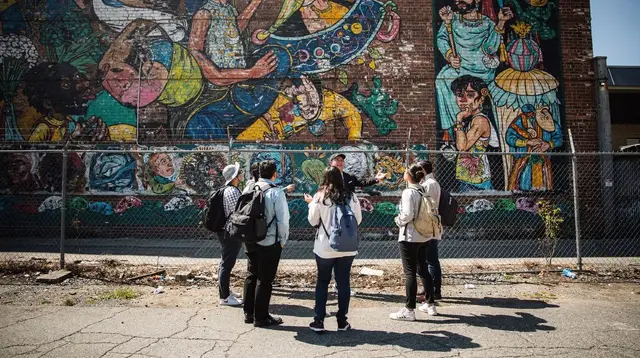
GetYourGuide does not provide a product photo for this activity — the image shows the meeting point, photographed by us.