San Francisco Haunted History Tour Guide
What is a San Francisco ghost tour actually like?
It's a 1.5-2.5 hour guided walk (occasionally with a bus or cable car segment) through older neighborhoods like North Beach, Chinatown, Nob Hill and the Tenderloin, mixing documented local history with ghost lore, unsolved crimes and disasters such as the 1906 earthquake and fire. Tours run most evenings year-round, cost roughly $30-55 per adult, and require no special fitness beyond a couple of miles of walking on hills.
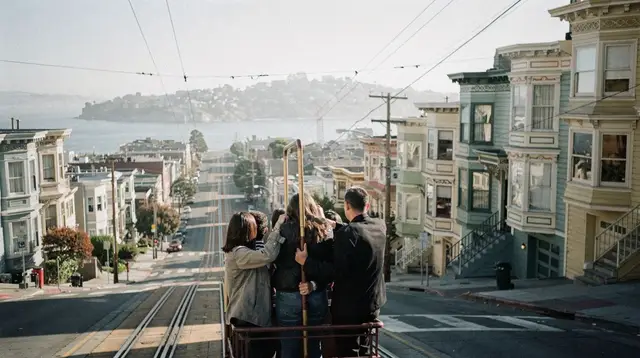
San Francisco’s fog, steep hills and dense 19th-century history make it an unusually good setting for a ghost tour — not because the city trades in cheap scares, but because so much of its older core genuinely survived earthquake, fire and a century and a half of hard use. A guided haunted-history walk is really a night-time history tour with the ghost stories layered on top, and it works especially well in a city where the daytime sights (Fisherman’s Wharf, Union Square, the cable cars) tell only the postcard version.
Why San Francisco works for a ghost tour
Few American cities pack as much documented disaster and vice into so small a footprint. The 1906 earthquake and fire destroyed more than 80% of the city and killed an estimated 3,000 people, many of whose bodies were never formally accounted for. Before that, the Gold Rush decades filled North Beach, the Barbary Coast and Chinatown with saloons, opium dens, brothels and violent crime at a scale that 19th-century San Francisco never fully documented. Add Chinatown’s tong wars, Nob Hill’s robber-baron mansions (several burned in 1906, rebuilt on the same lots), and a downtown core where the same street grid has hosted 170 years of continuous use, and guides have genuine material to work with — not invented backstory.
Because the oldest, densest neighborhoods sit close together on foot — North Beach, Chinatown, Nob Hill, the Tenderloin and downtown are all walkable from one another — a single evening route can move through several distinct historical layers without a vehicle.
What a typical ghost tour covers
Most guided ghost and haunted-history walks in San Francisco run 1.5 to 2.5 hours and combine three ingredients: documented local history, unsolved or notorious crimes, and ghost lore attached to specific buildings or corners. Expect stops outside (rarely inside) historic hotels, former brothels, old theaters, and sites tied to the 1906 disaster. Guides typically work from a fixed script built around verified dates and newspaper accounts, then add the folklore that’s grown up around a location over decades.
| Tour style | Typical focus | Typical length |
|---|---|---|
| Haunted history walk | General ghost lore + neighborhood history | 1.5-2 hours |
| Ghost true crime tour | Real unsolved or notorious crimes | 2-2.5 hours |
| “Gold and Ghouls” style tour | Gold Rush-era history + hauntings | 1.5-2 hours |
| App-guided cable car tour | Self-paced, narrated stops via app | Flexible, self-timed |
For a route that leans into the city’s most infamous unsolved cases and darker history rather than general ghost stories, a true-crime-focused evening walk covers different ground than a standard haunted-history tour, with more time spent on specific cases and less on general folklore.
North Beach and the old Barbary Coast
North Beach sits on what was once the Barbary Coast, San Francisco’s 19th-century red-light and saloon district, notorious enough in its day to give the term “Barbary Coast” its lasting association with lawlessness. Ghost tours through this area typically stop near old saloon sites, alleys once lined with gambling dens, and buildings that survived 1906 with their facades intact. It’s also the neighborhood most associated with the city’s Beat-era history a century later, so a good guide often threads both eras together. For daytime context on the same streets, the North Beach walking tour guide covers the neighborhood’s layout and landmarks without the ghost-story framing.
Chinatown after dark
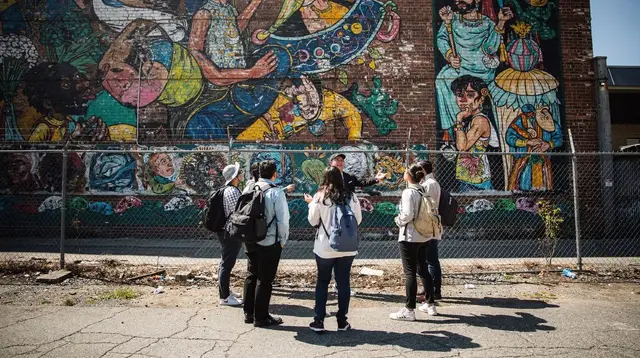
San Francisco’s Chinatown is the oldest in North America, and its 19th- and early 20th-century history includes tong conflicts, cramped tenement conditions, and discriminatory laws that shaped daily life for generations of residents. Evening tours here tend to focus on specific alleys — Waverly Place and Ross Alley are common stops — where guides describe documented tong violence alongside the neighborhood’s ghost lore. A Chinatown walking tour guide covers the daytime version of these same streets, useful for comparing what a route looks like with and without the after-dark framing. Travelers who’d rather combine both — history and a guide’s local context, day or night — can book a guided walk through Chinatown’s historic alleys and markets as a daytime complement to an evening ghost route.
Nob Hill’s mansions and the 1906 fire
Nob Hill was San Francisco’s most exclusive address before 1906, lined with the mansions of railroad and mining fortunes. Nearly all of them burned in the fire that followed the earthquake; a handful of building shells and retaining walls survived and were rebuilt around. Ghost tours through Nob Hill usually pair this history with stories tied to the grand hotels that replaced the mansions, several of which date to the immediate post-1906 rebuilding period.
The Tenderloin and downtown
The Tenderloin’s name and reputation as a vice district predate 1906 and persisted through Prohibition, when speakeasies and gambling operated openly enough to be common local knowledge. Some tours route through the edge of downtown here, pointing out theaters and hotels with documented histories of violent or unexplained deaths. This is generally the part of a route where a “ghost true crime” format spends more time than a general haunted-history walk.
Choosing between tour formats
A general haunted-history walking tour is the broadest option and the one most suited to a first visit or a mixed group, since it balances history, folklore and a few genuine scares without leaning too hard into graphic crime detail. Travelers more interested in the Gold Rush era specifically — saloons, vigilante justice, and the lawlessness of 1850s San Francisco — are better served by a Gold Rush-themed ghost tour that frames the hauntings around that specific period rather than the city’s history as a whole.
For a self-paced alternative that doesn’t require matching a fixed start time, an app-guided cable car tour lets visitors narrate their own route through the city’s historic core, though it’s a general sightseeing format rather than a dedicated ghost tour, so expect less lore and more straightforward history.
Practical planning
Most ghost tours depart in the early evening, after sunset but before it gets too late for a family-friendly group, and run most nights of the week year-round. October, and especially the week leading up to Halloween, is by far the busiest period — book several days ahead if visiting then, whereas a day or two of notice is usually enough the rest of the year.
Dress for San Francisco’s evening chill regardless of season; the city’s famous fog and cool nights mean a warm layer is useful even in July and August, not just winter. Routes cover roughly one to two miles on foot over some of the city’s hillier streets, so comfortable shoes matter more than any particular fitness level. Tours generally proceed rain or shine, with cancellations only for safety reasons, and most operators offer a full refund or free rescheduling with adequate notice — check the specific operator’s policy when booking.
Pricing for 2026 typically runs in the $30-55 per adult range for a standard 1.5-2.5 hour walking tour, with true-crime or specialty formats sometimes priced at the higher end given their longer runtime. As with any evening activity in San Francisco, dinner beforehand in North Beach or Chinatown pairs naturally with a route that starts nearby — see the San Francisco nightlife guide for options beyond the tour itself.
Who a ghost tour suits, and who it doesn’t
A general haunted-history format works well for a mixed group — couples, friends, older kids and teens — because it balances real history with folklore rather than dwelling on graphic detail. True-crime-focused formats are a different proposition: they spend more of the route on documented murders and unsolved cases, which most operators pitch at adults rather than families. If travelling with younger children, the San Francisco with kids guide is a better starting point for evening options than a true-crime route.
Mobility is worth thinking about separately from age. These are walking tours over roughly one to two miles of some of the city’s hillier terrain — North Beach, Nob Hill and parts of Chinatown all involve real gradient, not flat sidewalks. Anyone who needs a route with less walking, or wants to confirm what’s realistic before booking, should check the wheelchair-accessible San Francisco guide against the specific operator’s route before committing, since accessibility varies by tour and isn’t guaranteed on a hill-heavy evening walk. The self-paced, app-guided cable car format is the one exception worth considering here, since it doesn’t require matching a fixed walking pace with a group.
Getting to the meeting point
Most ghost tours meet somewhere within or near North Beach, Chinatown or downtown, all of which sit close enough together that getting to the start is rarely the hard part of the evening. Visitors staying elsewhere in the city can use Muni or a short cab ride; the getting around San Francisco guide and the BART vs Muni guide cover the practical differences between the city’s transit options for anyone unfamiliar with the system. Because tours run in the evening after most daytime sightseeing wraps up, arriving by transit avoids the added hassle of finding evening parking downtown or in North Beach, where street parking is limited even outside peak hours.
Timing a ghost tour around the rest of a trip
Ghost tours run year-round, but the atmosphere — and the crowds — shift with the season. October, and Halloween week specifically, is the busiest and most atmospheric stretch, when fog, shorter daylight and the calendar all line up with the subject matter; anyone visiting then should book earlier than the usual day-or-two window given how quickly weekend departures fill. Visitors planning an autumn trip more broadly can cross-reference the San Francisco fall visitor guide for what else the season brings. Outside October, the tours themselves don’t change format, but evenings are quieter and easier to book on short notice, which suits travelers slotting a ghost tour in as a late addition to an already-planned day rather than a centerpiece booked far ahead.
Combining a ghost tour with the rest of a San Francisco visit
A ghost tour is an evening activity, which makes it easy to combine with a full day of sightseeing rather than competing for time with it. Many visitors pair it with a daytime visit to Alcatraz, whose own dark history — a federal prison for some of the country’s most notorious inmates — gets its own dedicated treatment in the Alcatraz ghost tour guide rather than the mainland walking routes covered here. Others use it as the evening anchor for a first full day in the city, alongside a daytime walk through Fisherman’s Wharf or Golden Gate Park.
For visitors building out a broader itinerary, the self-guided walking tour of San Francisco and the San Francisco neighborhoods guide both help place North Beach, Chinatown, Nob Hill and the Tenderloin in context relative to the rest of the city, useful background before or after an evening ghost walk. Those planning several evenings out should also check the San Francisco haunted history route against the city’s broader nightlife guide and the Fisherman’s Wharf evening entertainment guide for what else runs after dark nearby.
Travelers weighing whether a guided format is worth it versus exploring solo can compare against the hop-on-hop-off vs walking tour comparison, though for ghost-specific content a local guide’s narration is difficult to replace with a self-guided app in the same way it can be for daytime sightseeing. Finally, anyone building a full trip around San Francisco’s history and food should see the North Beach food tour guide and the Chinatown food tour guide for daytime pairings in the same neighborhoods a ghost tour covers after dark.
San Francisco ghost tours: frequently asked questions
Is a San Francisco ghost tour suitable for kids?
Most operators pitch a general-audience haunted-history tour as fine for older kids and teens, but true-crime-focused tours lean into real murders and are better suited to adults. Check the specific tour’s description before booking for a family with younger children.
How long do ghost tours in San Francisco last?
Most walking-based ghost and haunted-history tours run 1.5 to 2.5 hours, covering roughly 1-2 miles on foot through hilly streets. A handful of specialty formats, like an app-guided cable car tour, run shorter or on a different schedule.
Do I need to book in advance?
Booking a day or two ahead is enough for most evening ghost tours outside major holidays, but Halloween week and Friday/Saturday nights in October sell out fastest, so reserve earlier if visiting then.
Are San Francisco ghost tours based on real history?
Reputable operators build their routes around documented events — the 1906 earthquake and fire, Gold Rush-era violence, Chinatown’s tong wars, and unsolved historic crimes — then add local ghost lore and folklore on top. Expect a mix of verifiable history and storytelling, not a purely factual lecture.
What should I wear and bring?
Comfortable walking shoes for hills and uneven sidewalks, and a warm layer — San Francisco evenings are cool and often foggy even in summer. Most tours proceed rain or shine unless the operator cancels for safety.
Which neighborhoods do ghost tours usually cover?
North Beach, Chinatown, Nob Hill, the Tenderloin and parts of downtown are the most common routes, since these are among San Francisco’s oldest, densest districts and carry the deepest layer of 19th- and early 20th-century history.
Is a ghost tour a good option if I only have one evening in San Francisco?
Yes — most routes double as an efficient introduction to several historic neighborhoods on foot, so it works well as an evening activity alongside a daytime sightseeing plan rather than competing with it.
Ghost Tours and Haunted Walks
Verified deep-linked GetYourGuide tours. Book through these links and we earn a small commission at no cost to you.
GetYourGuide does not provide a product photo for this activity — the image shows the meeting point, photographed by us.