Wheelchair-Accessible San Francisco: A Practical Guide
Is San Francisco wheelchair accessible?
Yes, in large part. Muni buses, BART and the ferries are all wheelchair accessible, and flat corridors like the Embarcadero, Fisherman's Wharf and Golden Gate Park connect major sights. The famous hills and the cable cars are the main exceptions, so route planning around grade matters more than in most cities.
What makes San Francisco hard, and what makes it easy
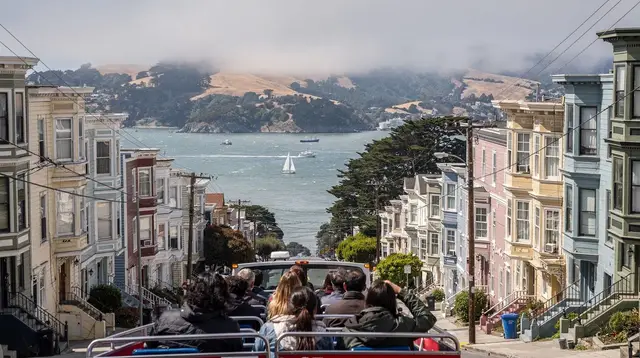
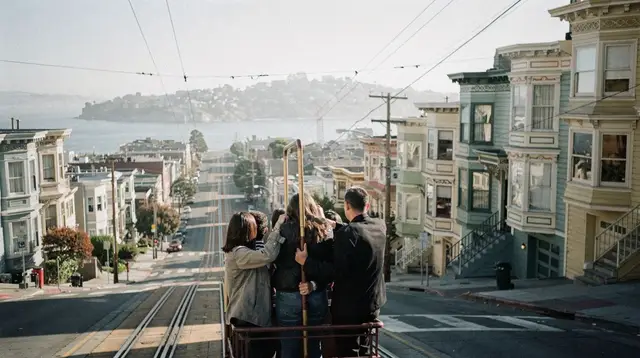
San Francisco’s reputation for hills is not exaggerated, and for a wheelchair user or anyone with limited mobility, that terrain is the single biggest variable in planning a visit — bigger than any single attraction’s own accessibility. The city sits on more than forty hills, and several of the most photographed neighborhoods (Nob Hill, Russian Hill, Telegraph Hill, upper Chinatown) sit on grades that are genuinely difficult or impossible to cross without motorized assistance. At the same time, large parts of San Francisco are flat or close to it: the Embarcadero waterfront, Fisherman’s Wharf and Pier 39, most of SoMa, the Marina, and long stretches of Golden Gate Park. A visit built around those flatter corridors, connected by accessible transit rather than long walks uphill, works far better than trying to follow a sightseeing route designed for someone who isn’t thinking about grade at all.
The good news is that the city’s public transit system was rebuilt over decades specifically to close this gap. Every BART station has an elevator, every Muni bus kneels and deploys a ramp, and the ferries that cross the bay are wheelchair accessible from dock to deck. The one significant exception, ironically, is the single most famous mode of transport in the city.
Getting around: transit is your best tool, not your enemy
BART is the most reliable accessible option for medium-to-long trips, including the direct line from SFO airport to downtown San Francisco. Every station on the network has an elevator (posted elevator outage notices are common, so it’s worth checking the BART website or app before a trip if a specific station matters), and platforms are level with the train floor, so boarding requires no ramp. A one-way Clipper fare from SFO to downtown is about $11.15 in 2026, roughly $22.30 for a round trip.
Muni — the city’s bus, streetcar and light-rail network — is the workhorse for shorter hops within San Francisco. Every Muni bus kneels at the curb and extends a ramp for wheelchair or scooter boarding, and the modern light-rail vehicles on the Muni Metro lines are accessible at station platforms with level boarding. The older F-line heritage streetcars, which run along Market Street and the Embarcadero, are a partial exception: some of the vintage cars have steps and limited accessibility, so it’s worth checking a specific vehicle before relying on that line. A single Muni ride with a Clipper card costs $2.85 and covers 120 minutes including transfers.
Cable cars are not wheelchair accessible. This is worth stating plainly because visitors often assume otherwise: boarding means stepping onto a running board or a bench seat, there is no ramp or lift, and the historic design cannot realistically be retrofitted. If a cable car ride is on a companion’s list rather than a requirement for the whole group, the good news is that Muni buses and streetcars run largely the same corridors — Powell Street to Fisherman’s Wharf, for instance — and get there faster besides.
Ferries departing the Embarcadero and Pier 41 for Sausalito, Tiburon, Angel Island and Oakland are wheelchair accessible, with level or ramped boarding at the terminals. This makes the ferry a genuinely good way to see the bay and reach Marin County without driving or dealing with Golden Gate Bridge parking. See the ferry routes guide for which crossings run which days and seasons.
Taxis and rideshare with wheelchair-accessible vehicles (WAVs) exist in San Francisco through both traditional taxi companies and rideshare apps, though availability can be inconsistent, especially at peak times — booking ahead for anything time-sensitive, like an airport transfer, is safer than requesting one on the spot. For a full comparison of getting from the airport into the city, see the SFO to downtown transport guide; the general question of whether a car helps or hurts a visit is covered in do you need a car in San Francisco.
Driving and parking: a car removes the hill problem for getting between neighborhoods, but downtown parking is expensive (roughly $3-8 per hour, daily maximums often $30-60 in high-demand areas) and accessible spaces are limited and in demand. For trips beyond the city — Wine Country, the Peninsula, the coast — a car is more useful than it is inside San Francisco itself, where transit generally outperforms driving for accessible, stress-free movement. The BART vs Muni guide breaks down which system suits which kind of trip.
Flat routes and neighborhoods worth prioritizing
If mobility and stamina are limiting factors, it’s worth deliberately building a day around flat ground rather than a famous view that happens to sit on a hill.
| Area | Terrain | Why it works |
|---|---|---|
| The Embarcadero | Flat, paved waterfront promenade | Connects the Ferry Building to Fisherman’s Wharf along a level, wide path with frequent accessible rest points |
| Fisherman’s Wharf & Pier 39 | Flat | Dense cluster of sights within a small, level area; accessible restrooms and wide sidewalks |
| Golden Gate Park | Mostly flat to gently graded | Paved paths connect the Conservatory of Flowers, the Japanese Tea Garden and the museums; some garden paths are gravel |
| SoMa (Museum of Modern Art, Oracle Park) | Flat | Grid layout, wide sidewalks, accessible museum entrances |
| The Marina | Flat | Level walk along Crissy Field toward the Golden Gate Bridge welcome area |
| Nob Hill, Russian Hill, Telegraph Hill | Steep | Best approached by accessible transit rather than on foot; not realistic to cross for a manual wheelchair user |
| Chinatown’s western blocks | Moderate to steep grade | The lower blocks near Union Square are flatter; grade increases heading west — see the Chinatown walking tour guide for a route that stays on manageable ground |
The self-guided walking tour and the broader neighborhoods guide are useful for cross-checking a planned route against the actual terrain before committing to it on foot.
Major attractions, one by one
Alcatraz: the ferry dock, the boat itself, and the paved path partway up the island are wheelchair accessible, and Alcatraz City Cruises operates a tram for the steepest section of the climb to the cellhouse. Once inside the historic prison building, some floors and cell areas have uneven surfaces that a standard tour doesn’t fully avoid, so travelers with significant mobility needs should contact Alcatraz City Cruises directly when booking to confirm what’s realistic on the day. Tickets sell out weeks ahead regardless of accessibility needs, so booking early matters even more here than usual — the Alcatraz accessibility guide has the specifics, and the Alcatraz tickets guide covers booking mechanics in general.
a self-guided Alcatraz ferry and audio-tour ticket follows the same official ferry and dock access described above, departing Pier 33.
The Golden Gate Bridge: the pedestrian walkway itself is paved and accessible, though it’s long — the full span is about 2.7 km (1.7 miles) each way — with a gentle but sustained grade toward mid-span and frequent wind. Most visitors in a wheelchair or with limited stamina do better viewing the bridge from the welcome center plaza and a short stretch of the walkway rather than attempting the full crossing. Parking and restrooms at the welcome center are accessible; see the Golden Gate Bridge visitor guide for logistics.
Fisherman’s Wharf and Pier 39: flat, paved, and one of the most naturally accessible tourist areas in the city, with wide boardwalks and accessible viewing areas for the sea lions.
Chinatown: the eastern, lower blocks near Union Square (including Grant Avenue’s gate and the first few blocks) are manageable; the terrain steepens further west and north. A guided option with a route planned around this is often more relaxing than navigating it independently on a first visit.
a guided Chinatown walking tour can be worth arranging in advance so the route is planned around flatter blocks rather than discovered on the fly.
Golden Gate Park: large paved paths connect its major museums and gardens, though some specific garden paths (parts of the Japanese Tea Garden, for instance) use gravel or narrow stepped sections. The park is large enough that budgeting transit time between areas, rather than trying to walk the whole thing, keeps a day realistic.
Muir Woods: outside the city proper, the main boardwalk loop through the redwoods is wheelchair accessible and a genuine highlight for visitors who can’t manage a hiking trail elsewhere in the region, though the timed-entry shuttle and parking reservation required for the site should be arranged in advance. See how to get to Muir Woods for the reservation system.
Guided options worth considering
For visitors who’d rather not plan every block of a route themselves, a guided tour with an accessible vehicle removes a lot of the guesswork, since routes are chosen around vans and drivers rather than walking distance.
a private car tour of San Francisco’s highlights with a guide covers the hillier viewpoints — Twin Peaks, the Golden Gate Bridge overlooks — without requiring anyone to walk the grade themselves, since the car does the climbing.
a private, custom-tailored tour with a local guide is worth mentioning specifically to the operator when booking, so the itinerary can be built around accessible stops and paced realistically rather than assumed.
a guided downtown walking tour sticking to Union Square and the Financial District stays on some of the flattest central ground in the city, useful for a first orientation day.
Planning around fog, distance and pacing
San Francisco’s cool, foggy summer (see the summer fog explainer) matters slightly differently for accessible travel than for the average visitor: cold, damp weather can be harder on joints and stamina, and September-October’s warmer, sunnier “second summer” is worth prioritizing if travel dates are flexible. Regardless of season, a layered jacket earns its keep, especially near the waterfront and at the bridge, where wind is near-constant.
Pacing matters more here than in a flat city. A day that mixes flat, transit-connected stops (the Embarcadero, Fisherman’s Wharf, a museum) with one hillier highlight reached by car or accessible transit — rather than on foot — tends to work far better than trying to cover the same ground a walking-focused itinerary assumes. The car-free San Francisco itinerary and the things to do in San Francisco hub are useful starting points to adapt, cross-checking each stop’s terrain against the table above before locking in a plan.
Practical logistics: equipment, restrooms and accommodation
Visitors who need a wheelchair, scooter or other mobility equipment but don’t want to fly with their own can arrange delivery from a local medical equipment rental company to a hotel; booking a few days ahead, rather than on arrival, avoids availability problems during busy periods. Most major hotels in San Francisco’s tourist core (Union Square, the Embarcadero, Fisherman’s Wharf) have accessible rooms, though it’s worth confirming roll-in shower availability specifically when booking, since not every “accessible” room includes one. Accessible restrooms are reliably available at major attractions, transit stations and shopping centers, less so at smaller independent cafés in older buildings, particularly in denser, older neighborhoods.
Wheelchair-Accessible San Francisco: Frequently Asked Questions
Are San Francisco’s cable cars wheelchair accessible?
No. The historic cable cars require stepping onto a running board or bench and have no ramp or lift, so they are not usable by wheelchair users. Muni buses and streetcars cover the same corridors and are fully accessible.
Is BART wheelchair accessible from the airport?
Yes. Every BART station has an elevator, and the SFO line runs directly from the airport to downtown San Francisco stations, each with step-free platform access; a one-way Clipper fare is about $11.15.
Can you visit Alcatraz in a wheelchair?
Alcatraz City Cruises’ ferries and the dock area are wheelchair accessible, and a paved tram is available for the steep path up to the cellhouse, though some interior areas of the historic prison remain uneven. Book directly with Alcatraz City Cruises and note accessibility needs when reserving.
Which San Francisco neighborhoods are flattest for wheelchair users?
The Embarcadero, Fisherman’s Wharf, SoMa, the Marina, and much of Golden Gate Park sit on largely flat or gently graded ground. Nob Hill, Russian Hill, Telegraph Hill and the western edge of Chinatown are the steepest and hardest to cross on foot or in a manual wheelchair.
Do Muni buses and streetcars have wheelchair ramps?
Yes. All Muni buses kneel and deploy a ramp, and the Muni Metro light-rail vehicles are step-free at accessible platforms. Older heritage streetcars on the F line have more limited accessibility than the modern light-rail fleet.
Is the Golden Gate Bridge walkway wheelchair accessible?
The bridge’s pedestrian walkway is paved and wheelchair accessible, though it is long, often windy, and has a gentle but sustained grade toward the center. Parking and restrooms at both the welcome center and the Marin side are accessible.
What rental equipment is available for visitors who need a wheelchair in San Francisco?
Several medical equipment rental companies in the city deliver manual and power wheelchairs, as well as scooters, to hotels; booking a few days ahead is safer than arriving without one, especially during peak season.
Accessibility Guide
Verified deep-linked GetYourGuide tours. Book through these links and we earn a small commission at no cost to you.
GetYourGuide does not provide a product photo for this activity — the image shows the meeting point, photographed by us.