San Francisco Sourdough: A Gold Rush Bread I Keep Going Back For
Why is sourdough bread associated with San Francisco?
San Francisco's sourdough tradition dates to the 1849 Gold Rush, when miners and bakers carried wild-yeast starters into the city and a local strain of bacteria, later named Fructilactobacillus sanfranciscensis, gave the bread its distinctive tang. Bakeries founded soon after, including Boudin in 1849, still bake with starters they trace back generations.
I didn’t expect a loaf of bread to be one of the things I thought about most on my first trip to San Francisco, but it happened somewhere between a bowl of clam chowder at Fisherman’s Wharf and a quieter bakery visit in North Beach a few days later. The bread tasted different in a way I couldn’t place at first — sharper, chewier, with a crust that cracked instead of just softening. It turns out that tang has a name, a bacteria strain, and a origin story tangled up with the same event that built the city itself.
The Gold Rush gave the city its bread
San Francisco went from a small settlement of a few hundred people to a boomtown of tens of thousands almost overnight after gold was discovered in 1848. Miners, merchants, and bakers poured in from everywhere, and a lot of them brought sourdough starter with them, because it was one of the few reliable ways to bake bread far from any supply chain. No commercial yeast, no refrigeration, nothing you needed to buy — just flour, water, and a culture you kept alive by feeding it regularly.
That practicality is also why “sourdough” became slang for a grizzled Gold Rush prospector. The story I like best, whether or not every version of it is strictly true, is that miners in the Sierra Nevada foothills kept their starter jars close to their bodies overnight in cold weather so the culture wouldn’t die. A miner and his sourdough were, in a real sense, a survival pair.
What nobody realized at the time was that the bread rising in San Francisco’s kitchens and bakeries was picking up something specific to the region. Decades later, in the 1970s, food scientists at the U.S. Department of Agriculture studying local sourdough starters identified a wild bacteria strain that was unusually common in them and gave it a name that ties it permanently to the city: Fructilactobacillus sanfranciscensis. It thrives especially well in San Francisco’s cool, foggy climate, and it’s a big part of why the local bread has that sharper sour edge compared to sourdough baked in warmer places.
Boudin, the bakery that never stopped
If one name comes up constantly in any conversation about San Francisco sourdough, it’s Boudin. Isidore Boudin, a French immigrant baker, opened his bakery in the city in 1849 — the same Gold Rush year that built the town around him — and the company says the starter used in its bakeries today descends from that original mother dough, kept alive through more than a century and a half, including through the 1906 earthquake and fire.
I went to the flagship Boudin at Fisherman’s Wharf mostly out of curiosity and ended up staying longer than planned. There’s a demonstration bakery on site where you can watch bakers shape and score the loaves through glass, including some of the sculpted “bread animals” (alligators, turtles, that sort of thing) that Boudin has become known for making with kids in mind. It’s touristy, no question, but it’s touristy because the history underneath it is real, not manufactured for the moment.
If you’re traveling with kids, the bread animals alone are worth the stop — it’s the kind of low-key, indoor-friendly activity that fits easily into a broader San Francisco with kids itinerary without needing tickets or a reservation.
The chowder bread bowl, and why I don’t mind it
You’ll see sourdough bread bowls filled with clam chowder all over Fisherman’s Wharf and the Embarcadero, and it’s easy to write the whole thing off as a gimmick built for a photo. I went in skeptical and came out fairly won over. The bread itself holds up: a thick, chewy crust that doesn’t go soggy immediately, with enough tang to cut through the richness of the chowder rather than just be a container for it. It’s overpriced for what it is, and I wouldn’t build a whole trip around it, but as a single stop while walking the waterfront, I think it earns its reputation more than most “must-eat tourist food” does.
If you’re building out a day around the Wharf and the water anyway, a pass that bundles a few attractions can be worth it logistically — I used the San Francisco Explorer Pass to cover a handful of stops near the waterfront without buying separate tickets for each one, which left more time for wandering into bakeries instead of standing in ticket lines.
Beyond the Wharf: where I went looking for quieter bread
The Wharf is where the sourdough history is most visible, but it’s not where I’d send someone who actually wants to taste good bread without the crowds. North Beach, the historically Italian neighborhood just uphill from the water, has small bakeries that have been feeding the neighborhood for generations, and walking there from Chinatown makes for a good, food-focused stretch of a morning. I’d pair the two neighborhoods on the same walk if you’re already headed that way — the contrast between them is part of the fun.
If Chinatown is new to you, it’s worth a quick read of some basic Chinatown etiquette tips before you go, and a Chinatown walking tour can help you sort the tourist storefronts from the bakeries and shops locals actually use.
The Mission District is worth a mention too, even though it’s better known for burritos than bread. Sourdough shows up there in newer, more experimental bakeries alongside the neighborhood’s other food traditions, and a few of the standout burrito spots use excellent bread on the side, which is reason enough to wander through if you’re already chasing the best Mission burritos.
For a first visit, I’d treat sourdough less like a single stop and more like a thread that runs through a few different neighborhoods. Grab a slice at Fisherman’s Wharf because the history is genuinely there, then let a second stop in North Beach or the Mission show you what a smaller, less tourist-facing bakery does with the same basic starter tradition. If you want structure around it, a guided food tour through North Beach or through Chinatown will do a better job than I can of pointing you to the specific counters worth the wait, since both neighborhoods change faster than any single writeup can keep up with.
If you’d rather wander on your own timeline, a self-guided walking tour of San Francisco is an easy way to string bakery stops together between the bigger sights, and it’s worth checking a broader San Francisco neighborhoods guide if you want to see how North Beach, Chinatown, and the Mission sit relative to everything else in the city before you plan the route.
Why the fog matters as much as the flour
It’s not a coincidence that the bacteria strain behind the tang is named for this specific city. San Francisco’s cool, marine layer keeps summer temperatures mild even when inland California is baking, and that fog is exactly the kind of environment Fructilactobacillus sanfranciscensis favors. If you’re curious about the climate that shaped the bread, our rundown of summer fog in San Francisco explains why the city stays cool and gray for much of the season, and our weather by month breakdown is worth a look if you’re still deciding the best time to visit San Francisco for a food-focused trip.
A practical note before you go
San Francisco prices don’t include sales tax at the register, which runs close to 8.6% here, and a tip is expected on top of that at any sit-down bakery cafe, even though it isn’t at a straightforward counter purchase. None of that should stop you from budgeting a bread-focused afternoon — a loaf, a bowl of chowder, and a coffee somewhere quiet is one of the cheaper, more memorable ways to spend a few hours in the city, and it fits easily around a bigger day exploring the neighborhoods on either side of the Wharf.
If you’re stacking multiple paid attractions into your trip anyway, it’s worth comparing whether a multi-attraction pass like the San Francisco 9 Day CityPASS saves more than paying per stop, and if a day trip out to Marin is on your list, the Alcatraz, Muir Woods and Sausalito day tour is a reasonable way to combine those the same day you’re eating your way around the Wharf in the morning.
tours.Food
Verified deep-linked GetYourGuide tours. Book through these links and we earn a small commission at no cost to you.
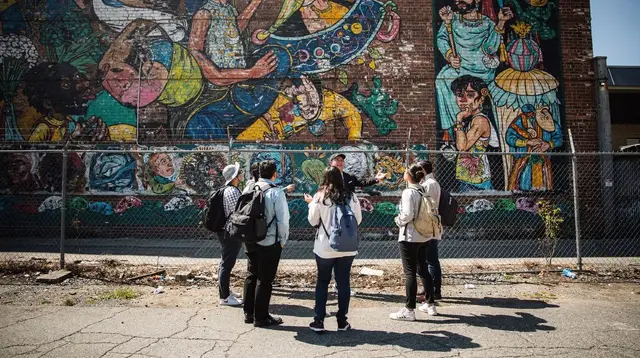
GetYourGuide does not provide a product photo for this activity — the image shows the meeting point, photographed by us.