San Francisco Weather by Month: What I'd Actually Pack
What's the weather like in San Francisco month by month?
San Francisco stays mild year-round, roughly 10-20°C (50-68°F), but the pattern is unusual: June-August are the coolest, foggiest months in the city itself, while September-October are the warmest and sunniest, often called the city's 'second summer.' A layered jacket is worth packing in every season, and coastal neighborhoods can run 5-8°C colder than the Mission on the same afternoon.
The month I got fooled by July
I packed for California in July the way I’d pack for anywhere sunny: t-shirts, shorts, sandals, one light cardigan “just in case.” I stood at Golden Gate Bridge at 4pm and couldn’t see the top of the towers. The wind coming off the water was cold enough that I bought a $40 sweatshirt from a souvenir stand within the hour. That trip taught me the one thing I now tell everyone before they visit San Francisco: the calendar here runs backwards from what you expect, and the difference between the coast and three blocks inland can be bigger than the difference between two whole seasons.
I’ve now been back in every month of the year, so this is less a forecast than a packing brief — what I actually wore, where I was cold, and where I was surprised to be warm.
Why San Francisco’s “summer” isn’t warm
The short version: cold Pacific water off the coast meets warm inland air rising over California’s Central Valley, and the fog — locally nicknamed Karl the Fog — gets pulled in through the Golden Gate to fill the gap. That process peaks in June, July and August, which is exactly when visitors expect the best weather and often get the greyest. Daytime highs in the fog belt commonly sit around 15-19°C (60-66°F) in midsummer, colder and windier right at the water. I’ve read more on this pattern in Why San Francisco Summers Are Cold and Foggy, and it matches every July I’ve spent here.
September and October flip the script. The fog retreats, afternoons turn clear and often genuinely warm, and this is the best-documented window for the classic clear shot of the bridge. I did the full case for it in The Best Time to Visit San Francisco (It’s Not Summer) — short version, if your dates are flexible, aim for fall over summer.
Month by month, roughly what to expect
| Months | Typical daytime feel | What I packed |
|---|---|---|
| Jan-Feb | Cool, the rainy stretch, 10-15°C (50-59°F) | Waterproof jacket, real umbrella won’t survive the wind — a hood does |
| Mar-Apr | Mild, showers easing, 12-17°C (54-63°F) | Layers, light rain shell |
| May | Transitional, fog starting to build, 13-18°C (55-64°F) | Jacket for evenings, t-shirts for inland afternoons |
| Jun-Aug | Coolest, foggiest, especially near the coast, 15-19°C (60-66°F) | Fleece or windbreaker, every single day, even downtown |
| Sep-Oct | Warmest, clearest — the “second summer” | Still brought a light layer for evenings, rarely needed it midday |
| Nov | Cooling again, rain returning, 12-16°C (54-61°F) | Jacket, closed shoes |
| Dec | Coolest, wettest month, 9-14°C (48-57°F) | Waterproof everything |
These are broad ranges, not a substitute for checking the week you’re actually travelling, but the shape of the year holds up trip after trip.
The microclimate split I underestimated
The bigger surprise wasn’t the season — it was the neighborhood. The Mission District and Noe Valley sit in the lee of the city’s hills, sheltered from the marine layer, and I’ve stood in the Mission in a t-shirt on the exact same July afternoon that Ocean Beach was wrapped in cold, blowing fog. I wrote up what that felt like in Ocean Beach: What to Know Before You Go — it’s genuinely a different climate a few kilometres away, not just a figure of speech.
Practically, this means: if today’s plan is the beach or the bridge, dress for the coast, not for wherever you’re staying. If you’re walking a warm inland neighborhood, you can usually shed the layer you needed an hour earlier at the water. I keep a foldable windbreaker in my daypack from May through September specifically for this — it’s in my longer packing notes at What to Pack for San Francisco (When Summer Isn’t Warm).
What I do differently by season now
Summer visit (Jun-Aug): I no longer plan an outdoor-bridge-photo morning and hope for clarity — I check the forecast that day and stay flexible, often saving Golden Gate Bridge for late afternoon when the fog sometimes lifts. My fuller summer notes are in San Francisco in Summer: Why It’s Cold, Foggy, and How to Pack for It.
Fall visit (Sep-Oct): This is when I now book the outdoor-heavy days — Muir Woods, the waterfront, anything with a view. I laid out why in San Francisco in Fall: Why September and October Are the Best Months to Visit.
Winter visit (Dec-Feb): Rain, not cold, is the real planning factor — I lean toward indoor days and check road conditions before any trip toward Lake Tahoe, where the season looks completely different; that comparison lives in Lake Tahoe in Winter: A Visitor’s Guide.
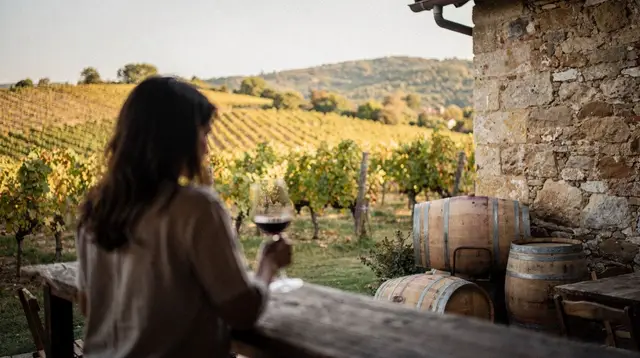
Wine Country side trips: Harvest season (roughly September) adds its own weather logic on top of the city’s — warmer, drier, and genuinely the best light I’ve seen in the vineyards, covered in Napa Valley Harvest Season: When to Go and What to Expect.
On weather-dependent days I now build in flexibility rather than a single fixed plan — a pass that covers several indoor and outdoor options, like the San Francisco Explorer Pass, has saved a couple of foggy mornings for me by letting me swap a viewpoint for a museum without losing money. For a first trip covering the major sights regardless of weather, I’ve also used the San Francisco CityPASS to bundle the big-ticket stops. And on the one clear, warm week I’ve had in early October, a full day out combining Muir Woods with the coastal towns — I booked it as the Alcatraz, Muir Woods and Sausalito day tour — was worth grabbing while the weather actually cooperated.
A few more neighborhood notes
If your itinerary is Chinatown- or Mission-heavy regardless of season, both of those areas run warmer than the waterfront — I go into more detail on layout and walkability in Mission District Neighborhood Guide: Murals, Food and Parks. And if whale-watching is on your list, the season for that runs separately from the temperature calendar — worth checking Whale Watching Season Near San Francisco: When and Where I’ve Actually Seen Them before you book, since the best sighting months don’t line up neatly with the warmest ones.
San Francisco weather by month, answered
Is San Francisco cold in the summer?
Compared to what most visitors expect from California, yes. June through August are the city’s coolest, foggiest months, with daytime highs commonly in the 15-19°C (60-66°F) range near the coast, and noticeably colder with wind at spots like the Golden Gate Bridge or Ocean Beach.
What’s the best month to visit for warm, clear weather?
September and October are the most reliable window for warm, sunny afternoons and clear bridge views — San Francisco’s unofficial “second summer,” after the fog retreats.
Do I need a jacket in San Francisco in summer?
Yes. A packable jacket or fleece is worth carrying every day from roughly May through September, even if the forecast says “sunny” — coastal wind and fog can make a warm-looking day feel cold within minutes.
Why is one neighborhood warmer than another on the same day?
San Francisco’s hills block the marine layer from reaching sheltered areas like the Mission District and Noe Valley, while exposed spots like Ocean Beach or the Sunset District sit right in the fog belt. A temperature gap of 5-8°C between neighborhoods on the same afternoon is normal.
When does it rain in San Francisco?
The wet season runs roughly November through March, with December and January typically the wettest months. Summers are largely dry, even when they’re grey with fog.
Is Lake Tahoe weather the same as San Francisco’s?
No — Tahoe sits at elevation in the Sierra Nevada and has genuine snow winters and warm, dry summers, a very different pattern from San Francisco’s coastal fog cycle. Check conditions separately before a day trip out.
Should I plan differently for Wine Country because of weather?
Somewhat. Napa and Sonoma run warmer and drier than the city, especially inland in summer and during the September harvest, so it’s worth packing sun protection there even on a foggy San Francisco morning.
What should I pack for a one-week trip covering multiple seasons of weather?
Layers over anything single-purpose: a t-shirt base, a mid layer, and a packable wind or rain shell cover nearly every day San Francisco can produce, regardless of the month.
Seasonal Guide
Verified deep-linked GetYourGuide tours. Book through these links and we earn a small commission at no cost to you.
GetYourGuide does not provide a product photo for this activity — the image shows the meeting point, photographed by us.