San Francisco in One Day: The Golden Gate, the Wharf and Chinatown Without a Car
Can you see the Golden Gate Bridge, Fisherman's Wharf and Chinatown in a single day in San Francisco without a car?
Yes — Muni buses, the historic cable cars and a short walk connect all three in one loop, starting early at the bridge and finishing in Chinatown by evening. A car adds parking costs and hassle in the city itself and isn't needed for this route.
A Loop Built for One Day, Zero Parking
Anyone landing in San Francisco with a single free day before a flight, a cruise departure or a longer trip elsewhere faces the same problem: the city’s best-known sights are spread across a hilly peninsula, and driving between them means one-way streets, steep grades and $30-60 daily parking in the busiest areas. The fix isn’t a car — it’s a route.
This itinerary threads together the Golden Gate Bridge, Fisherman’s Wharf and Chinatown into one loop that runs almost entirely on foot, Muni buses and the cable cars, with a ferry return if you want to see the bridge from the water instead of just from underneath it. It assumes an early start, comfortable shoes and a layered jacket — even in summer, when San Francisco’s famous fog keeps mornings at the bridge cool and grey regardless of what the rest of California is doing that week. For the full transit picture before you go, the guide to getting around San Francisco covers Clipper cards, BART and Muni fares in more detail than fits here.
If you’d rather not think about individual tickets all day, a multi-attraction pass bundles several stops on this route — worth comparing before you set out. The San Francisco Explorer Pass lets you pick attractions as you go, while the San Francisco CityPASS bundles a fixed set of major sights at a discount if you’re weighing a longer stay after all. A third option, the Go San Francisco Card, works on a per-day model that can suit a single packed itinerary like this one.
Day 1
7:00-7:30am — Coffee and a Head Start
Start early, before the day’s first tour buses and cruise-ship crowds reach the waterfront. Grab coffee near your hotel — expect to pay roughly $4-6 and remember San Francisco’s ~8.625% sales tax isn’t included in the menu price — and get moving toward the bridge while the streets are still quiet. An early start also improves your odds against the marine layer: fog frequently sits over the Golden Gate in the morning and can linger for hours, especially in summer, so being there at opening light doesn’t guarantee a clear shot of the towers, but arriving late guarantees nothing at all.
7:30-9:30am — The Golden Gate Bridge
Take a Muni bus (Route 28 or a combination via Route 30) toward the Presidio and the bridge’s toll-plaza area — a taxi or rideshare works too and costs relatively little at this hour. Walk out onto the bridge’s pedestrian path for the classic view back toward the city skyline and Alcatraz, or head into the Presidio side for the wide-angle shot from Battery Spencer-style overlooks. The bridge’s toll is charged only to vehicles entering the city from the north, and only electronically — there’s no booth and nothing for a pedestrian to pay. If the fog hasn’t burned off, don’t force it: a clear span shot is common but never guaranteed on any single morning, and September-October is the far more reliable season for one, worth knowing if you’re planning a return trip. The full logistics — parking, viewpoints, best photo spots — are in the Golden Gate Bridge visitor guide; background on why the toll works the way it does is in the explainer on the Golden Gate Bridge toll.
Budget about 60-90 minutes here, including transit time each way. If you have any flexibility and want the bridge from the water rather than underneath it, a short cruise past the span is a popular add-on — details in the Golden Gate bay cruise guide — though it doesn’t fit this particular one-day loop without adding real time.
9:30-10:15am — Back Toward the Waterfront
Catch a Muni bus back toward the Marina and Fisherman’s Wharf area (Route 30 or 47 corridors connect reasonably well). This transition is a good moment to note how Muni actually works: a single Clipper-card ride is $2.85 and covers 120 minutes including transfers, so hopping between two buses on the way to the Wharf is normally covered by one fare rather than two. If you’d rather understand the wider BART-versus-Muni picture before your trip, the BART vs. Muni guide breaks down which system does what.
10:15am-1:00pm — Fisherman’s Wharf and Pier 39
Fisherman’s Wharf is San Francisco’s most tourist-oriented stretch of waterfront, and it earns that reputation honestly with sea lions, seafood stands and views out toward Alcatraz Island. Walk the piers, watch the sea lions hauled out at Pier 39, and grab an early lunch — a casual seafood or chowder-in-a-bread-bowl meal here runs roughly $14-22 per person before tax and tip, with tipping expected at 18-20%+ if you sit down rather than order at a counter.
This is also the departure point for Alcatraz, sold exclusively by Alcatraz City Cruises from Pier 33 — no other operator can legally sell tickets to the island, and dates commonly sell out 90 days in advance in summer. This itinerary doesn’t have time to add the island visit (the Cellhouse tour alone runs a couple of hours), but if a future trip includes it, book it the moment your dates are fixed — see the Alcatraz tickets guide for exactly how the release window works, and the Alcatraz tour operators compared page if you’re weighing day versus night tours. For everything else along this stretch of shoreline, the Fisherman’s Wharf neighborhood guide is worth a look before you arrive.
If you’re curious what else the waterfront has to offer after dark on a different trip, the Fisherman’s Wharf evening entertainment guide covers that side of the neighborhood — not needed for this loop, but useful context for return visits.
1:00-1:45pm — The Cable Car Ride
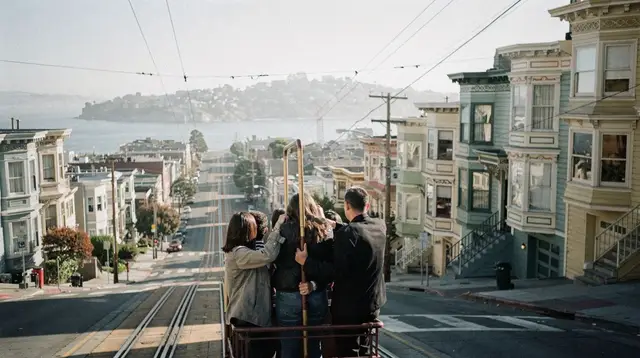
From the Wharf, walk to the Powell-Hyde or Powell-Mason cable car turnaround at Hyde and Beach, or Bay and Taylor. Queues at the Powell Street terminus near Union Square routinely run 30-60+ minutes at peak times, but boarding at the Wharf end tends to move faster since fewer people start their ride there. A single ride costs a flat $8 with no transfers issued, payable via the MuniMobile app, a Clipper card, or cash at the kiosk. Treat this as the experience of the day, not a fast way to travel — the cable car is a slow, grip-operated historic system, and a regular Muni bus would cover the same ground quicker. Ride it up over Russian Hill and Nob Hill toward Chinatown; the mechanics of how the system actually pulls itself along are covered, if you’re curious, in how cable cars work.
1:45-4:30pm — Chinatown
Step off near the Chinatown Gate on Grant Avenue and spend the afternoon working through North America’s oldest Chinatown: temples tucked into upper floors, produce markets on Stockton Street one block over from the tourist-facing shops on Grant, and the working Golden Gate Fortune Cookie Factory in Ross Alley. This is also a good place for a mid-afternoon tea break or an early dinner — a mid-range sit-down meal here runs roughly $35-65+ per person before tip, though plenty of excellent, cheaper options exist along Stockton and Clement-adjacent side streets.
A short self-guided loop through the alleys covers the highlights in under two hours; if you’d rather follow a structured route than wander, the Chinatown walking tour guide lays one out turn by turn, and general etiquette notes are in Chinatown etiquette tips. Chinatown borders North Beach, San Francisco’s Italian district, if you have extra time or energy — the North Beach walking tour guide picks up where Chinatown leaves off, and the North Beach food tour guide is worth bookmarking for a future trip focused on food rather than sights.
4:30-6:30pm — Wind Down or Add a Stop
With the three anchor stops done, use whatever’s left of the afternoon based on your energy and flight time. Options that fit without a car:
| Add-on | Time needed | Getting there |
|---|---|---|
| Union Square shopping | 30-45 min | Short walk or cable car from Chinatown |
| North Beach espresso and pastry | 30-45 min | 10-minute walk from Chinatown |
| Ferry Building marketplace | 45-60 min | Muni or a 20-minute walk downhill |
| Return to hotel to pack | — | Muni or rideshare |
If you have any flexibility left and want a broader sense of what a longer stay could look like, the two-day San Francisco highlights itinerary and the fuller three days in San Francisco itinerary both build outward from this same core loop.
Why This Route Works Without a Car
Every leg of this day — bus to the bridge, bus back, cable car to Chinatown — runs on transit that a Clipper card or the MuniMobile app handles without pre-booking. Parking near any of these three stops is expensive and often full by mid-morning, and San Francisco’s steep grades and one-way streets make driving between them slower than it looks on a map. A rental car earns its keep on day trips outside the city — Wine Country, the Peninsula, Highway 1 — not on a single day spent entirely within San Francisco itself. The guide to whether you need a car in San Francisco makes the same case in more depth, and the dedicated car-free San Francisco itinerary extends this same no-car logic across a longer stay. For a broader self-guided walking framework that this single day borrows from, see the self-guided walking tour of San Francisco, and for a wider sense of what else the city’s neighborhoods offer beyond this loop, the San Francisco activities hub is worth a browse before you land.
FAQ: San Francisco in One Day
Is one day enough to see San Francisco?
One day is enough for a focused loop like this one — the Golden Gate Bridge, Fisherman’s Wharf and Chinatown — but not for the whole city. Neighborhoods like the Mission, Golden Gate Park and the Haight, plus Alcatraz, are realistically a second or third day.
Do I need a rental car for this itinerary?
No. Muni buses and the cable cars cover every leg of this route, and parking near the bridge, the Wharf and Chinatown is expensive and often scarce. A car is more useful for day trips outside the city than for a single day inside it.
What’s the best time to see the Golden Gate Bridge to avoid fog?
Early morning gives the calmest crowds but no guarantee against fog, which is common at the bridge year-round and especially persistent on summer mornings. September and October are San Francisco’s clearest, warmest months overall, so a bridge visit then has better odds of an unobstructed view.
Can I fit Alcatraz into this same one-day itinerary?
Not comfortably. The ferry crossing plus the Cellhouse audio tour takes a couple of hours on its own, and tickets — sold only by Alcatraz City Cruises from Pier 33 — often sell out weeks ahead. If Alcatraz is a priority, book it for a dedicated slot on a second day rather than squeezing it into this route.
How much does a day like this cost, roughly?
Beyond transit fares (each Muni ride is $2.85, each cable car ride is $8), budget for food — $14-22 for a casual lunch, more for a sit-down Chinatown dinner — plus tips of 18-20% at any table-service meal. A multi-attraction pass, like the Explorer Pass or CityPASS options, can simplify costs if you plan to add paid sights.
Is the cable car worth the wait?
Once, yes — it’s a National Historic Landmark and a genuinely different way to move through the city. But it’s slow, and queues at the Powell Street turnaround can run over an hour at peak times. Boarding at a quieter stop, like near the Wharf, cuts the wait substantially.
What should I pack for a one-day visit in summer?
A layered jacket, even in July or August — San Francisco’s summer fog keeps mornings and the bridge area cool regardless of the season elsewhere in California. Comfortable walking shoes matter more than anything else on this particular route.
Which neighborhoods border this route if I have extra time?
North Beach sits right next to Chinatown and is easy to fold in for an espresso or an extra hour of wandering; Union Square is a short walk or cable car ride from either end of the loop.
tours.1 days
Verified deep-linked GetYourGuide tours. Book through these links and we earn a small commission at no cost to you.
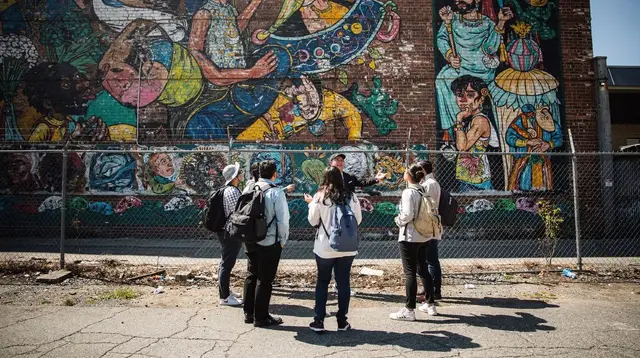
GetYourGuide does not provide a product photo for this activity — the image shows the meeting point, photographed by us.