Fisherman's Wharf: What's Actually Worth Your Time
Is Fisherman's Wharf worth visiting despite its tourist-trap reputation?
Yes, if you're selective. Pier 39's sea lions, the historic ferry to Alcatraz, and a walk along the Embarcadero are genuinely worthwhile, but the chain-restaurant strip along Jefferson Street and most souvenir shops are worth skipping. Budget 2-3 hours, not a full day.
Separating the real draws from the strip mall
Fisherman’s Wharf has a reputation problem, and it’s mostly deserved. The stretch of Jefferson Street packed with chain seafood restaurants, wax museums and shops selling identical “I Heart SF” hoodies is exactly the kind of tourist trap locals steer visiting friends away from. But writing off the whole neighborhood misses what actually works here: a genuine harbor, a colony of wild sea lions that decided to move in uninvited in 1989 and never left, one of the last operating cable car turnarounds, and the departure point for the single most in-demand ticket in the city.
The trick is knowing which few hundred meters reward your time and which don’t.
A bit of history, briefly
The name isn’t marketing — this really was a working fishing harbor, built up by Italian immigrant fishing families (many from Genoa and Sicily) starting in the late 1800s, and the small fleet of Dungeness crab boats still docked near Pier 45 is a real, if shrunken, continuation of that trade rather than a prop. The neighborhood’s shift from working harbor to tourist destination happened gradually across the 20th century, accelerating once Pier 39 opened as a shopping and dining complex in 1978 — a decade before the sea lions showed up uninvited and became the bigger draw. That layered history is part of why the neighborhood feels split in two: a few blocks of genuine maritime San Francisco surrounded by attractions built purely for visitors passing through once.
What’s genuinely worth it
Pier 39’s sea lions. This is the neighborhood’s single best free attraction, and it earns the hype. Wild California sea lions took over the K-dock marina floats in 1989 after a Loma Prieta-earthquake-era boom in the local herring population, and the population has fluctuated ever since — usually a few hundred in the busier months (autumn through early winter), sometimes down to a handful in spring. There’s no schedule to check ahead of time; you just show up and see who’s there. The viewing area is free, uncrowded compared to the rest of the pier, and worth 15-20 minutes on its own.
The Embarcadero waterfront walk. Skip the shops and just walk the water’s edge from the Ferry Building toward the Wharf, or the reverse. You get open bay views, the working harbor, and a much better sense of San Francisco as a port city than anything sold in a gift shop nearby.
Alcatraz departure. Pier 33, a short walk east of the main tourist cluster, is the only legal departure point for Alcatraz Island, run exclusively by Alcatraz City Cruises. If Alcatraz is on your itinerary, you’ll pass through this end of the neighborhood regardless — just don’t confuse it with the Pier 39 area, which is a 10-15 minute walk further west.
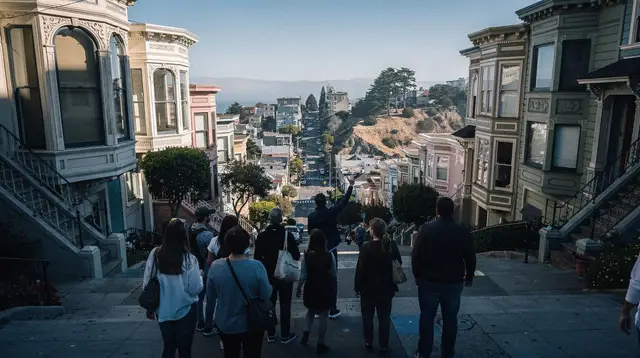
Historic cable cars. The Powell-Hyde line terminates near the Wharf, and riding it one way — ideally boarding partway along the route rather than queuing at the crowded Powell Street turnaround — is a genuinely fun, only-in-San-Francisco experience. It’s slow and touristy by design, but that’s the point once, not as daily transport.
Boudin Bakery’s viewing window. Boudin has baked sourdough here since 1849, and the bakery’s ground-floor window lets you watch bakers shape loaves by hand. It’s commercial, sure, but it’s also one of the few spots on the strip connected to something real about the city’s food history rather than manufactured for visitors.
What to skip
The wax museums and “mystery” attractions. Ripley’s Believe It or Not, the wax museums, the various haunted-house-style walk-throughs clustered along Jefferson Street are overpriced novelty attractions with no particular connection to San Francisco. If you’d skip the equivalent in any other city, skip it here.
Most restaurants directly on the tourist strip. The seafood stands and sit-down restaurants facing the water on Jefferson Street are priced for one-time visitors who won’t be back to complain, and the quality generally reflects that. A sourdough bread bowl of clam chowder from a walk-up stand is a fine quick bite; a $60 sit-down seafood dinner in the same three blocks rarely is.
Souvenir shopping. The dozens of near-identical shops selling the same magnets, shirts and keychains aren’t worth browsing unless you specifically need a last-minute gift. Prices are higher than equivalent shops elsewhere in the city.
Treating it as a full-day destination. This is the biggest planning mistake. Fisherman’s Wharf rewards two to three focused hours, not a full day. Pair it with a walk to North Beach or Chinatown, both a short walk away, rather than lingering on the strip itself.
Beyond the sea lions: piers, boats and the wheel
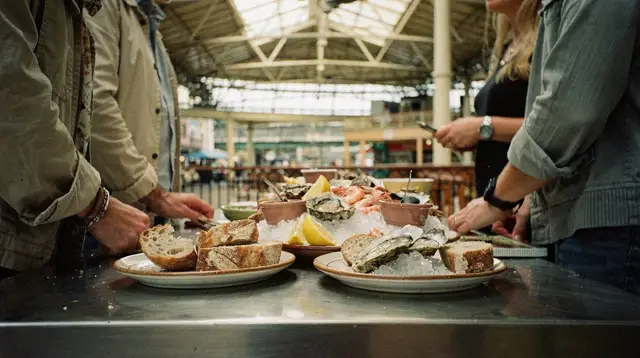
The stretch of waterfront around Pier 39 has a handful of other things worth a quick look if you’re already there, beyond the headline attraction. The SkyStar Wheel, a large observation wheel on the Pier 39 waterfront, gives a short ride up over the harbor and out toward Alcatraz and the bridge; a SkyStar Wheel ticket is a quick add if you’d rather get a view from above than book a full boat trip. For a longer look at the neighborhood itself, a guided Fisherman’s Wharf highlights tour walks the harbor and the historic ships with someone who knows which corners are worth stopping at, and a Fisherman’s Wharf and Pier 39 food tour is a more structured way to eat well here than picking blind off the Jefferson Street strip — it routes you toward the handful of stands and counters that are actually worth the money rather than the ones simply closest to foot traffic.
If the plan is to see the Wharf and the Golden Gate Bridge in the same outing without driving or figuring out transit yourself, a half-day Golden Gate Bridge and Fisherman’s Wharf day trip packages the two together, which suits visitors short on time who’d rather not sequence the logistics themselves.
Fisherman’s Wharf after dark
Most of what’s described above is a daytime visit, but the neighborhood doesn’t empty out entirely once the sun goes down. The working harbor views are arguably better at dusk, when the fishing boats are lit up and the crowds thin, and a handful of restaurants and bars stay open well past the point most day-trippers have moved on. It’s not a nightlife destination on the scale of the Mission or SoMa, but if an evening stroll along the water fits your schedule better than an afternoon one, see the Fisherman’s Wharf evening entertainment guide for what’s actually open and worth it once the tour buses clear out.
Visiting with kids
Fisherman’s Wharf is one of the more reliably kid-friendly stretches of San Francisco: the sea lions need no explanation to hold a child’s attention, the cable car ride is a novelty rather than a chore, and the short distances mean little walking is required between the good parts. Families combining the Wharf with a broader kid-friendly day around the city can check the San Francisco with kids guide for how it fits alongside other stops.
When to go
There’s no bad season for the neighborhood itself — it’s outdoors and waterfront regardless of month — but a few things shift with the calendar. The sea lion population is largest from late summer into winter and thinner in spring, as noted above, so autumn and early winter visits generally have the most animals to see. Summer brings San Francisco’s characteristic fog and the heaviest crowds, since it coincides with peak tourist season; a weekday morning, before the cruise-ship and tour-bus crowds arrive, is consistently the calmest time to see Pier 39 without shoulder-to-shoulder foot traffic. Whatever the season, layers help — the waterfront is windier and several degrees cooler than inland parts of the city at almost any time of year.
A realistic visit, in order
| Stop | Time | Notes |
|---|---|---|
| Pier 39 sea lions | 15-20 min | Free, no reservation |
| Walk to Pier 33 (if riding to Alcatraz) | 15 min | Book Alcatraz tickets far ahead — see the ticket guide |
| Boudin Bakery window | 10 min | Free to watch, bread bowl optional |
| Embarcadero waterfront walk | 30-45 min | Toward the Ferry Building or back toward North Beach |
| Cable car ride (Powell-Hyde) | 20-30 min including wait | Board partway along the line if the turnaround queue is long |
Total: roughly two to three hours, longer if Alcatraz is part of the day.
Getting there without a car
Driving to Fisherman’s Wharf is one of the more common visitor mistakes in San Francisco. Parking is expensive, often full, and the neighborhood sits at the far end of streets that get congested with tour buses and delivery traffic. The F-line historic streetcar runs from Market Street straight along the Embarcadero to the Wharf, several Muni bus routes serve the area directly, and both the Powell-Hyde and Powell-Mason cable car lines terminate nearby. If you’re arriving from elsewhere in the city, transit is almost always faster than finding parking. For a broader sense of how the neighborhood fits into a wider visit, see the San Francisco neighborhoods guide and the getting around San Francisco guide.
Combining it with a bigger day
Fisherman’s Wharf works best as one stop in a longer day rather than a destination on its own. A hop-on-hop-off bus route commonly includes it alongside the Golden Gate Bridge and Chinatown, and it’s a natural starting or ending point for a self-guided walking tour that continues into North Beach. If Alcatraz is the main reason for your visit, check the Golden Gate Bridge visitor guide and the San Francisco attraction tickets guide for how to sequence a day that includes both without backtracking across the city.
For a bay-level view of the area rather than a walk along it, a short helicopter flight over the Golden Gate and the bay departs from the wider Bay Area and gives a genuinely different perspective on how the Wharf, the bridge and the island tie together — worth considering if you have the budget and the day is otherwise light.
Visitors who want a structured, narrated way to get their bearings around the cable car network that runs through this end of the city often use a self-guided cable car audio tour that covers the Wharf alongside Nob Hill and Union Square. And travelers extending their day north across the bridge sometimes combine a Wharf morning with a Golden Gate Bridge bike ride that continues toward Muir Woods, which starts not far from where the cable car lines terminate.
Practical notes
Prices at the Wharf, like everywhere in the city, don’t include California’s roughly 8.625% sales tax, and a tip is expected at any sit-down restaurant here — see the tipping guide if visiting from a country without that norm. The neighborhood is well-patrolled and heavily trafficked at almost all hours, making it one of the lower-risk areas of the city for a tourist on foot; the main practical caution, as anywhere in San Francisco, is never leaving anything visible in a parked car. If you’re wondering whether the whole area lives up to its reputation one way or the other, the tourist trap myths piece goes deeper into which specific claims hold up and which don’t.
Fisherman’s Wharf, frequently asked
Is Fisherman’s Wharf worth visiting despite its tourist-trap reputation?
Yes, if you’re selective. Pier 39’s sea lions, the historic ferry to Alcatraz, and a walk along the Embarcadero are genuinely worthwhile, but the chain-restaurant strip along Jefferson Street and most souvenir shops are worth skipping. Budget 2-3 hours, not a full day.
How do I get to Fisherman’s Wharf from downtown San Francisco?
The F-line historic streetcar runs along Market Street and the Embarcadero straight to the Wharf, and several Muni bus routes and the Powell-Hyde and Powell-Mason cable car lines also terminate nearby. Parking is expensive and scarce, so public transit or walking is the practical choice.
Where does the Alcatraz ferry leave from?
Alcatraz City Cruises, the only legal ticket seller for the island, departs from Pier 33, a short walk east of the main Fisherman’s Wharf tourist strip along the Embarcadero. It is not the same dock as the Pier 39 sea lions.
Are the sea lions at Pier 39 always there?
No. Numbers fluctuate seasonally, typically peaking from late summer into winter and thinning out in spring, though a few are usually visible year-round on the K-dock viewing area.
Is the food at Fisherman’s Wharf any good?
Much of the food directly on the tourist strip is overpriced and mediocre, aimed at one-time visitors rather than repeat customers. Better options exist a short walk away or at a handful of long-standing seafood counters and bakeries within the neighborhood itself.
How much time should I plan for Fisherman’s Wharf?
Two to three hours covers the worthwhile parts well: Pier 39’s sea lions, a walk along the Embarcadero, and a sourdough bread bowl or clam chowder stop. A full day here is generally more time than the neighborhood rewards.
Is Fisherman’s Wharf safe for tourists?
Yes, it’s one of the most heavily patrolled, well-lit tourist areas in San Francisco. The main practical risk is the same as anywhere in the city: never leave anything visible in a parked car.
San Francisco by Neighborhood
Verified deep-linked GetYourGuide tours. Book through these links and we earn a small commission at no cost to you.
GetYourGuide does not provide a product photo for this activity — the image shows the meeting point, photographed by us.