Sacramento City Tour Guide: Old Town, the Capitol and Gold Country
Is Sacramento worth a day trip from San Francisco?
Yes, as a change of pace from the coast: Sacramento is about 1.5-2 hours by car or a direct Amtrak/Capitol Corridor train, and its walkable Old Town waterfront plus the State Capitol building make a full but manageable day. It also works as a jumping-off point for the wider Gold Country.
Sacramento rarely tops a first-time San Francisco itinerary, and that is exactly its appeal: it is the one nearby city that isn’t about ocean views or wine-tasting queues. California’s state capital sits about 1.5-2 hours inland by car or a direct train from the Bay Area, and a single day there covers a walkable historic waterfront, a genuinely grand government building open to the public for free, and — if the schedule allows — a first taste of the Gold Country foothills that stretch east toward Lake Tahoe.
This guide focuses on the core Sacramento visit: Old Sacramento and the State Capitol, how guided tours and self-guided time compare, what it costs, how to get there without a car, and how Sacramento fits into a longer loop through the Gold Country.
Why Sacramento, and why as a tour rather than a wander
Sacramento’s downtown core is compact enough to explore on foot, but two features make a guided or semi-guided approach worth considering over simply wandering in. First, the history is layered — Gold Rush-era riverfront, the terminus of the transcontinental railroad, and 19th-century state government all sit within a few blocks of each other — and a guide or a well-designed audio/digital tour connects those threads faster than reading plaques one by one. Second, Sacramento’s museums (the California State Railroad Museum, the Sacramento History Museum, and others clustered in Old Town) each reward some background before walking in, rather than being read cold.
A combined museum ticket and digital city tour is a practical middle ground: it bundles entry with a self-paced narrated route, so a visitor isn’t locked to a fixed group schedule but still gets the context a guide would normally supply. a combined history museum ticket with a digital walking tour of Old Sacramento covers most of what a first visit needs in a few hours.
Sacramento also suits a different kind of traveler than most of the destinations covered on this site. It doesn’t have the coastal drama of Big Sur or the reservation logistics of Muir Woods, and it isn’t trying to. What it offers instead is a genuinely educational, low-friction day: flat, walkable streets, indoor museum options if the weather turns, and a government building that’s actually open to the public rather than viewed from behind a rope line. That makes it a solid pick for travelers who’ve already covered the classic San Francisco sights and want a change of pace, for history-minded visitors, and for families who appreciate a day with fewer long car rides and more hands-on exhibits — the Railroad Museum in particular is a favorite with kids.
Old Sacramento: the historic waterfront district
Old Sacramento (commonly just “Old Town”) runs along the Sacramento River and preserves several blocks of wooden boardwalks and Gold Rush and railroad-era buildings, many now housing museums, shops and restaurants. It reads as a smaller, quieter cousin of San Francisco’s Fisherman’s Wharf — historic rather than heavily commercial, and easy to cover in two to three hours at an unhurried pace.
Highlights within Old Town include the California State Railroad Museum (one of the largest of its kind in North America), the Sacramento History Museum, and the waterfront itself, where riverboats and the old railroad depot give a sense of Sacramento’s role as the western terminus of the first transcontinental railroad. Unlike the coastal destinations covered elsewhere on this site, none of this involves fog, tides or ferry schedules — Sacramento’s Central Valley setting means hot, dry summers and mild, occasionally foggy winters, quite different from San Francisco’s own microclimates.
Old Town’s wooden boardwalks and raised sidewalks are also a direct legacy of the city’s early flooding problems: much of the district was rebuilt above the original street level in the 19th century after repeated inundations from the Sacramento and American rivers, and a few spots still let visitors peer down into the older, lower street. It’s a small detail that a self-paced digital tour tends to flag but a purely visual wander can easily miss, which is part of why a narrated route pays off here more than it might in a neighborhood like Chinatown or North Beach, where the atmosphere carries the visit on its own.
The State Capitol: free, grand, and easy to combine with Old Town
The California State Capitol building sits a short walk (or a quick rideshare) from Old Town, its white dome visible from several blocks away. Entry to the building and its museum is free, and the surrounding Capitol Park adds 40 acres of gardens and memorial groves worth a slow walk if the day is warm.
Guided tours of the Capitol’s historic rooms are typically free but run on limited daily time slots, and larger groups sometimes need advance sign-up — worth checking directly before building a tight schedule around a specific tour time. Visitors short on time can still see the rotunda, the historic legislative chambers (when in session or open for viewing) and the museum exhibits without joining a formal tour.
A quirkier side of Sacramento’s history
Alongside the official Capitol tour and the family-oriented museums, Sacramento’s Gold Rush past also has a darker, stranger side that some visitors prefer to explore after the sun goes down. The city grew up fast during the Gold Rush, and with that growth came saloons, vigilante justice, and a fair share of unsolved crime — material that a handful of themed evening tours now lean into. a themed walking tour covering Sacramento’s Gold Rush-era murder and mayhem history is a good option for visitors who’ve already done Old Town in daylight and want a different angle on the same streets, rather than a repeat of the Railroad Museum and Capitol circuit. It works well paired with dinner in Old Town, turning a day trip into a slightly longer evening out before the drive or train back.
Sacramento and the wider Gold Country
Sacramento sits at the western edge of California’s Gold Country, the belt of foothill towns that boomed during the 1848-1855 Gold Rush and today mix mining history with a growing wine-tasting scene distinct from Napa and Sonoma. Several counties east of Sacramento — Placer, El Dorado, Amador and Calaveras/Tuolumne — offer their own tasting rooms, generally more relaxed and less reservation-heavy than Napa Valley or Sonoma.
For visitors extending a Sacramento day, digital tasting passports are a low-commitment way to sample the region without booking individual winery appointments: a self-paced digital wine tasting passport covering Placer County tasting rooms or a similar digital tasting passport for the Calaveras and Tuolumne County wine region both work as flexible add-ons rather than fixed-time tours. As with any wine tasting, California’s 0.08% legal driving limit applies — a passport used across several stops still needs a plan for the drive back, the same rule that applies to a Napa or Sonoma day.
Sacramento also borders the agricultural Yolo County countryside to the west, where a different kind of tour is on offer: a guided rail bike tour through the Yolo County countryside on converted rail tracks is a low-effort, family-friendly way to see farmland scenery without a full day’s driving.
Getting to Sacramento from San Francisco
| Method | Approx. time | Notes |
|---|---|---|
| Car (I-80) | 1.5-2 hours | Longer with weekday commute or holiday traffic; downtown parking is far cheaper than in San Francisco itself |
| Amtrak / Capitol Corridor train | About 2 hours | Direct service to downtown Sacramento station, a short walk from Old Town and the Capitol |
A car is not necessary for this specific trip. The Capitol Corridor train drops visitors within walking distance of both Old Town and the Capitol, which removes the need to think about parking, tolls or navigating unfamiliar streets — a contrast with most other day trips on this site, where a rental car is genuinely the more practical choice.
This makes Sacramento one of the easier day trips to plan logistically. Compare that with Napa Valley or Silicon Valley, both of which are far more comfortable with a car since tasting rooms and tech campuses are spread out with limited transit between stops, or with Yosemite, where the drive alone eats most of the day. Sacramento’s compactness around its train station is closer in spirit to a visit to downtown Oakland — a destination built around a walkable core rather than a driving loop.
Sacramento as a stop toward Lake Tahoe
Sacramento sits roughly along the I-80 corridor that continues east toward Lake Tahoe, about 3.5-4 hours from San Francisco and further still beyond Sacramento. Some visitors treat Sacramento as a half-day stopover on a longer drive rather than a separate round trip from the city — breaking up the drive with Old Town and the Capitol before continuing into the Sierra foothills or turning back toward the Bay. This works better outbound (stopping on the way to a Tahoe overnight) than as a same-day round trip combining both, given the added driving time on each end.
Suggested one-day plan
- Morning: arrive by train or car, start in Old Sacramento with the waterfront and the Railroad Museum.
- Midday: lunch in Old Town, then walk to the State Capitol for the rotunda, museum and Capitol Park.
- Afternoon: either a second museum stop in Old Town, or head toward the Yolo countryside or a nearby Gold Country tasting room if time and a designated driver allow.
- Evening: return by train or drive back to San Francisco, avoiding the worst of I-80 commute traffic where possible.
Practical notes
- Cost: expect combined museum-and-tour tickets in a moderate range compared with San Francisco’s own paid attractions; the Capitol itself is free.
- Weather: Sacramento’s Central Valley climate runs hotter and drier in summer than San Francisco — pack differently than for a coastal day, especially July through September.
- Pairing: Sacramento pairs naturally with a Gold Country day trip or as a stop within a longer Northern California loop itinerary rather than a single isolated trip.
- Budget planning: for a fuller sense of typical costs across a San Francisco-based trip, see the trip budget guide.
- Background reading: for more on how the Gold Rush shaped the city before you arrive, see Sacramento’s Gold Rush history.
- Comparison: if deciding between a Gold Country day and a coastal one, Napa vs Sonoma covers the more common alternative for a single inland day trip.
Is Sacramento the right day trip for you?
Sacramento won’t suit everyone. Visitors with only two or three days in San Francisco are usually better served staying within the city or taking a shorter hop to Sausalito or Muir Woods, where the payoff-to-travel-time ratio is higher. But for a longer stay, or a second or third visit to the Bay Area where the coastal highlights are already checked off, Sacramento offers something genuinely different: real state history, a walkable historic core, and — via the train — one of the least stressful day trips on this site to actually execute. It also slots naturally into a broader itinerary; travelers building a six-day Northern California loop or already planning to pass through the Central Valley on the way to Yosemite or Lake Tahoe can fold in a Sacramento stop without adding a dedicated extra day.
Frequently asked questions about visiting Sacramento
How far is Sacramento from San Francisco?
Roughly 1.5 to 2 hours by car depending on traffic, or about the same by a direct Amtrak/Capitol Corridor train, which avoids parking and bridge tolls entirely.
Is the State Capitol free to visit?
Yes, entry to the California State Capitol building and its museum is free, though guided tours may have limited time slots and sometimes require advance sign-up, especially for groups.
What is Old Sacramento exactly?
Old Sacramento (often called Old Town) is a preserved riverfront historic district along the Sacramento River, with wooden boardwalks, Gold Rush-era buildings, museums and shops, sitting just a short walk from the Capitol and downtown.
Can I visit Sacramento without a car?
Yes. The Capitol Corridor train runs directly from the Bay Area to downtown Sacramento, and Old Town, the Capitol, and the main museums are all within easy walking distance of the station.
Is one day enough for Sacramento?
For Old Town and the Capitol, yes. If you want to add a Gold Country stop such as Placer or Amador County wine tasting, plan on a longer day or split it across two visits.
Does Sacramento connect to other Gold Country towns?
Sacramento sits at the western edge of Gold Country and is a practical base for reaching foothill wine and mining towns in Placer, El Dorado, Amador and Calaveras counties, most of which are 45 minutes to just over an hour further by car.
Is Sacramento part of a Lake Tahoe road trip?
It can be. Sacramento sits roughly along the I-80 corridor toward Lake Tahoe, so some visitors treat it as a stopover or half-day detour on the way to or from Tahoe rather than a separate trip from San Francisco.
San Francisco and Fisherman's Wharf Tours
Verified deep-linked GetYourGuide tours. Book through these links and we earn a small commission at no cost to you.
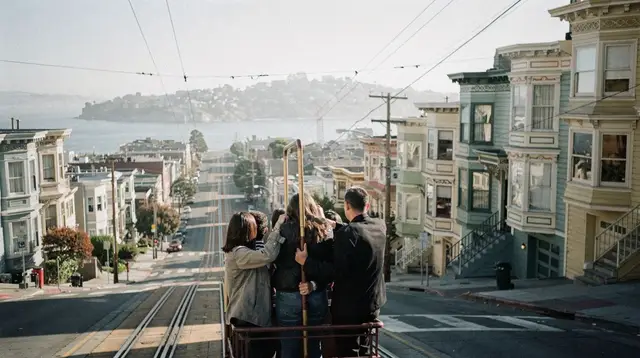
GetYourGuide does not provide a product photo for this activity — the image shows the meeting point, photographed by us.