Car Break-Ins in San Francisco: What I Actually Do to Avoid Them
How common are car break-ins in San Francisco in 2026, and how do I avoid one?
Reported car burglaries have dropped roughly 75-85% since the 2017 peak, to about 10 a day citywide in 2026, but the core advice hasn't changed: never leave anything visible in a parked car, especially at trailheads and viewpoints. Empty the car completely, park in busy or attended spots when you can, and treat a rental car's obvious lack of belongings as your best protection.
Why I stopped leaving anything in the car, ever
The first time someone warned me about San Francisco car break-ins, I assumed it was the kind of exaggerated travel-forum panic you can safely ignore. Then I spent a week driving a rental car around the city and out to Muir Woods, and I watched a parking lot attendant at a trailhead literally announce over a loudspeaker: “Please remove all belongings from your vehicle, including from the trunk.” Nobody laughed. Everyone complied. That’s when it clicked that this isn’t paranoia, it’s just local knowledge that visitors haven’t caught up to yet.
I want to be upfront about the numbers, because they cut both ways. San Francisco’s car break-in problem, known locally as “bipping,” was genuinely brutal at its peak in 2017, with over 30,000 reported incidents in a single year. By 2026, that number has fallen by something like 75-85%, down to roughly 10 reported break-ins a day citywide. That’s a real, well-documented improvement. But “10 a day” is still ten smashed windows a day, and rental cars — recognizable by their plates, their spotless interiors, and their tendency to sit unattended at scenic pullouts for exactly as long as a hike takes — remain an easy, obvious target. The city has gotten better. The advice visitors are given hasn’t changed, because the underlying logic hasn’t changed either.
The routine I actually follow now
Here’s what changed for me after that trailhead loudspeaker moment. I stopped thinking of “hiding” things in the car and started thinking of emptying it completely, every single time, no exceptions. A jacket on the back seat, a phone charger in the cup holder, an empty tote bag on the floor — none of it needs to be valuable. A break-in doesn’t require expensive contents, it just requires the visible possibility that there might be something worth checking. A closed glovebox with nothing in it is worth exactly as much as a wide-open one to someone glancing through the window, so the only thing that actually works is nothing to see at all, not even a bag.
The second habit is choosing where I park with the break-in risk in mind, not just the walk distance. Anywhere with foot traffic, a staffed lot, or a viewpoint pull-off that’s busy enough to have other people constantly arriving and leaving is safer than an isolated shoulder with one car on it. This matters most exactly where you’d least expect to think about it: trailheads and viewpoints outside the city, where a car can sit alone for hours while you’re out of sight on a trail. Big Sur pullouts, remote stretches near Yosemite, and quiet turnouts around Lake Tahoe are all places where a car can be completely unattended and unwatched for a long stretch of a day, which is precisely the setup that makes a break-in low-risk for whoever’s doing it.
In the city versus outside it
Inside San Francisco proper, I’ve mostly sidestepped the whole issue by not driving much at all. Between Muni, BART, the cable cars, and the ferries, getting around the city itself rarely needs a car, and honestly a parked car is more of a liability than a convenience within city limits — expensive parking, one-way streets, steep grades, and yes, break-in risk all stack against it. I save the rental for the days I actually need one: a loop out toward Sausalito, a longer push down Highway 1, or a multi-day trip where public transit genuinely can’t get me there.
Those are also the days I’m most careful. A day trip to Muir Woods or a stop at a coastal viewpoint means the car sits in a lot while I’m gone for an hour or more, completely out of sight of it. That’s a different risk profile from parking somewhere in the city where I’m never far from the car for long. I’ve started treating any trailhead or scenic overlook parking lot as a “car break-in zone” by default, regardless of how nice or touristy it looks — some of the more scenic pullouts are actually the more targeted ones, precisely because everyone parked there is a visitor who just walked away from a rental car.
What I pack for and what I don’t bother packing for
I don’t buy a special lock or an anti-theft device anymore, mostly because none of that beats an empty car. What I do now is plan the day so the car never needs to hold anything while I’m away from it: daypack goes with me, camera goes with me, snacks go with me. If I’m doing something like the Alcatraz, Muir Woods and Sausalito day tour style itinerary — hopping between a ferry, a redwood walk, and a waterfront town — I try to book things that don’t require driving between every stop, which cuts down on how many times the car sits alone in a lot. A guided day out, like a combined day tour that covers Alcatraz, Muir Woods and Sausalito without you driving between each stop, removes a chunk of that exposure entirely, since the car (if you even rented one) stays wherever you’re staying instead of sitting at a series of trailheads.
For the days I am driving myself, I’ve also leaned into shorter, better-planned stops rather than long stretches with the car unattended. A guided walk somewhere like Tiburon, for instance — a walking tour through Tiburon’s waterfront history — keeps me on foot in a town with steady foot traffic rather than parked alone at a remote overlook for an afternoon. Same logic applies to wine country: a guided wine tasting session with a local sommelière means someone else is driving, which solves both the parking-and-tasting problem and the empty-car problem in one move.
None of this is complicated, and none of it requires giving up on driving to the places that genuinely need a car, like Big Sur or the wine valleys. It’s really one habit, repeated: treat every stop as if the car will be searched, and make sure there’s nothing to find.
Car break-ins in San Francisco: what visitors actually ask
Is San Francisco safe for tourists despite the car break-in reputation?
Yes, for the most part — violent crime against visitors is rare, and car break-ins are a property crime aimed at unattended vehicles, not a personal safety threat. The risk is specifically to belongings left in a parked car, not to you.
Are rental cars targeted more than personal cars?
Not officially tracked as a separate category, but anecdotally yes — rental cars are easy to spot by their plates and tend to be parked at tourist spots and trailheads for predictable stretches of time, which makes them a convenient target.
Where are car break-ins most likely to happen?
Isolated trailhead and viewpoint parking areas outside the city — around Muir Woods, Twin Peaks, Lands End, and coastal pullouts — see reports fairly often, alongside dense tourist areas like Fisherman’s Wharf where cars sit for hours.
Does locking the doors and hiding items in the trunk actually help?
Locking the doors is still worth doing, but “hiding” items rarely helps, since trunk pops are a known technique and any bag or wire visible through a window signals there could be more out of sight. Fully empty is safer than well-hidden.
Should I even rent a car for a San Francisco trip?
Skip it inside the city — Muni, BART, and the ferries cover it well — but a car is genuinely useful for day trips to Wine Country, the Peninsula, or down Highway 1, as long as you’re careful with unattended parking.
What should I actually pack to avoid tempting a break-in?
Nothing that needs to stay in the car. Bring a daypack you take with you everywhere, and check what’s worth packing in the first place so you’re not stuck deciding what to “hide” at a trailhead.
Has the situation really improved, or is that just PR?
It’s a documented, multi-year decline — from over 30,000 reported break-ins in 2017 to around 10 a day citywide by 2026 — based on police-reported data, not marketing. The city is safer than its reputation, but the baseline habits still make sense.
What about parking at Golden Gate Bridge viewpoints or other quick photo stops?
Same rule applies even for a five-minute stop: don’t leave anything visible. Quick stops are actually a common trap, since people assume “it’s only a minute” and leave a phone or bag on the seat.
tours.Practicalities
Verified deep-linked GetYourGuide tours. Book through these links and we earn a small commission at no cost to you.
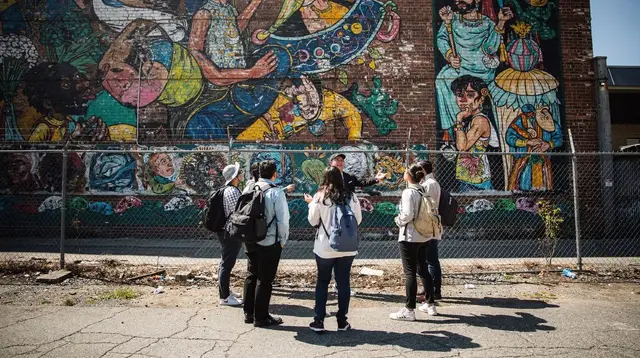
GetYourGuide does not provide a product photo for this activity — the image shows the meeting point, photographed by us.