A Photography Itinerary for San Francisco and the Bay Area
How long do you need for a Golden Gate Bridge, Muir Woods and Big Sur photography trip?
Four days is enough to shoot the Golden Gate Bridge at golden hour, the Muir Woods redwoods in filtered morning light, and the Big Sur coastline properly. A rental car is essential — this route depends on being at specific viewpoints at sunrise or sunset, which public transport can't reliably deliver.
Chasing light, not landmarks
This is not a checklist itinerary. It’s built around three kinds of light that this stretch of California does better than almost anywhere else: the low, warm sidelight that hits the Golden Gate Bridge at dawn and dusk, the soft, diffused glow that filters down through the redwood canopy at Muir Woods on a foggy morning, and the hard, dramatic contrast of cliff, ocean and fog along Big Sur. Every day here is planned around being in the right place at the right hour, with the rest of the schedule built around that anchor rather than the other way around.
A rental car is non-negotiable for this trip. None of the three signature shoots — a bridge viewpoint at sunrise, a redwood grove at opening time, a coastal pullout at golden hour — line up with a bus or tour schedule. See the San Francisco neighborhoods guide and the getting around San Francisco guide for why a car is a liability inside the city itself but becomes essential the moment you leave it.
Pack a lens cloth and expect it to earn its keep — coastal fog and redwood mist both leave a film on glass within minutes. Bring layers: even in summer, dawn at Fisherman’s Wharf or a Marin headland routinely sits well below what a “California trip” suggests packing for.
Day 1: San Francisco — scouting and the first golden hour
Arrive early enough to scout before shooting. Spend the late morning and early afternoon on foot around Chinatown and the Embarcadero, both of which reward wide shots and street-level detail without needing perfect light. If you want the city’s classic elevated angles, an Explorer Pass covering several viewpoints in one booking is worth considering before you commit to individual tickets — you can check current options through a multi-attraction San Francisco pass that bundles several of the city’s best viewpoints.
By mid-afternoon, head toward the Golden Gate Bridge and scout your sunset position without a camera in hand. The two classic angles are Battery Spencer on the Marin side (elevated, full span, best in the last 90 minutes of light) and Fort Point directly beneath the bridge’s south tower (dramatic, low angle, needs a longer lens for the towers). Remember that the toll only applies heading into the city — crossing north to scout costs nothing until you come back. For a full breakdown of angles, timing and gear notes specific to this bridge, the Golden Gate Bridge visitor guide and the dedicated Golden Gate Bridge photoshoot guide are worth reading before you go.
Shoot sunset from your chosen viewpoint, but don’t count on a clean shot of the full span on the first evening — San Francisco’s fog frequently sits over the bridge’s upper towers, especially in summer, and a clear view is never guaranteed on any single visit. If fog rolls in hard, treat it as its own subject rather than a failure: a fogged-in tower against warm light is one of the city’s most recognizable images. Overnight in the city.
Day 2: Muir Woods redwoods and Sausalito light
Redwood photography works best in flat, diffused light rather than harsh sun, which makes an overcast or foggy Marin morning — common here regardless of season — genuinely useful rather than a problem. Arrive at Muir Woods as close to opening as possible: the shuttle and parking system runs on a timed-entry reservation, and the grove is far quieter, and far easier to compose in, before mid-morning crowds arrive. Book your slot in advance; the Muir Woods tickets and parking guide covers exactly how the reservation system works, and the Muir Woods hiking trails guide lays out which loops give the best canopy shots without doubling back.
If you’d rather not manage the reservation system yourself, a guided option that bundles Muir Woods with nearby Sausalito removes that logistics step entirely — see a guided Muir Woods and Sausalito day tour with admission included, or, if you’re driving yourself and only need the entry sorted, Muir Woods and Sausalito entry included as a standalone ticket.
Spend two to three hours in the grove working the light shafts and fern-floor detail shots that only show up when fog is filtering the canopy overhead. Fallen giants and cross-sections near the visitor center are reliably good for scale shots even in flat light.
By early afternoon, drive to Sausalito for a complete change of palette — pastel houseboats, harbor reflections and, on a clear afternoon, a rare southward view back toward the city skyline across the bay. The Sausalito ferry cruise guide and Sausalito bike ride guide both cover vantage points along the waterfront. Return to San Francisco for the evening, or push on toward the Peninsula if you want a head start on Day 3’s drive.
Day 3: Highway 1 south to Big Sur
This is a driving day built around arriving at Big Sur with enough daylight left for a proper golden-hour shoot. The coastal drive down Highway 1 is slow by design — narrow, winding, frequently interrupted by pullouts worth stopping at — so budget the whole day rather than treating it as a transit leg. The Big Sur day trip guide and the Big Sur Highway 1 road trip car rental guide both lay out realistic drive times and where the road narrows most.
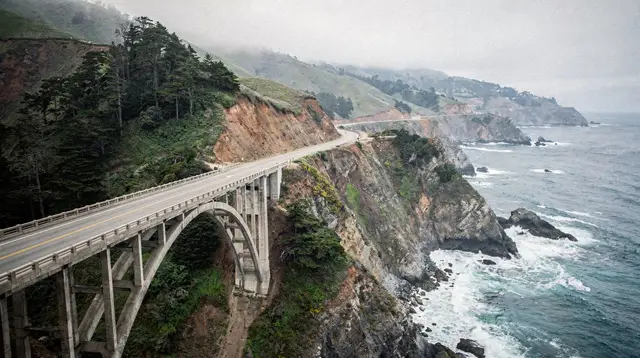
Leave San Francisco by mid-morning. A short detour through the Peninsula coast near Half Moon Bay is an easy add-on if you’re ahead of schedule, but don’t let it eat into golden hour later. Continue south past Santa Cruz and Monterey — worth a coffee stop, not a full detour on this trip — and time your arrival at Bixby Bridge, one of the most photographed spans on the California coast, for the last hour or two of daylight. The light here rakes across the arch and the cliffline in a way that flat midday sun simply doesn’t produce.
If you’d rather not navigate the coastal pullouts and timing yourself, a half-day guided option departing from Monterey covers Big Sur’s highlights with a local driver who already knows where the light works: a guided half-day Big Sur tour from Monterey.
Overnight in or near Big Sur rather than attempting a same-day return — the road back to San Francisco after dark is not one to rush, and a Big Sur sunrise the following morning is one of the trip’s best shoots.
Day 4: Big Sur sunrise and the drive home
Wake before dawn for McWay Falls, a short, flat, well-marked walk from the parking area at Julia Pfeiffer Burns State Park. The waterfall drops directly onto a private cove beach, and early light hitting the cliffs above it — before the marine layer typically burns in — is the shot most photographers come to Big Sur for. The Big Sur hiking trails guide covers this walk and several longer options nearby if you have extra time.
Spend the rest of the morning working your way back up the coast, stopping at any pullouts you passed too quickly the day before — southbound and northbound light on the same cliff can look completely different. Plan the return drive to San Francisco for early-to-mid afternoon, before fatigue and fading light make the winding sections harder to manage. If your flight or schedule allows a final stop, Lands End on the city’s western edge is a quieter, less-photographed alternative to the bridge viewpoints from Day 1, and works well as a closing shot for the trip.
Trip at a glance
| Day | Anchor location | Key light window | Overnight |
|---|---|---|---|
| 1 | San Francisco / Golden Gate Bridge | Sunset, Battery Spencer or Fort Point | San Francisco |
| 2 | Muir Woods / Sausalito | Foggy morning canopy light | San Francisco |
| 3 | Highway 1 south to Big Sur | Sunset at Bixby Bridge | Big Sur area |
| 4 | Big Sur / McWay Falls | Sunrise | — (return to SF) |
Practical notes
- Gear: a mid-range zoom covers most of this trip; a wider lens helps under the redwood canopy and at Bixby Bridge, where you’re often closer to the subject than expected.
- Reservations: Muir Woods requires a timed shuttle/parking reservation — book before you leave, not on arrival.
- Driving: the Golden Gate Bridge toll is charged only heading into San Francisco and is fully electronic; a rental agency’s toll-processing fee often costs more than the toll itself, so check the policy before you drive.
- Fog: treat it as a feature, not an obstacle — some of the strongest images on this route come from partially obscured towers or cliffs rather than clear-sky conditions.
- Timing: this route works in any season, but September and October give the most reliably clear late-afternoon light in San Francisco itself, while Muir Woods’ filtered-light look is strongest whenever the coast is foggy — which is most mornings, year-round.
Photography itinerary FAQ
Do I need a car for this itinerary?
Yes. Golden-hour and sunrise shoots at the Golden Gate Bridge, Muir Woods and Big Sur don’t line up with public transit or tour schedules, and Big Sur in particular has no rail or bus service. A rental car is the only practical way to control your own timing on this route.
What’s the best time of year for Golden Gate Bridge photos?
September and October, San Francisco’s clearest and warmest stretch, give the best odds of an unobscured span at sunset. Summer mornings and evenings are more likely to have fog over the towers, though a partially fogged bridge is its own worthwhile shot.
Do I need a reservation for Muir Woods?
Yes. Entry runs on a timed shuttle and parking reservation system, and slots for popular mornings sell out in advance. Book before arriving rather than hoping to walk in.
Is one night in Big Sur really necessary, or can I do it as a day trip?
An overnight is strongly preferable. Big Sur’s best light — sunset at Bixby Bridge and sunrise at McWay Falls — falls on either end of the day, which a same-day round trip from San Francisco can’t cover without an exhausting amount of driving.
Can I combine this trip with Yosemite or Lake Tahoe?
Not comfortably on a 4-day photography trip. Both are 3.5-4.5 hours from San Francisco in a different direction from Big Sur, and adding either would turn this into mostly driving with little time to actually shoot. Treat it as a separate trip.
What’s the single best sunset spot for the Golden Gate Bridge?
Battery Spencer, on the Marin side just north of the bridge, gives an elevated view of the full span with the city skyline behind it and is the most reliable single sunset location on this route.
Is Highway 1 to Big Sur difficult to drive?
It’s narrow and winding rather than technically difficult, but it demands full attention and rewards a slow pace. Budget the whole day for the drive south rather than treating it as a quick transfer, and avoid driving the most exposed sections after dark.
Will I definitely get fog-free shots on this trip?
No trip to this coast can guarantee it — fog is a defining feature of the region, not an occasional inconvenience. Building in two days around San Francisco and the bridge, rather than one, meaningfully improves the odds of at least one clear golden hour.
Trip Planning
Verified deep-linked GetYourGuide tours. Book through these links and we earn a small commission at no cost to you.
GetYourGuide does not provide a product photo for this activity — the image shows the meeting point, photographed by us.