San Francisco Earthquakes: What Visitors Actually Need to Know
Will I feel an earthquake during my trip to San Francisco?
Almost certainly not in any noticeable way. San Francisco sits on active fault lines and small tremors happen often, but most are too weak to feel, and a damaging quake during a short visit is statistically unlikely. Basic awareness, not anxiety, is the right response.
The first time I felt the floor move in San Francisco, I was standing in a café near Union Square, coffee halfway to my mouth, and for about two seconds I genuinely thought a truck had gone by outside. It hadn’t. It was a small earthquake, the kind that barely makes the local news, and within a minute everyone around me had gone right back to their conversations. Nobody looked up from their laptop. That, more than anything, is what I’d want a first-time visitor to know before worrying too much about this topic: San Franciscans live with the fact of earthquakes so completely that a minor one barely registers as an event.
I don’t say that to wave away a real geological fact. The San Andreas Fault runs close to the city, and the Hayward Fault cuts through the East Bay, and both are capable of producing serious earthquakes. San Francisco’s modern identity was shaped by the catastrophic 1906 earthquake and the fires that followed it, and the 1989 Loma Prieta earthquake, centred well south of the city near Santa Cruz, is still within living memory for plenty of residents. This is not a place where the risk is invented for a guidebook. But there’s a wide gap between “earthquakes are a real feature of this region” and “you should expect to be caught in a dramatic one during a five-day trip,” and I want to walk through that gap honestly rather than either dismissing the topic or dramatizing it.
How likely is it, really?
Small earthquakes happen in the Bay Area constantly — dozens of tiny, unfelt tremors most weeks, picked up only by seismometers. Felt-but-minor shaking, like the café moment I described, happens periodically, often just once or twice a year in a way that catches people’s attention at all. A quake strong enough to cause real damage or disrupt a trip is a different order of event, and scientists talk about those in terms of decades-long probabilities, not “will it happen this week.” For the average visitor spending a handful of days in the city, the realistic scenario is: nothing happens, or at most you feel a brief, mild shake and it becomes a story you tell later, not an emergency you have to manage.
I mention this partly because I’ve met travelers who arrive genuinely nervous, having read something alarming online, and spend their first day half-braced for disaster. That’s not a good way to see a city this beautiful. The buildings you’ll actually be inside — hotels, museums, the cable cars, restaurants — are built and maintained under some of the strictest seismic codes in the United States, precisely because the risk is taken seriously by engineers and planners, not left to chance.
What locals actually do, and what you can copy
There’s no daily ritual here, no siren drills for tourists, nothing that will interrupt your itinerary. What locals do is quieter than that: they know, in the back of their minds, the very basic “drop, cover, hold on” response, and they don’t think about it again until they need it. If you want the whole plan in one sentence, that’s it. If shaking starts and you’re indoors, get down, get under something sturdy like a table if one’s nearby, and hold on until it stops — don’t run outside, since falling glass and debris near building exteriors is the more common source of injury, not the shaking itself. If you’re outside, move away from building facades, awnings, and anything overhead, and just wait it out in an open spot.
If you’re on one of the cable cars, or Muni, or BART when something happens, the honest answer is that operators are trained for exactly this and the systems are built to stop safely — your job is simply to stay where you are and follow any instructions given rather than trying to self-evacuate a moving vehicle.
A few practical, low-effort habits
None of this needs to become a project. A few small habits cover almost everything worth doing:
- Notice where the stairwells are in your hotel, the way you’d glance at any unfamiliar building — not because you’ll need them, but because it takes five seconds and costs nothing.
- Keep your phone reasonably charged, as you would anywhere, since it’s your link to maps, transit, and anyone traveling with you.
- If you’re heading out to Muir Woods, Big Sur, or another spot with steep terrain, dress and plan as you would for any outdoor destination — sturdy footwear, awareness of the ground underfoot — which happens to be good general practice as well as sound seismic sense.
- If a bigger quake does happen while you’re in the city, expect that cell networks may get congested for a short while as everyone tries to check in with people at once; texting tends to get through more reliably than calling.
That’s genuinely the whole list. I’ve traveled to San Francisco several times, spent long stretches walking Chinatown, North Beach, and the hills around Nob Hill, and the topic of earthquakes has come up in conversation more than it’s come up in actual experience.
Where this fits with everything else you’re planning
None of this should reorganize your trip. The version of San Francisco worth your time is the one full of steep streets, fog rolling through the Golden Gate Bridge, sourdough and dim sum, and a ferry ride out to Alcatraz — not a city spent bracing for something statistically unlikely to interrupt your week. If you’re building out your days, a pass like the San Francisco Explorer Pass or the multi-attraction CityPASS is a far more useful thing to think about before you land than seismic contingency planning.
Same with a day trip like the combined Alcatraz, Muir Woods and Sausalito day tour, or simply booking a guided tour of Muir Woods on its own — the kind of details that actually shape whether your trip goes well.
If you want more general background, the National Park Service and the US Geological Survey both publish plain, non-alarmist information about regional seismic activity, and any hotel front desk here can answer specific questions calmly, because they field them often. For everything else — is San Francisco safe for tourists, what to actually pack (see our San Francisco packing list), whether you need a car in the city, and how the city handles accessibility — those are worth far more of your planning time than earthquake risk.
Before you go, it’s also worth reading up on the practical side of your trip: our guide to San Francisco neighborhoods if you’re still choosing a base, getting around San Francisco for transit basics, and the San Francisco attraction tickets guide if you’re weighing a pass against booking things individually. If your trip includes destinations further out, our pieces on Muir Woods, Sausalito, and the wider things to do in San Francisco hub are good next stops. And if you’re curious about the city’s history beyond 1906, our Castro neighborhood history and San Francisco sourdough bread history pieces are a much more cheerful rabbit hole.
San Francisco earthquakes: frequently asked questions
Will I feel an earthquake during a typical visit to San Francisco?
Most visitors feel nothing at all. Small, unfelt tremors happen often in the region, but a shake noticeable enough to interrupt your day is uncommon during a trip of a few days to a couple of weeks.
What should I do if I feel shaking while I’m indoors?
Drop to the ground, take cover under sturdy furniture like a table if one’s nearby, and hold on until the shaking stops. Stay inside rather than running out, since falling debris near building exteriors is a bigger risk than most indoor shaking itself.
What if an earthquake happens while I’m outside?
Move away from building facades, glass, awnings, and anything overhead, and wait in as open a space as you can find until it stops.
Are San Francisco’s hotels and major attractions built to handle earthquakes?
Yes. California, and San Francisco in particular, applies some of the strictest seismic building codes in the country, and this shapes how hotels, museums, and other visitor-facing buildings are constructed and maintained.
Is it safe to be on a cable car or BART train during an earthquake?
Operators and transit systems are trained and designed for this. The practical advice as a passenger is simply to stay put and follow any instructions given rather than trying to exit a moving vehicle on your own.
Should I avoid Muir Woods, Big Sur, or other outdoor day trips because of earthquake risk?
No — there’s no need to change your day-trip plans over this. Ordinary outdoor precautions, like sturdy footwear and general awareness on trails, are the same precautions worth taking regardless of seismic activity.
Will my phone still work if a bigger earthquake happens?
Networks can get temporarily congested if many people try to call at once. Text messages tend to get through more reliably than calls in that situation, so that’s a reasonable first move if you need to reach someone.
Is San Francisco’s earthquake risk a reason to reconsider visiting?
Not really. The risk is real in the geological sense, but the odds of it meaningfully disrupting a short visit are low, and the city’s buildings and infrastructure are built with this risk already accounted for.
tours.Practicalities
Verified deep-linked GetYourGuide tours. Book through these links and we earn a small commission at no cost to you.
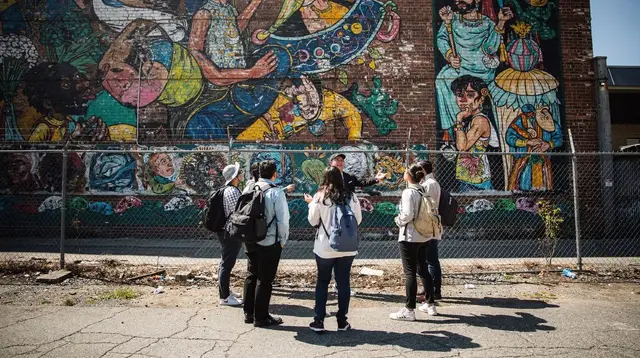
GetYourGuide does not provide a product photo for this activity — the image shows the meeting point, photographed by us.