San Francisco Accessibility Guide: Hills, Transit and Attractions
Is San Francisco easy to navigate with mobility limitations?
It's manageable but uneven: BART stations are step-free with elevators, and many Muni buses kneel and carry ramps, but the historic cable cars aren't wheelchair accessible and many sidewalks run up genuinely steep grades. Planning routes around elevators and flatter neighborhoods matters more here than in most US cities.
I’ll say this upfront: the first time I visited San Francisco with a relative who uses a wheelchair, I assumed the hills would be the whole story. They’re part of it, but honestly the bigger surprise was how much the city has quietly built around them — step-free BART stations, kneeling buses, ramped sidewalks in the flatter districts — while a few famous attractions, especially the cable cars, simply haven’t changed and probably won’t.
The hills are real, but they’re not everywhere
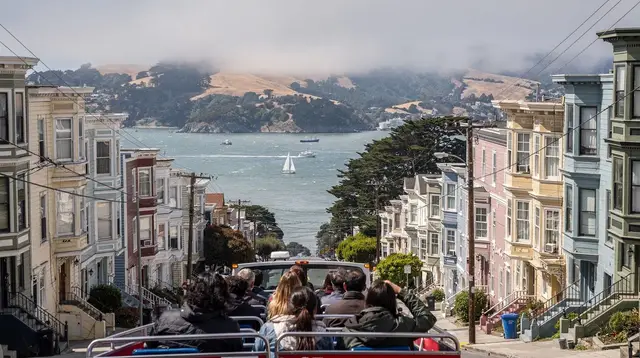
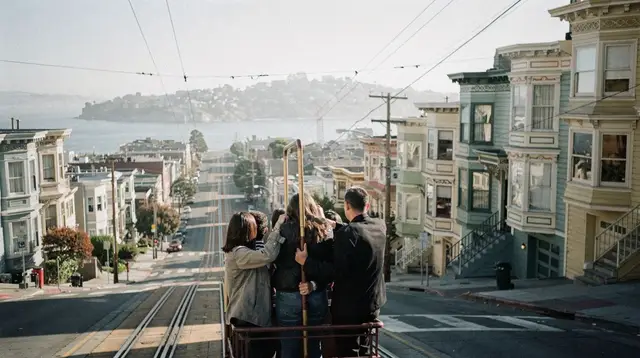
San Francisco’s reputation for steep streets is earned — some grades in Russian Hill, Nob Hill and parts of the Castro exceed anything you’d find in a typical American city. But the city isn’t uniformly steep. The Mission District, the Embarcadero, most of Chinatown’s flatter blocks, and long stretches of the Sunset and Richmond are close to flat. If you’re routing a day on foot or by wheelchair, it’s worth checking elevation before committing to a walking loop rather than assuming the whole city behaves like the postcard photos of Lombard Street.
Sidewalks in the older, hillier neighborhoods can also be narrow, cracked, or interrupted by driveways at awkward angles — more a nuisance than a hard barrier, but worth building slack into your schedule for.
BART is the accessible backbone
Of the city’s transit options, BART is the one I’d lean on most for step-free travel. Every BART station has elevators connecting the street, the fare gates and the platform, and BART’s live elevator status is published online, which matters because elevators do occasionally go down and it’s better to know before you arrive than after. BART is also how most visitors arrive from the airport in the first place — a one-way Clipper fare from SFO to downtown runs about $11.15 in 2026, and the whole route from the airport is step-free.
Muni: better than it looks, with real gaps
Muni’s buses and light-rail vehicles are generally accessible — most buses kneel at the curb and deploy a ramp, and operators are used to it. Where it gets more complicated is the historic streetcars and, especially, the cable cars. The cable cars (Powell-Hyde, Powell-Mason, California Street) are a 19th-century grip-operated system, and riders board directly onto a running board or open bench — there’s no ramp, no low floor, and realistically no way to adapt it without changing what makes it historic. If a cable car ride matters to your trip, treat it as a photo-and-watch stop rather than something everyone in your group can ride together.
Streetcars vary by vehicle: newer light-rail vehicles on the Muni Metro lines are low-floor and accessible; the vintage F-line streetcars along the Embarcadero and through Fisherman’s Wharf are a mixed fleet, and not every one that rolls up will have a lift.
| Mode | Accessibility | Notes |
|---|---|---|
| BART | Step-free, elevators at every station | Check live elevator status before you travel |
| Muni bus | Kneeling, ramp-equipped | Most reliable Muni option |
| Muni Metro (light rail) | Low-floor on newer vehicles | Varies slightly by line |
| F-line streetcar | Mixed fleet | Not every vehicle has a lift |
| Cable car | Not wheelchair accessible | No ramp, open boarding platform |
| Ferries | Generally step-free with assistance | Crew typically help with boarding |
Alcatraz and the ferries
Alcatraz is, surprisingly, one of the better-handled attractions. Alcatraz City Cruises, the sole official operator, runs boats with wheelchair-accessible boarding and offers an audio tour with an accessible-features track; the island itself has a paved main path up to the cellhouse, though the grade is noticeable and there’s a tram-style option for those who need it. Because tickets are the exclusive product of one NPS-authorized concession and sell out weeks ahead, I’d build in extra lead time if you also need to confirm accessible boarding arrangements — call ahead rather than assuming it on the day.
A guided option like the waterfront tour bundled with an Alcatraz ticket can also simplify logistics since transport and entry are handled together, or you can book the ferry and Cellhouse audio tour on their own through the self-guided Alcatraz ferry ticket.
Ferries generally are a good accessible option across the bay — to Sausalito, Tiburon and beyond — since boarding is at a level, staffed gangway rather than the steps of a bus. Crews are used to assisting with boarding.
Golden Gate Bridge, Muir Woods and the waterfront
The Golden Gate Bridge’s pedestrian walkway is paved and largely flat, though it’s long, exposed to wind, and can get crowded. Muir Woods has a paved, level boardwalk loop through part of the redwood grove that’s genuinely wheelchair-friendly, even though the reservation-only shuttle and parking system adds a planning step regardless of mobility needs. A combined day like the Alcatraz, Muir Woods and Sausalito day tour covers three of the more accessible stops in one outing without you having to arrange transport between each.
Fisherman’s Wharf and Pier 39 are flat, paved and easy going, which is part of why they stay so crowded. If you’re traveling with kids as well as accessibility needs in mind, the Bay Area Discovery Museum ticket in Sausalito is worth knowing about — it’s a step-free, ferry-reachable stop across the bay.
What I’d actually plan around
Realistically, the pattern I’ve settled into is: use BART for anything crossing the city or coming from the airport, treat Muni buses as the everyday option, skip relying on cable cars or vintage streetcars for anyone who needs a ramp, and lean on ferries for bay crossings. Curb ramps are common but not universal in the older hill neighborhoods, so I map a route in advance rather than improvising once I’m there. None of this makes San Francisco effortless, but it’s more workable than the city’s steep-hills reputation suggests.
Accessibility in San Francisco — questions I get asked
Are the cable cars wheelchair accessible?
No. Cable cars have open boarding platforms and running boards with no ramp or lift, and there’s no accessible version of the ride — it’s a fixed limitation of the historic system, not something being phased in.
Is BART fully step-free?
Yes, every BART station has elevators linking street level, the fare gates and the platforms. Elevators can occasionally be out of service, so check BART’s live status page before you travel if that matters to your route.
Can you visit Alcatraz with a wheelchair?
Yes, with planning. Alcatraz City Cruises’ boats accommodate wheelchairs and the island has a paved main path and tram-style assistance to the cellhouse, but it’s worth contacting them ahead of time to confirm arrangements given how far in advance tickets sell out.
Are San Francisco’s sidewalks generally accessible?
It varies a lot by neighborhood. Flatter areas like the Embarcadero, the Mission and parts of Chinatown are easy going; hillier neighborhoods like Russian Hill and Nob Hill have steep grades and occasionally narrow or uneven sidewalks.
Is Muir Woods accessible?
The main boardwalk loop through part of the redwood grove is paved and level, making it one of the more wheelchair-friendly nature stops near the city, though the reservation system for the shuttle and parking applies to every visitor regardless of mobility needs.
Do Muni buses have ramps?
Most Muni buses kneel at the curb and deploy a ramp, and this is generally the most dependable accessible option within the city after BART.
Is the Golden Gate Bridge walkway wheelchair friendly?
The pedestrian walkway is paved and mostly flat, so it’s manageable, though it’s long and can be windy and crowded, which is worth factoring in separately from the surface itself.
Should I call ahead for accessible arrangements at major attractions?
Yes, especially for Alcatraz, where tickets sell out weeks ahead and boarding assistance is worth confirming directly with the operator rather than assuming it on arrival.
Accessibility Guide
Verified deep-linked GetYourGuide tours. Book through these links and we earn a small commission at no cost to you.
GetYourGuide does not provide a product photo for this activity — the image shows the meeting point, photographed by us.