Yosemite Entrance Fees, Passes, and Permits Explained
How much does it cost to enter Yosemite and do you need a reservation?
In 2026, Yosemite charges a standard vehicle entrance fee of $35 for 7 days (or $70 for an annual pass), plus a new $100-per-person fee for international visitors aged 16 and up since January 1, 2026. There is no day-use or peak-hours reservation system in place for 2026 — entry is by standard fee only, though parking lots and entrance queues still fill up on busy days.
What it actually costs to drive into Yosemite
Yosemite is one of the easier national parks to enter on short notice, at least on paper: there is no day-use or peak-hours vehicle reservation system running in 2026, which means anyone who shows up with a valid pass or fee is legally entitled to drive in. The catch is that “allowed to enter” and “finding a parking spot in Yosemite Valley at 11am on a July Saturday” are two very different things — more on that below. This guide walks through what the entrance fee actually covers, when an annual pass pays for itself, the international visitor fee that started in 2026, and how the whole system interacts with the Yosemite National Park trip you’re probably planning from San Francisco.
If you’re still deciding whether Yosemite fits into your itinerary at all, it’s worth reading Yosemite from San Francisco: A Complete Planning Guide and Yosemite as a Day Trip From San Francisco: The Reality Check I Wish I’d Had first — the honest answer is that Yosemite from San Francisco is a 3.5-4.5 hour drive each way, and treating it as a single long day is one of the most common regrets visitors report.
The standard entrance fee, in plain numbers
| Entry type | Fee (2026) | Valid for |
|---|---|---|
| Private vehicle (all passengers) | $35 | 7 consecutive days |
| Motorcycle | $30 | 7 consecutive days |
| Pedestrian or cyclist (per person) | $20 | 7 consecutive days |
| Yosemite annual pass | $70 | 12 months from purchase |
| International visitor surcharge (16+) | +$100 per person | Added on top of the above |
The vehicle fee is charged once per car, not per passenger, which makes a full car of five people a much better deal per head than arriving on foot or by bike. It covers 7 consecutive days of entry, so if your trip includes an overnight stay near the park (genuinely the better way to see Yosemite rather than rushing it as a day trip — see Yosemite as a Day Trip From San Francisco: The Reality Check I Wish I’d Had), you can drive in and out on consecutive days without paying again.
Payment at the entrance station is by card only. There is no cash option at the gate, so if you’re planning to pay on arrival, make sure you have a working card rather than assuming cash will do — this trips up more visitors than you’d expect, especially those used to national parks elsewhere accepting cash.
The annual pass: when it’s worth it
At $70, the Yosemite-specific annual pass beats a single $35 vehicle entry the moment you plan a second visit within 12 months — for example, one trip in spring to catch the waterfalls at full flow and a second in autumn for clearer skies and fewer crowds. It’s also worth considering if your San Francicso-based trip includes stops at other National Park Service sites, since a small number of nearby sites recognize the broader annual pass categories.
Note that the Yosemite annual pass is distinct from the America the Beautiful pass, which covers essentially every federal recreation site in the country (national parks, forests, wildlife refuges) for a higher annual price. If Yosemite is the only National Park Service site on your itinerary, the $70 park-specific pass is the cheaper option; if you’re combining it with other national parks on a longer US trip, do the math on the America the Beautiful pass instead.
Neither annual pass is transferable to third-party ticket resellers, and neither one skips the fact that parking lots in Yosemite Valley still fill up on busy days — the pass covers the entrance fee, not a parking guarantee.
The new international visitor fee (since January 1, 2026)
Since the start of 2026, visitors aged 16 and older who are not US citizens or permanent residents pay an additional $100 per person, on top of whichever standard fee or pass applies. This is a per-person charge, so a family of four international visitors driving in together would pay the $35 vehicle fee plus $100 per adult and teenager aged 16+ (children under 16 are exempt from the surcharge). It applies regardless of how you enter — by car, on foot, or by bicycle — and regardless of whether you’re using a single-visit fee or an annual pass.
This is a genuinely new cost that didn’t exist in prior years, and it’s easy to miss if you’re budgeting from an older blog post or a friend’s account of a pre-2026 trip. If your group includes a mix of US and international travelers, only the non-US members pay the surcharge — it’s calculated per person, not per vehicle. For general trip budgeting beyond just the entrance fee, San Francisco Trip Budget: What a Day Really Costs style planning applies here too: build the $100-per-person line item in explicitly rather than treating it as a rounding error.
No day-use reservation — but that’s not the whole story
Unlike some recent years at Yosemite, and unlike several other major US national parks that run timed-entry systems, 2026 has no day-use or peak-hours vehicle reservation requirement. You do not need to book an entry time slot in advance, and there’s no online reservation portal to fight over the moment it opens.
What this means in practice is a trade: no reservation stress, but no guaranteed parking either. Yosemite Valley’s parking areas — by far the most popular part of the park — routinely fill by mid-morning on summer weekends, and entrance-station queues commonly run 60 minutes or more between 8am and 5pm on the busiest days. The National Park Service’s own advice, echoed by park-adjacent guides, is to arrive before 8am or after the late-afternoon rush rather than assume the lack of a reservation system means an easy midday arrival. If you’re driving up as a day trip from San Francisco, that early start becomes even more important given the 3.5-4.5 hour drive already eating into your day — see Yosemite from San Francisco: A Complete Planning Guide for realistic timing.
Because there’s no formal reservation to hold your place, buying your pass or fee online in advance doesn’t guarantee a parking spot the way a timed-entry ticket would elsewhere — but it does remove one variable (payment) from a morning that already has enough friction. It’s a small thing that makes a real difference when you’re trying to beat the queue.
Seasonal road closures affect more than the entrance fee
The entrance fee covers your right to enter the park, but it doesn’t guarantee every road is open. Yosemite’s high-elevation routes close under snow every winter and reopen only once conditions allow, typically mid-to-late May. In 2026, Glacier Point Road opened to vehicles on May 9 and Tioga Road — the high Sierra route and also the most direct link east toward Lake Tahoe — opened on May 15. Visiting in April or early May means these roads, and the viewpoints and trailheads along them, are simply inaccessible regardless of what pass you’re holding.
This matters for trip planning beyond the fee itself: if a Tioga Road crossing toward Lake Tahoe is part of your route, check the season before you commit, since Lake Tahoe Road Trip: Car Rental Guide and Yosemite and Lake Tahoe: How to See Both on a Multi-Day Tour both assume the high route is open, which it isn’t for roughly half the year.
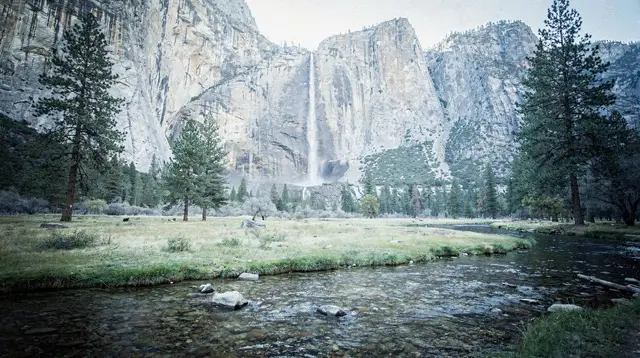
Waterfall timing is the other seasonal factor worth knowing before you pay for entry. Yosemite Falls and Bridalveil Fall run at their most dramatic roughly April through June, fed by spring snowmelt. By September, the same falls that looked spectacular in a May photo can be reduced to a trickle. If seeing the waterfalls at full flow is the point of your visit, plan the calendar around that window rather than around your own travel convenience — the entrance fee is the same price in September as it is in May, but the park looks very different.
Booking a guided visit instead of self-driving
If the logistics above — the long drive, the early-arrival requirement, the parking uncertainty — sound like more coordination than you want to handle solo, a guided tour from San Francisco removes most of the friction: someone else drives, someone else times the entrance queue, and the entrance fee is typically built into the tour price. A day trip such as a guided Yosemite day tour from San Francisco covers the entrance logistics for you and is worth comparing against a self-drive day, especially given how much of a self-driven day trip gets eaten by the road.
For travelers who want more time in the park without renting a car and self-navigating, a private two-day Yosemite tour spreads the visit across an overnight stay, which is consistently the better way to experience the park rather than a single rushed day — see Yosemite in Two Days for how that kind of trip is typically structured. Families in particular often do better with a tour built around flexibility; a customizable family-oriented Yosemite tour adjusts pace and stops for younger travelers rather than sticking to a fixed group itinerary.
Getting around once you’re inside
Entrance fees and passes get you through the gate, but once you’re in Yosemite Valley, a free shuttle system covers most of the valley floor, so a car isn’t strictly necessary for sightseeing once parked. Cyclists sometimes prefer covering the relatively flat valley floor by bike rather than shuttle or car; renting a bike, such as through a standard Yosemite Valley bike rental, is a popular way to reach multiple viewpoints and trailheads in a single morning without hunting for parking at each stop.
For trail planning once you’re past the entrance station, Yosemite Hiking Trails: Best Day Hikes by Fitness Level and Season breaks down routes by difficulty and season, and Yosemite Valley Accessibility Guide: Viewpoints and Trails Without Strenuous Hiking covers what’s realistically manageable for visitors with mobility needs — both worth reading before you commit to a specific day’s plan. Winter visitors should also check Yosemite Winter Activities Beyond Skiing: Snowshoeing, Trails and the Ice Rink, since the entrance fee and pass system stays the same year-round even though road access and activities change dramatically with snow.
Common mistakes with Yosemite entry fees
- Assuming a day-use reservation is required. It isn’t, in 2026 — but that misconception leads some visitors to either skip Yosemite unnecessarily or scramble for a reservation slot that doesn’t exist. Read the current-year rules rather than an older trip report.
- Bringing cash to the entrance station. Card payment only; cash isn’t accepted at the gate. Pay online in advance if you want to avoid any payment step on arrival.
- Forgetting the international visitor surcharge. At $100 per person for visitors 16 and up, this is a meaningful addition to a family’s total cost if not budgeted for in advance.
- Buying a general America the Beautiful annual pass when only visiting Yosemite. The park-specific $70 pass is cheaper if Yosemite is your only National Park Service stop this year.
- Arriving mid-morning on a summer weekend and expecting light traffic. No reservation system doesn’t mean no queue — entrance lines and full parking lots are common between 8am and 5pm in peak season regardless of the fee system.
- Assuming Tioga Road or Glacier Point Road are open year-round. Both are seasonal and typically close under snow from autumn through mid-to-late spring; check current status before routing a trip through them.
- Treating the entrance fee date as the only planning factor. Waterfall flow, road openings, and crowd levels all shift by month even though the entrance price doesn’t — see Yosemite from San Francisco: A Complete Planning Guide for how to match your visit window to what you actually want to see.
Whether you drive yourself through the gate or let a full-day Yosemite tour with lunch and hotel pickup handle the driving and timing, the entrance fee itself is now one of the more predictable parts of a Yosemite trip — it’s the road conditions, parking, and seasonal access that still call for planning ahead. For a wider comparison of how a Yosemite stop fits against other Sierra options, Yosemite vs Lake Tahoe: Which Trip From San Francisco? is a useful next read, and Yosemite National Park rounds up activities once you’re past the gate.
Yosemite entrance fees and passes: frequently asked questions
Do I need a reservation to drive into Yosemite in 2026?
No. Yosemite is not running a day-use or peak-hours vehicle reservation system in 2026. Entry is by standard entrance fee only, paid at the gate or bought online in advance.
How much is the Yosemite entrance fee?
The standard vehicle entrance fee is $35 for 7 consecutive days, covering everyone in the car. Motorcycles pay $30, and pedestrians or cyclists pay $20 per person, also valid for 7 days.
Is there an annual pass for Yosemite?
Yes. The Yosemite-specific annual pass costs $70 and covers unlimited entries to the park for 12 months from the month of purchase. The America the Beautiful annual pass, covering all national parks, is a separate product and typically costs more.
What is the new international visitor fee?
Since January 1, 2026, visitors aged 16 and older who are not US citizens or permanent residents pay an additional $100 per person on top of the standard entrance fee, whether they arrive by vehicle, on foot, or by bicycle.
Can I pay the Yosemite entrance fee with cash?
No. Entrance stations accept card payment only; cash is not accepted at the gate. Buying your pass online in advance avoids any payment friction at the entrance station.
When do Tioga Road and Glacier Point Road open each year?
Both are seasonal, snow-closed roads that typically reopen in mid-to-late May. In 2026, Glacier Point Road opened to vehicles on May 9 and Tioga Road on May 15; exact dates shift year to year depending on snowpack.
What is the best time to see Yosemite’s waterfalls at full flow?
Roughly April through June, when spring snowmelt feeds Yosemite Falls and Bridalveil Fall. By late summer and early autumn, some falls slow to a trickle or dry up entirely.
Is it better to buy the Yosemite pass online or at the gate?
Either works since there is no reservation requirement in 2026, but buying online in advance skips any line at the entrance station and guarantees you have a card-payment method ready, since cash is not accepted at the gate.
San Francisco Passes and Tickets
Verified deep-linked GetYourGuide tours. Book through these links and we earn a small commission at no cost to you.
GetYourGuide does not provide a product photo for this activity — the image shows the meeting point, photographed by us.